On this page
Lightning safety for hikers and campers comes down to avoiding storms in the first place: check the forecast, start early, and be off exposed ground before thunderstorms build. If you hear thunder, you are close enough to be struck, so move quickly to a safe building or hard-topped vehicle, or to lower, less exposed terrain if neither is in reach.
The National Weather Service is clear that no place outdoors is safe during a thunderstorm. What you can do is plan your day to avoid storms, recognize the warning signs early, and know the steps that reduce risk when you are caught out. This guide covers planning, what to do on the trail and at camp, what to avoid, and how to help someone who has been struck.
Key takeaways
- No place outside is safe in a thunderstorm. A building or hard-topped vehicle is the only real shelter.
- If you can hear thunder, lightning is close enough to strike you. Act right away.
- In many mountain areas storms build in the afternoon, so start early and plan to be off high ground before then.
- Avoid summits, ridges, open fields, isolated tall trees, water and metal objects during a storm.
- A tent offers no protection from lightning.
- Wait 30 minutes after the last thunder before going back to exposed areas.
How dangerous is lightning for hikers and campers?
Lightning is a serious risk for hikers and campers because they are often far from buildings or vehicles, on high or open ground, and slow to reach shelter. The National Weather Service states that no outdoor place is safe when thunderstorms are in the area, so the best protection is planning to avoid being exposed when storms arrive.
The risk is highest on summits, ridges, open meadows and lakes, and in summer when afternoon thunderstorms are common in many regions. Lightning can strike well away from the main storm, which is why the sky above you does not need to look dark for the danger to be real.
The good news is that most of the risk is within your control. Timing, route choice and an early decision to turn back prevent most dangerous situations.
How do you plan a hike to avoid lightning?
Plan a hike to avoid lightning by checking the forecast for the exact trail area, noting the chance and timing of thunderstorms, starting early and choosing a route with lower, sheltered options. In mountain areas, storms often develop in the early afternoon, so aim to be off summits and ridges well before then.
The National Weather Service outdoor lightning safety guidance advises checking the forecast for the specific outdoor area, because it can differ from the forecast at home, and staying inside if thunderstorms are highly likely.
- Check the forecast for the trail location, not just the nearest town.
- Look at the hourly thunderstorm chance and when it starts to rise.
- Start early enough to reach high points and descend before that time.
- Choose a route with bail out options below treeline or off ridges.
- Set a turnaround time and agree on it with your group.
- Check the forecast again on the morning of the hike.
For more on reading forecasts and planning around fast changes, see our guide on how to prepare for changing trail weather.
Tip: Make the decision before you start. A group that agrees to turn back at the first thunder, or at a set time, avoids an argument on an exposed ridge.
What are the warning signs of a thunderstorm on the trail?
Warning signs of a thunderstorm include tall, towering clouds building upward, darkening cloud bases, a sudden gust of cool wind, a quick drop in temperature and, most clearly, thunder or visible lightning. If you notice any of these, start moving toward safer terrain right away rather than waiting to see what happens.
- Clouds growing tall during the day. Puffy clouds that build quickly can turn into thunderstorms.
- Dark, low bases moving toward you. Rain and lightning often follow.
- A sudden cool gust. Storm outflow can arrive before the rain.
- Thunder. If you can hear it, you are within striking distance.
- Static or buzzing. Hair standing up or buzzing from metal gear signals an immediate danger. Move away from exposed ground at once.
The common rule “when thunder roars, go indoors” from the National Weather Service is the simplest guide to follow.
What should you do if you hear thunder while hiking?
If you hear thunder while hiking, stop climbing and head for a safe building or hard-topped vehicle if one is close. If none is in reach, get off summits, ridges and open ground, move to lower terrain such as a valley or a lower stand of trees, avoid water and metal, and spread your group out.
Getting down quickly is the most useful action. Every step away from exposed high ground lowers your risk.
Steps when caught on the trail
- Turn around or descend immediately, without pushing to the summit.
- Leave ridges, peaks and open slopes for lower ground.
- Avoid isolated tall trees, poles and other tall objects.
- Stay away from lakes, rivers and wet ground where possible.
- Move away from metal fences, cables and similar objects.
- Spread the group out so people are well apart from each other.
- Keep moving toward safer terrain or shelter if you can do so safely.
The National Weather Service notes that these steps only slightly reduce the risk. They are a last resort, not a substitute for avoiding the storm.
Where are the most and least risky places during a storm?
The riskiest places in a storm are high, open or isolated spots, such as summits, ridges, open fields and meadows, and lakes or rivers. Less risky outdoor spots include valleys, ravines and lower stands of trees. The only genuinely safe places are enclosed buildings with wiring and plumbing, or hard-topped metal vehicles with windows closed.
| Location | Lightning risk | What to do |
|---|---|---|
| Summit or ridge | Very high | Descend immediately |
| Open meadow or field | High | Move toward lower ground or forest |
| Isolated tall tree | High | Move well away from it |
| Lake, river or beach | High | Get out of and away from water |
| Lower stand of trees in a forest | Lower, still unsafe | Stay near lower trees, spread out |
| Valley or ravine | Lower, still unsafe | Watch for flash flooding |
| Open shelter, picnic pavilion or tent | Not safe | Do not rely on it |
| Enclosed building or hard-topped car | Safe | Go there if you can |
Valleys and ravines can flood quickly in heavy rain, so stay alert to rising water while you wait out a storm.
How do you stay safe from lightning at camp?
Stay safe at camp by choosing a site away from summits, ridges, open fields and isolated tall trees, ideally in a lower area or among a lower stand of trees. Remember that a tent offers no protection. If a storm arrives and a car or building is close, go there until the storm has passed.
When choosing a campsite in storm season, think about where you would go if lightning starts. A drive-in campground with your car nearby gives you a real shelter option. In the backcountry, pick a site in lower terrain and away from water edges.
- Avoid pitching on high, open ground.
- Do not camp under the tallest tree in the area.
- Stay away from metal poles and fences.
- Check the forecast before you set up and before bed.
- Plan to move to a vehicle or building if one is close.
What should you avoid doing during a lightning storm?
During a lightning storm, avoid staying on high or open ground, sheltering under isolated trees, standing near water, holding or touching metal objects, gathering close together in a group and relying on open shelters or tents. Also avoid heading back out until 30 minutes after the last thunder, because storms can still strike as they move away.
- Do not shelter under a lone tree. It can be struck, and current can spread through the ground.
- Do not stay in or near water. Water and wet items conduct electricity over long distances.
- Do not hold metal poles high. Lay trekking poles down away from you.
- Do not huddle together. Spreading out reduces the chance of several people being hurt.
- Do not treat a tent or open shelter as safe. They offer no protection.
- Do not rush back out. Wait 30 minutes after the last rumble.
What should you do if someone is struck by lightning?
If someone is struck by lightning, call emergency services immediately and check whether they are breathing and have a pulse. Lightning victims do not carry an electrical charge, so it is safe to touch them. If they are not breathing, start CPR if you are trained, and use an automated external defibrillator if one is available.
Move the person to a safer spot only if you can do so without putting yourself at greater risk. Lightning injuries can include burns, confusion, hearing problems and heart issues, and some effects may not be obvious right away. Anyone who has been struck should get medical care, even if they seem fine.
Taking a first aid or CPR course from an organization like the American Red Cross is one of the best ways to prepare for any trail emergency.
How do other weather risks connect to lightning safety?
Lightning often arrives with other hazards: cold rain, strong wind, hail and sudden temperature drops can follow a storm, while hot, humid days are the ones most likely to build thunderstorms. Planning for lightning means planning for heat in the morning and cold, wet conditions in the afternoon, often on the same hike.
Getting soaked and chilled while waiting out a storm can lead to hypothermia, even in summer. Pack a waterproof shell and a warm layer every time, and read our guide on how to prevent hypothermia on the trail. Our outdoor clothing layering basics explain how to stay dry and warm. On the hot mornings that often come before storms, our guide to heat safety for hikers covers water, shade and pacing.
What are common lightning safety myths?
Common lightning myths include the ideas that lightning never strikes the same place twice, that rubber boots or tires protect you, that you are safe if it is not raining, and that tents or trees make good shelter. Believing these can lead people to stay exposed when they should be moving to safety.
| Myth | Reality |
|---|---|
| Lightning never strikes the same place twice | Tall, exposed objects can be struck many times |
| Rubber soles protect you | Shoes offer no meaningful protection |
| No rain means no danger | Lightning can strike well away from the rain |
| A tent is shelter | A tent offers no protection |
| Trees are safe cover | Isolated tall trees are among the riskiest places |
| Touching a victim is dangerous | Victims carry no charge and need help fast |
Frequently asked questions
How far away can lightning strike?
Lightning can strike far from the storm that produces it, which is why the National Weather Service says that if you can hear thunder, you are close enough to be struck. Do not wait for rain or dark clouds overhead. Treat any thunder as a signal to move toward shelter or safer, lower ground.
Is it safe to stay in a tent during a thunderstorm?
No. A tent offers no protection from lightning, and the poles and fabric do nothing to divert a strike. If a hard-topped vehicle or enclosed building is close, go there until 30 minutes after the last thunder. In the backcountry, camp in lower terrain away from summits, open ground and isolated tall trees.
What is the 30-minute rule for lightning?
The 30-minute rule means waiting at least 30 minutes after the last rumble of thunder before heading back to exposed areas or resuming outdoor activity. Storms can still produce lightning as they move away, so leaving shelter too early is a common mistake. Restart the 30 minutes each time you hear thunder.
Should hikers use the lightning crouch position?
Some outdoor courses teach a crouched position with feet together as a last resort, but it does not make you safe. The National Weather Service stresses that no outdoor position or place is safe in a storm. Your time is better spent getting off high ground, away from water and toward real shelter.
Sources and further reading
- National Weather Service: lightning safety outdoors
- National Weather Service for forecasts and storm alerts
- American Red Cross for first aid and CPR training
- National Park Service for park weather alerts
Your next step: build the habits that keep you off exposed ground at the wrong time with our guide on how to prepare for changing trail weather.
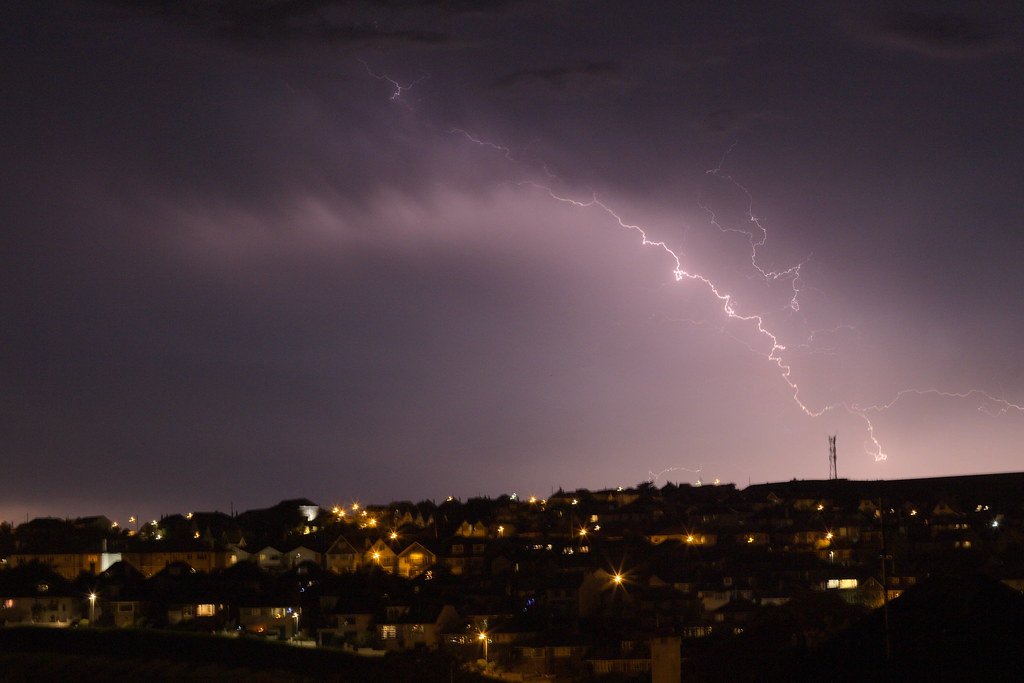
Featured photo: azxzcukl55 via Openverse (CC0).