On this page
A complete camping kitchen checklist covers six groups: a stove with fuel and a way to light it, cookware, utensils and prep tools, food storage and a cooler, cleanup supplies, and pantry basics like oil, salt and coffee. Pack those groups in labeled bins and you can cook real meals at camp without forgetting the one item that ruins dinner.
This checklist is built for car camping and campground cooking, where weight matters less than convenience. You will find each category broken into must-haves and nice-to-haves, plus tips on food safety, wildlife storage, cleaning up and organizing a camp kitchen box you can grab for every trip.
Key takeaways
- Start with the cooking core: stove, fuel, lighter or matches, pot, pan and a spatula.
- Keep cold food below 40°F in a well-packed cooler and use a thermometer if you can.
- Store all food and scented items as local rules require, in a car, bear box or locker.
- Bring a cleanup kit: wash bins, biodegradable soap, a scrubber, a towel and trash bags.
- Pack everything into one or two labeled bins so your kitchen is ready for the next trip.
- Never use a camp stove, grill or heater inside a tent or closed vehicle.
What should be on a camping kitchen checklist?
A camping kitchen checklist should include a heat source with fuel and ignition, cookware, eating and cooking utensils, food prep tools, food storage, cleanup supplies and pantry staples. Plan your meals first, then check each item against your menu. That way you bring what you will actually use and leave the rest at home.
Here is the full checklist at a glance:
| Category | Must-haves | Nice to have |
|---|---|---|
| Heat source | Stove, fuel, lighter, matches | Backup lighter, windscreen |
| Cookware | Pot with lid, frying pan | Kettle, Dutch oven, griddle |
| Cooking tools | Spatula, spoon, tongs, knife | Ladle, whisk, can opener |
| Prep | Cutting board, bowls | Measuring cups, colander |
| Eating | Plates, bowls, cups, cutlery | Insulated mugs, camp chairs |
| Food storage | Cooler, ice, food bags | Second cooler for drinks |
| Water | Water jug, bottles | Water filter or treatment |
| Cleanup | Wash bins, soap, scrubber, towel | Drying rack, sink |
| Pantry | Oil, salt, pepper, coffee | Spices, condiments |
| Lighting | Headlamp, lantern | String lights |
Use the detailed lists below to pack each group. If this is your first trip, pair this list with our first-time camping checklist so your sleep and shelter gear is covered too.
What cooking equipment do you need for camping?
The cooking equipment you need for camping is a stove, the right fuel, at least two ways to light it, a pot with a lid and a frying pan. With these five items you can boil water, cook pasta, make eggs and heat sauces. Add a kettle or Dutch oven only if your menu needs one.
Cooking core checklist:
- Camp stove that suits your group size.
- Fuel that matches your stove, plus a spare.
- Lighter, plus waterproof matches as a backup.
- Pot with a lid for boiling and simmering.
- Frying pan or skillet.
- Windscreen, if your stove does not have one built in.
- Heat-resistant gloves or a pot gripper.
Two-burner stoves are common for car camping because they let you cook two things at once. Smaller single-burner stoves pack down tighter. Whichever you use, test it at home before the trip and check that your fuel connects properly.
Tip: Set up your stove on a stable, level surface away from tents and overhanging branches. Keep a pot of water nearby whenever you cook over an open flame.
Can you cook over a campfire instead?
You can cook over a campfire where fires are allowed, using a grate, foil packets or a cast iron pan. Always check current fire restrictions first, since campfires are often banned during dry periods. Bring a stove as a backup even if you plan to use the fire, so you can still cook if a ban is in place.
What utensils and prep tools should you pack for camping?
For camping, pack a spatula, a large spoon, tongs, a sharp knife with a cover, a cutting board, a can opener and a few mixing bowls. These tools handle most campground meals. Choose sturdy, heat-resistant utensils that are easy to clean, and keep them together in a roll-up pouch or small bin.
Cooking and prep checklist:
- Spatula.
- Large cooking spoon.
- Tongs.
- Chef’s knife with a blade cover.
- Cutting board.
- Can opener and bottle opener.
- Vegetable peeler.
- Mixing bowls in two sizes.
- Measuring cup.
- Aluminum foil and zip bags.
Eating checklist:
- Plates and bowls for each person.
- Forks, knives and spoons.
- Mugs or cups.
- Water bottles.
- Napkins or paper towels.
Reusable plates and cutlery cut down on trash. If you bring disposables, make sure you can pack them out or dispose of them in campground bins.
How do you keep food cold and safe while camping?
To keep food cold and safe while camping, pre-chill your cooler, pack it with plenty of ice or ice packs, keep it in the shade and open it as little as possible. Perishable food should stay at or below 40°F. A simple fridge thermometer inside the cooler lets you check, and anything left warm too long should be thrown out.
Cooler packing steps:
- Chill the cooler overnight with ice or a few frozen jugs.
- Freeze water bottles or meals you will eat later in the trip.
- Pack raw meat in sealed containers at the bottom so juices cannot drip.
- Add ready-to-eat foods above the meat.
- Fill gaps with ice to reduce warm air.
- Keep a separate cooler for drinks, which get opened more often.
- Store the cooler in the shade and cover it with a blanket or tarp.
Food safety guidance from the US Department of Agriculture and the CDC is a good reference for safe temperatures and cooking. Visit foodsafety.gov for current advice. Cook meat to safe internal temperatures, use a food thermometer and wash your hands or use sanitizer before handling food.
Tip: Plan meals with the most perishable foods first. Eat fresh meat on day one or two, then switch to eggs, canned goods and shelf-stable meals later in the trip.
How do you store food at a campsite?
Store food at a campsite according to local rules, which may require a bear box, a locked vehicle, a hard-sided food locker or a bear-resistant container. Never leave food, coolers, trash or scented items like toothpaste unattended or inside your tent. Animals learn quickly where to find food, which is dangerous for them and for campers.
Food storage checklist:
- Cooler latches or straps.
- Airtight containers for dry food.
- Bags for trash and recycling.
- A plan for overnight storage that follows campground rules.
Check the campground or park website before you go. Some areas with active bears have strict storage rules and may fine campers who break them. The National Park Service publishes food storage rules for many parks.
What cleanup supplies do you need for a camp kitchen?
For a camp kitchen, you need two wash bins or collapsible basins, biodegradable soap, a scrubber or sponge, a quick-drying towel, a small strainer and trash bags. Clean dishes soon after eating so food smells do not linger. Then dispose of gray water and food scraps as the campground directs.
Cleanup checklist:
- Two wash bins, one for washing and one for rinsing.
- Biodegradable soap.
- Scrubber or sponge.
- Dish towel or quick-drying cloth.
- Small mesh strainer for food bits.
- Trash and recycling bags.
- Hand sanitizer and hand soap.
- Paper towels.
Steps for cleaning dishes at camp:
- Scrape food scraps into your trash bag.
- Heat water and wash dishes in the first bin with a small amount of soap.
- Rinse in the second bin with clean water.
- Strain the gray water and pack out the food bits.
- Dispose of the strained gray water in designated areas, or scatter it at least 200 feet from water sources where allowed.
- Air dry or towel dry dishes and pack them away.
The Leave No Trace principles explain why straining and scattering gray water away from lakes and streams matters. Follow campground rules first, since many have designated sinks or dump points.
What pantry items should you bring camping?
Pantry items to bring camping include cooking oil, salt and pepper, a few favorite spices, coffee or tea, sugar, condiments and shelf-stable snacks. Pack small amounts in labeled containers or small bottles rather than full-size jars. A well-stocked pantry kit turns simple camp food into meals people actually look forward to eating.
Pantry checklist:
- Cooking oil or butter in a sealed container.
- Salt and pepper.
- Spice blend or two.
- Coffee, tea or hot chocolate.
- Sugar or sweetener.
- Ketchup, mustard, hot sauce or other condiments.
- Bread, tortillas or crackers.
- Oatmeal or cereal.
- Peanut butter or another spread.
- Snacks such as nuts, dried fruit and bars.
Keep a separate small bag of “always” pantry items in your camp kitchen bin. Refill it after each trip so you never arrive without salt or coffee.
How do you organize a camp kitchen box?
To organize a camp kitchen box, pick one or two sturdy plastic bins with lids, pack items by category, label the bins and keep a printed checklist inside the lid. Store the box packed and ready between trips. When it is time to camp, you add fresh food and ice, and your kitchen is done.
Simple system for a camp kitchen box:
- Choose a bin with a tight lid that fits in your vehicle.
- Put heavy items like the stove and pans at the bottom.
- Group utensils in a roll-up pouch or small bag.
- Keep cleanup supplies together in one bag.
- Store pantry items in a separate small bag or box.
- Tape a checklist inside the lid and tick it off after each trip.
- Restock fuel, soap and pantry items before storing the box.
Car campers can carry more, so a camp kitchen box suits that style best. Our car camping checklist covers the rest of the gear that fits in your trunk. If you are cooking for children too, the family camping checklist includes extra items like plastic plates and easy snacks.
What are common camp kitchen mistakes?
Common camp kitchen mistakes include forgetting a lighter or fuel, packing a cooler badly, leaving food out where animals can reach it, skipping cleanup supplies, using a stove on unstable ground and running stoves inside tents. Most can be avoided with a checklist and a quick test of your gear at home before you leave.
| Mistake | What happens | How to avoid it |
|---|---|---|
| No lighter or wrong fuel | Cannot cook | Pack two ignition sources and test fuel |
| Poor cooler packing | Food warms and spoils | Pre-chill and fill gaps with ice |
| Food left out | Wildlife visits camp | Store food as rules require |
| No cleanup kit | Dirty dishes attract animals | Pack wash bins and soap |
| Stove on uneven ground | Spills and burns | Use a stable, level surface |
| Cooking inside a tent | Fire and carbon monoxide risk | Always cook outside in open air |
| Too much food | Waste and heavy coolers | Plan meals by day |
Carbon monoxide from stoves, grills and heaters can build up quickly in enclosed spaces. The CDC warns against using fuel-burning devices inside tents, campers or closed vehicles. If someone feels dizzy, has a headache or nausea while near a stove, move them to fresh air and get emergency help.
What camping kitchen gear is worth buying first?
The camping kitchen gear worth buying first is a reliable stove, a good cooler and a basic cookware set. These three items have the biggest impact on what you can cook and how safe your food stays. Most utensils, plates and cleanup items can come from your home kitchen until you know what you need.
When comparing gear, focus on:
- Stove: number of burners, fuel type, wind protection and stability.
- Cooler: size for your group, insulation, latch quality and drain plug.
- Cookware: pot and pan sizes, handles, lids and how easy they are to clean.
Our essential camping gear buying guide explains how to compare stoves, coolers and other core gear without overspending.
Frequently asked questions
What is the most important item in a camping kitchen?
The most important item in a camping kitchen is a reliable heat source, usually a camp stove with the right fuel and at least two ways to light it. Without heat, you cannot boil water or cook most meals. Test your stove at home before the trip and always pack a spare lighter or matches.
How do you keep a cooler cold for a weekend camping trip?
To keep a cooler cold for a weekend, pre-chill it overnight, pack it with frozen jugs or ice packs and plenty of ice, and fill air gaps. Keep it in the shade, covered with a blanket, and open it as little as possible. Use a separate cooler for drinks to protect your food.
How do you wash dishes when camping?
Wash dishes when camping using two bins: one with warm, soapy water and one with clean rinse water. Scrape food scraps into the trash first. Use biodegradable soap, strain the gray water and pack out food bits. Dispose of gray water where the campground allows, well away from lakes and streams.
What food is easiest to cook while camping?
Easy camping foods include pasta, tacos, pancakes, scrambled eggs, foil packet meals, sausages and one-pot chili or stews. Choose meals with few ingredients and simple steps. Prepare some ingredients at home, like chopped vegetables or mixed pancake batter, to save time and cleanup at the campsite.
Can you use a camp stove inside a tent?
No, you should never use a camp stove inside a tent, camper or closed vehicle. Fuel-burning stoves can cause fires and produce carbon monoxide, which can build up quickly in enclosed spaces and is dangerous. Always cook outside in open air, on a stable surface, away from tents and overhanging branches.
Sources and further reading
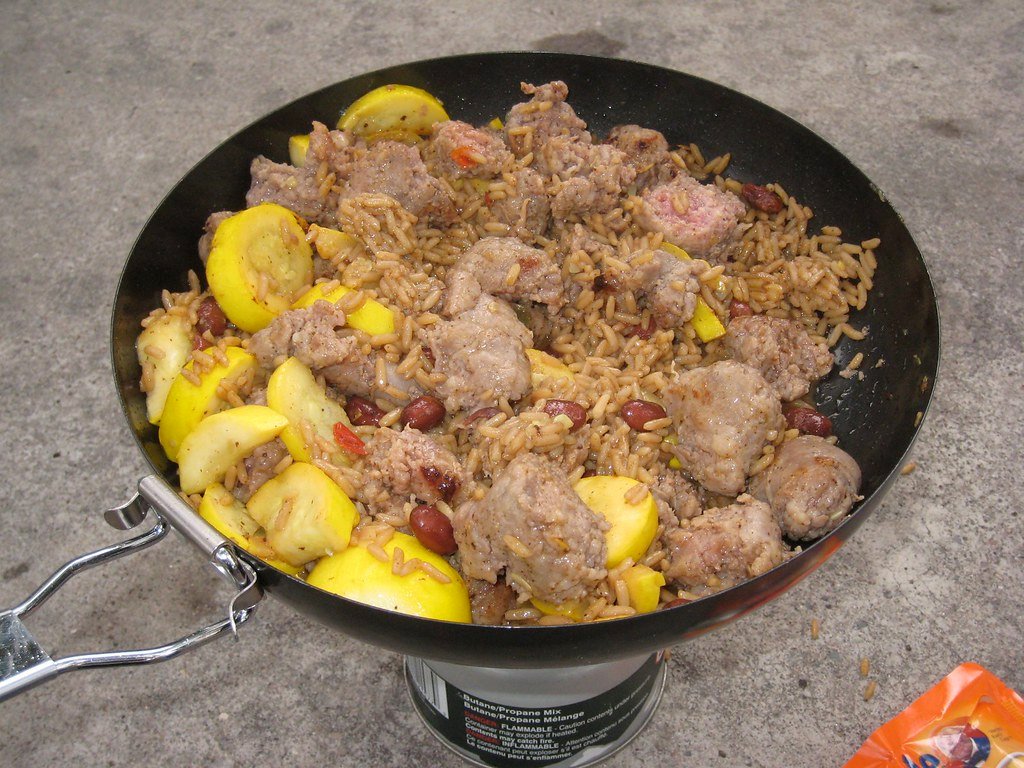
Featured photo: cogdogblog via Openverse (CC0).