On this page
Camping for beginners works best when you keep the first trip simple: one or two nights at a developed campground with toilets and water, close to home, in mild weather. Bring a tent you have practiced pitching, a sleeping bag and pad suited to the night temperatures, easy meals and a headlamp, and you have the core of a good trip.
This guide walks through every decision in the order you will face it, from picking the kind of camping that suits you to packing up on the last morning. Each section links to a more detailed guide if you want to go deeper on one skill.
Key takeaways
- Start with car camping at a developed campground so you can carry extra comfort items and walk to a toilet.
- Reserve a site early for weekends and holidays, and read the campground rules before you go.
- Your sleep system (tent, sleeping bag, sleeping pad) matters more than any other gear for a good first night.
- Practice pitching your tent at home and arrive with at least two hours of daylight to spare.
- Plan simple meals, store food properly and follow Leave No Trace principles at your site.
- Check the forecast and fire restrictions the day before, and have a backup plan for bad weather.
What is the easiest type of camping for beginners?
The easiest type of camping for beginners is car camping at a developed campground. You park next to your site, unload directly from the car and usually have drinking water, toilets and sometimes showers nearby. That safety net lets you learn tents, cooking and sleeping outdoors without carrying everything on your back.
Here is how the main styles compare for a first trip:
| Camping style | What it means | Beginner friendly? |
|---|---|---|
| Car camping | Drive to a numbered site, gear stays near the car | Yes, the best starting point |
| Walk-in camping | Park nearby and carry gear a short distance | Yes, once you have tried car camping |
| Glamping or cabins | Fixed shelter with beds, sometimes power | Yes, but you learn fewer skills |
| Dispersed camping | Free camping on public land with no facilities | Not for a first trip |
| Backpacking | Carry everything on a multi-mile hike | Better after a few car camping trips |
Car camping also forgives mistakes. If you forget a pillow or your stove runs out of fuel, the car is right there and a store may be a short drive away. Once you know how you sleep outdoors and what you actually use, you can move on to walk-in sites and then short backpacking trips.
Tip: For your very first night out, pick a campground within about an hour or two of home. If the weather turns or a key piece of gear fails, heading home is easy and the trip still counts as practice.
How do you choose and book a beginner campsite?
Choosing a beginner campsite starts with the campground, then the individual site. Look for a developed campground with potable water, flush or vault toilets, level tent pads and a host or ranger on site. Then pick a site that is flat, away from dead trees, not in a low spot where rain collects, and not right beside the toilets.
In the United States, many federal campgrounds in national parks, national forests and other public lands are booked through Recreation.gov. State parks usually run their own booking systems. Popular campgrounds can fill months ahead for summer weekends, so book as early as you can, or aim for weeknights and shoulder seasons when sites are easier to get.
When you read a campground listing, check these details:
- Whether drinking water is available or turned off for the season.
- Toilet type and whether there are showers.
- Maximum people, tents and vehicles per site.
- Quiet hours, check-in and check-out times.
- Fire rules and whether firewood must be bought locally.
- Whether pets are allowed and leash rules.
- Food storage rules, especially in bear country.
Our guide on how to choose a campsite covers site selection in more detail, including how to read shade, wind and drainage once you arrive.
For readers outside the US: in the UK, many campsites are privately run and booked directly or through booking platforms, and wild camping is restricted in most of England and Wales. In Canada, Parks Canada and provincial parks run reservation systems, and in Australia each state manages national park bookings separately. Always check the official park or campsite page before you go.
What gear do you need for your first camping trip?
The gear you need for a first camping trip falls into five groups: shelter, sleep, kitchen, clothing and safety. You do not need to buy everything new. Borrowing or renting a tent and sleeping bag is a smart way to learn what you like before you spend money on your own kit.
Use this list as a starting framework, then work through our full first-time camping checklist before you pack.
| Category | Core items | Nice to have |
|---|---|---|
| Shelter | Tent, stakes, footprint or groundsheet | Tarp, mallet |
| Sleep | Sleeping bag, sleeping pad, pillow | Camp chair, blanket |
| Kitchen | Stove, fuel, lighter, pot, utensils, cooler | French press, cutting board |
| Water | Water containers, refillable bottles | Collapsible sink or wash basin |
| Light | Headlamp per person, spare batteries | Lantern |
| Clothing | Layers, rain jacket, warm hat, spare socks | Camp shoes |
| Safety | First aid kit, map, phone, sun protection | Power bank, whistle |
How do you choose a tent for beginners?
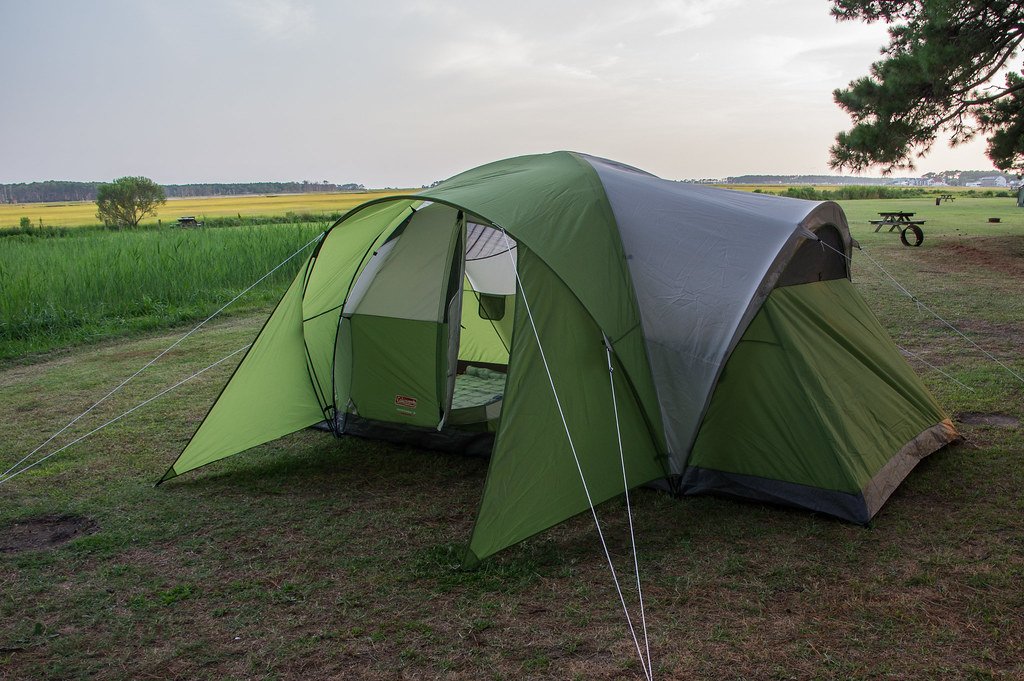
A beginner tent should be simple to pitch, have a full rainfly and offer a little more room than the stated capacity suggests. Many campers size up by one person, so two people choose a three-person tent for space to store bags. Our guide on how to choose a camping tent explains capacity, seasons, poles and fabric in plain terms.
Why does your sleep system matter so much?
Most first trips go wrong at night, not during the day. Cold ground pulls heat from your body faster than cold air, so a sleeping pad with enough insulation is as important as the sleeping bag. Check the expected low temperature for the campground, not the nearest city, and choose a bag rated for colder than that low.
How do you set up camp when you arrive?
Setting up camp works best in a fixed order: walk the site, choose the tent spot, pitch the tent, then arrange the kitchen and seating. Arrive with at least two hours of daylight, because pitching a tent in the dark for the first time is frustrating and makes it easy to pick a poor spot.
Follow these steps when you pull in:
- Check in with the host or at the kiosk and confirm your site number.
- Walk the site and look up for dead branches before choosing a tent spot.
- Clear small rocks, sticks and pinecones from the tent pad.
- Lay down the footprint so no edge sticks out past the tent floor.
- Pitch the tent with the door facing away from the wind if you can.
- Stake out the rainfly and guylines so the fabric is taut.
- Set up the kitchen downwind and well away from the tent.
- Put your sleeping pad and bag inside the tent so they can loft.
If you have never pitched your tent before, do a full practice run in a yard or park first. Our step-by-step guide on how to set up a tent covers poles, clips, stakes and guylines, and how to tension the fly so it sheds rain.
Tip: Pack the tent so the stakes and poles are easy to reach, and keep a small bag with headlamps, a lighter and the first aid kit at the top of the car. Those are the items you want first when you arrive.
What should beginners cook while camping?
Beginners should cook simple meals that need one pot or one pan and few ingredients. Prepare as much as you can at home: chop vegetables, mix pancake batter dry ingredients, marinate meat and pre-portion snacks. That cuts down on dishes, mess and the time you spend cooking in fading light at the campsite.
A two-burner camp stove is the easiest option for car camping. Practice lighting it at home so you know how the fuel connects and how the flame adjusts. Easy first-trip meal ideas include:
- Breakfast: oatmeal with fruit, scrambled eggs and tortillas, or pancakes.
- Lunch: wraps or sandwiches assembled from the cooler.
- Dinner: pasta with jarred sauce, foil packet vegetables and sausages, or chili heated in one pot.
- Snacks: trail mix, crackers, cheese, fruit and granola bars.
Keep raw meat at the bottom of the cooler, use plenty of ice and drain melted water to keep food cold. Bring a basin and biodegradable soap for dishes, and scatter strained gray water well away from water sources if the campground allows it, or use the designated sink.
How do you store food safely at camp?
Food storage protects you, your food and local wildlife. Many campgrounds require food, coolers, trash and scented items such as toothpaste to be locked in a vehicle or in a provided food locker overnight, and bear country rules can be strict. Never keep food in your tent. Follow the specific rules posted at your campground.
How do you sleep well and stay warm at camp?
Sleeping well at camp comes down to insulation from the ground, a bag suited to the temperature, dry clothing and a warm body when you get in. Eat a snack before bed, change into dry base layers, wear a warm hat if the night is cold and empty your bladder before you settle in.
Nights outdoors are often colder than beginners expect, even in summer, especially in the mountains or in the desert. A few habits make a big difference:
- Put on dry layers for sleep, and keep tomorrow’s clothes in the bag with you so they are warm in the morning.
- Use a sleeping pad with enough insulation for the season, or add a closed-cell foam pad underneath.
- Vent the tent slightly to reduce condensation dripping on you.
- Fill a bottle with warm water, seal it tightly and place it in your sleeping bag.
- Bring earplugs and an eye mask for noisy campgrounds and early sunrises.
Our guide on how to stay warm while camping goes deeper on layering, pads and what to do if you wake up cold at 3 a.m.
How do you stay safe while camping?
Staying safe while camping means planning for weather, fire, wildlife, water and minor injuries before you leave. Check the forecast the day before, know the campground’s fire rules, store food properly, bring a basic first aid kit and tell someone where you are going and when you expect to return.
Work through these safety basics:
- Weather: check the forecast from the National Weather Service or your national weather service. If thunder is in the forecast, know where your car or a hard building is. A tent does not protect you from lightning.
- Campfires: use only established fire rings, keep fires small, never leave them unattended and drown them with water until the ashes are cold to the touch. Fire bans change quickly in dry weather.
- Wildlife: keep a respectful distance, never feed animals and follow food storage rules.
- Water: drink treated tap water from the campground or treat water from streams and lakes before you drink it.
- First aid: pack a kit with bandages, blister care, antiseptic wipes, tweezers and any personal medications.
- Communication: cell coverage at campgrounds is often weak, so download maps in advance and share your plans.
If someone is seriously hurt or ill, call your local emergency number (911 in the US and Canada, 999 or 112 in the UK, 000 in Australia) or contact the campground host or ranger right away.
What is campground etiquette for beginners?
Campground etiquette is a set of simple courtesies that keep shared spaces pleasant: respect quiet hours, stay within your own site, keep noise and lights low at night, control pets and leave the site cleaner than you found it. Most rules are posted at the entrance or on the booking page.
The Leave No Trace principles give a clear framework for low-impact camping. In practice at a campground, that means:
- Do not cut through other people’s sites to reach the toilets or water.
- Turn off music and bright lanterns during quiet hours.
- Do not move picnic tables or fire rings between sites.
- Pack out all trash, including small items like twist ties and food scraps.
- Do not carve trees, hammer nails into them or hang heavy loads on young trunks.
- Leave natural objects such as rocks and plants where you found them.
What are the most common beginner camping mistakes?
The most common beginner camping mistakes are arriving after dark, skipping a practice pitch, bringing a sleeping bag or pad that is too thin for the night, forgetting a headlamp and overpacking the cooler without enough ice. Almost all of them can be avoided by planning ahead and doing a short trial run.
Watch out for these as well:
- Pitching the tent in a dip that floods when it rains.
- Leaving the rainfly off on a clear evening, then getting soaked by dew or a surprise shower.
- Forgetting fuel for the stove or a backup lighter.
- Wearing cotton for cold or wet conditions, which stays damp and chills you.
- Leaving food or trash out overnight.
- Ignoring the low temperature in the forecast.
- Trying to do too much on day one instead of settling in.
How should beginners pack up and leave the site?
Packing up camp goes faster when you clean as you go and follow a set routine. Start with the kitchen and food, then bedding, then the tent last so it has time to dry. Do a final walk of the site to collect micro trash and make sure the fire is completely out before you drive away.
A smooth departure looks like this:
- Finish breakfast and wash dishes.
- Pack the cooler and food into the car.
- Stuff sleeping bags and deflate pads.
- Shake out the tent, wipe off dirt and let the fly dry in the sun if possible.
- Pull stakes, fold the tent and count stakes and poles.
- Drown the fire, stir the ashes and drown it again.
- Walk the whole site for trash and forgotten items.
If you have to pack a wet tent, unpack it and dry it fully as soon as you get home to prevent mildew. Then make notes on what you used, what you missed and what you can leave behind next time. That list is the most useful piece of gear for your second trip.
When you are ready to pack for your first night out, start with our first-time camping checklist and tick items off as they go into the car.
More camping guides for beginners
Frequently asked questions
How long should a first camping trip be?
A first camping trip is usually best kept to one or two nights. That is long enough to learn how to pitch the tent, cook and sleep outdoors, but short enough that a forgotten item or a cold night will not ruin the experience. Add more nights once you know what you need.
Is camping safe for beginners?
Camping at a developed campground is generally a safe way to start when you prepare well. Check the weather forecast, follow fire rules, store food properly and bring a first aid kit. Tell someone your plans, and contact the host, a ranger or emergency services right away if something goes seriously wrong.
Do I need to buy all new gear to go camping?
You do not need to buy all new gear for your first trip. Many people borrow from friends, rent from outdoor stores or use household items such as blankets, pots and flashlights. Once you know you enjoy camping, invest first in a good sleeping pad, sleeping bag and tent.
What time of year is best for beginner camping?
Late spring and early fall are often good times for beginner camping in many regions, with milder temperatures and fewer insects than midsummer. The best season depends on your location, so check typical night lows, rainfall and campground opening dates for the specific park before you book.
Sources and further reading
- Recreation.gov for booking many US federal campgrounds.
- National Park Service for park alerts, campground rules and safety advice.
- Leave No Trace Center for Outdoor Ethics for low-impact camping principles.
- National Weather Service for US forecasts and weather safety.
Rules on fires, food storage and bookings change by park and season, so always check the official page for your campground before you go.
Featured photo: Boris Burnayev via Openverse (CC0).