On this page
To choose a camping stove, start with how you camp: car camping, backpacking or a mix. Then pick a stove type and fuel that suit your group size, the weather you camp in and the cooking you plan to do. Finally, compare weight, stability, simmer control, wind performance and fuel availability before you buy.
This research-based buying guide explains the main stove types, how different fuels behave, and the features worth paying attention to. It does not recommend specific models, because the right stove depends on your trips. If you are building a full kit, our essential camping gear buying guide shows where a stove fits alongside shelter, sleep and lighting.
Key takeaways
- Car camping and backpacking stoves are built for very different priorities: cooking comfort versus low weight.
- Canister stoves are simple and popular, liquid fuel stoves handle cold and remote trips well, and two-burner stoves suit groups at a campsite.
- Fuel choice affects cold weather performance, availability and whether you can travel with it.
- Simmer control, stability and wind protection matter as much as boil speed for real cooking.
- Never use a camping stove inside a tent or closed space, because of fire and carbon monoxide risks.
What should you consider when choosing a camping stove?
When choosing a camping stove, consider how you camp, how many people you cook for, what you plan to cook, the weather and altitude you expect, the fuel you can buy where you travel, and how much weight and space you can carry. These factors narrow the field quickly before you compare individual features.
A backpacker boiling water for dehydrated meals needs something very different from a family cooking breakfast at a drive-in campsite. Start with your typical trip, not the most extreme trip you can imagine.
| Question | Why it matters |
|---|---|
| Car camping or backpacking? | Sets your weight and size limits |
| How many people? | Decides burner size, pot size and number of burners |
| Boil water or cook meals? | Determines how much simmer control you need |
| What weather and altitude? | Affects which fuels perform well |
| Where will you travel? | Affects fuel availability and travel rules |
What are the main types of camping stoves?
The main types of camping stoves are canister stoves, integrated canister systems, liquid fuel stoves, multi-fuel stoves, alcohol stoves, solid fuel tablet stoves, wood-burning stoves and two-burner propane stoves for car camping. Each type trades off weight, convenience, cold weather performance and cooking control differently, so the best type depends on your trips.
| Stove type | Strengths | Trade-offs |
|---|---|---|
| Canister stove | Light, simple, quick to set up | Weaker in cold, canister waste |
| Integrated canister system | Very efficient boiling, wind resistant | Bulkier, often limited simmering |
| Liquid fuel stove | Strong in cold, refillable fuel | Heavier, needs priming and maintenance |
| Multi-fuel stove | Burns several fuel types | More complex and often heavier |
| Alcohol stove | Very light and simple | Slower, harder to control, fire risk in dry areas |
| Solid fuel tablets | Tiny and light | Slow, residue, limited heat |
| Wood-burning stove | No fuel to carry | Needs dry fuel, often restricted |
| Two-burner propane | Stable, cooks real meals | Heavy, only for car camping |
Canister stoves
Canister stoves screw onto pressurized gas canisters, usually a blend of isobutane and propane. They are light, easy to light and need little maintenance, which makes them popular with backpackers. Performance can drop in cold weather as canister pressure falls. Small upright models sit on the canister, while remote canister models connect by a hose and sit lower and more stably.
Integrated canister systems
Integrated systems combine a burner, a pot with a heat exchanger and often a windscreen in one unit. They are efficient at boiling water and resist wind well, making them good for dehydrated meals and hot drinks. Many offer limited simmer control, and the dedicated pot can be less versatile for real cooking.
Liquid fuel and multi-fuel stoves
Liquid fuel stoves burn white gas from a refillable bottle, and multi-fuel stoves can also burn other fuels such as kerosene or unleaded gasoline, depending on the design. They perform well in cold weather and at altitude, and fuel can be easier to find in some remote areas. They need priming, occasional cleaning and a little practice.
Two-burner car camping stoves
Two-burner stoves run on propane cylinders and look like a small kitchen range. They are stable, let you cook two things at once, and suit groups and families at drive-in campsites. They are too heavy for backpacking. Our car camping checklist covers the rest of a campsite kitchen.
How does fuel type affect your choice of stove?
Fuel type affects how well a stove works in cold weather and at altitude, how easy it is to buy fuel where you camp, how much waste you create and whether you can travel with it. Canister gas is convenient, liquid fuel handles cold and remote areas well, and propane cylinders suit car camping. Match fuel to conditions.
- Canister gas: Convenient and clean burning. Performance drops in cold, and empty canisters need proper disposal or recycling where available.
- White gas: Strong in cold, refillable and widely used for winter and expedition camping. Needs careful handling.
- Propane cylinders: Reliable for car camping and generally better in cold than butane-heavy blends. Heavy and bulky.
- Alcohol: Light and simple but slower and less controllable. Flames can be hard to see in daylight.
- Wood: No fuel to carry, but often restricted during fire bans and harder in wet weather.
Tip: Before a trip abroad, research which fuels are sold at your destination. Canister threads, fuel names and availability vary between countries.
Can you fly with camping stove fuel?
In general, you cannot carry camping stove fuel on a passenger plane, either in carry-on or checked bags. Stoves themselves may be allowed only if they are completely clean and free of fuel residue. Rules vary, so check the TSA and your airline before you fly, and plan to buy fuel at your destination.
Which stove features matter most?
The stove features that matter most are simmer control, stability, wind performance, ignition, weight and packed size, and the burner’s compatibility with your pots. Boil time gets a lot of attention, but for real cooking, a stove that holds a low flame and stays steady on uneven ground is often more useful than one that boils fastest.
Simmer control
Simmer control lets you turn the flame down low for cooking rice, sauces or pancakes without burning them. Stoves with fine valve control are better for meal cooking, while some boil-focused designs only offer high heat. If you plan to cook more than boiling water, test or research how well the flame turns down.
Stability
A stable stove supports your pot securely, especially large pots full of water. Wide pot supports and a low center of gravity help. Remote canister and liquid fuel stoves sit lower than upright canister stoves, which can make them more stable for bigger pots and group cooking.
Wind performance
Wind steals heat and can blow out small flames, which wastes fuel. Integrated systems and stoves with built-in windscreens handle wind better. Many campers also use a separate windscreen or shelter the stove with rocks or their body. Follow the manufacturer’s guidance, because some windscreens can overheat canisters if used incorrectly.
Ignition, weight and packed size
Push-button igniters are convenient but can fail, so always carry a lighter or matches as a backup. For backpacking, compare the weight of the stove plus fuel and pot for your trip length, not just the burner alone. For car camping, packed size and setup time matter more than ounces.
How do you choose a stove for backpacking vs car camping?
For backpacking, choose a light, compact stove that boils water efficiently and suits the weather on your trips, usually a canister stove, integrated system or liquid fuel stove. For car camping, choose a stable two-burner stove that makes it easy to cook full meals for your group. Weight matters little at a drive-in site.
| Priority | Backpacking | Car camping |
|---|---|---|
| Weight | Very important | Minor |
| Packed size | Very important | Moderate |
| Simmer control | Depends on menu | Important |
| Number of burners | Usually one | Often two |
| Pot capacity | Small, one or two people | Large, group meals |
| Wind protection | Important in open terrain | Helpful, often built in |
If you are just getting started, our guide to beginner hiking gear and what you actually need helps you decide whether a stove is worth carrying on shorter trips at all.
How do you match a stove to your group size and menu?
Match a stove to your group size and menu by thinking about pot size, how many things you cook at once and how long meals take. Solo hikers boiling water need very little. Couples cooking simple meals can share a single burner. Groups and families making full meals benefit from two burners and larger, stable pots.
- List the meals you usually cook on a trip.
- Note whether each meal is boil only, simmer or fry.
- Estimate the largest pot size you will use.
- Decide whether you need to cook two things at the same time.
- Choose a stove type and burner count that handle your most common meal well.
How do you use a camping stove safely?
Use a camping stove safely by cooking outdoors on a stable, level surface away from tents and dry vegetation, keeping fuel away from flames, checking connections for leaks and never leaving a lit stove unattended. Never use one inside a tent, vehicle or closed shelter. The CDC warns that fuel-burning appliances in enclosed spaces can cause carbon monoxide poisoning.
Carbon monoxide has no smell or color, so you may not notice it building up. Symptoms can include headache, dizziness, nausea and confusion. If you suspect carbon monoxide poisoning, move to fresh air immediately and call emergency services. The CDC has more guidance on carbon monoxide safety.
- Read the manufacturer’s instructions before first use.
- Check fire restrictions with the park or land manager before every trip.
- Keep a clear area around the stove and have water nearby.
- Let the stove cool fully before packing it away.
- Store fuel upright, closed and away from heat.
What are common mistakes when choosing a camping stove?
Common mistakes when choosing a camping stove include buying for boil time alone, ignoring cold weather performance, choosing a stove too heavy for backpacking or too small for group cooking, forgetting about fuel availability and travel rules, and skipping simmer control when you plan to cook real meals. Most come from not matching the stove to the trip.
- Buying the lightest stove for car camping. A tiny stove makes group cooking slow and unstable.
- Ignoring the weather. Canister stoves can struggle on cold mornings.
- Forgetting the pot. A stove and pot must work together in size and stability.
- Relying only on a push-button igniter. Always carry a lighter.
- Skipping a test run. Use the stove at home or in the yard before your first trip.
How do you test a camping stove before a trip?
Test a camping stove before a trip by setting it up outdoors, connecting the fuel, lighting it, boiling water and trying a low simmer if your menu needs one. This confirms everything works, shows you how much fuel you might use and lets you learn the controls in calm conditions rather than at a windy campsite at dusk.
Check that you have the right fuel, a backup lighter, a windscreen if you use one and any small tools or parts the stove needs. For liquid fuel stoves, practice priming. Then add the stove to your packing list. As a next step, return to the essential camping gear buying guide to plan the rest of your kit.
Frequently asked questions
What type of camping stove is best for beginners?
For backpacking beginners, a canister stove is often the simplest choice because it is light, easy to light and needs little maintenance. For car camping beginners, a two-burner propane stove is easy to use and makes cooking full meals straightforward. Choose based on how you camp, and practice at home first.
Do canister stoves work in cold weather?
Canister stoves can lose performance in cold weather because the gas pressure drops as the canister cools. Fuel blends with more propane tend to perform better than butane-heavy blends. In cold conditions, many campers keep the canister warm before use or choose a liquid fuel stove, which handles low temperatures more reliably.
Can I use a camping stove inside my tent?
No. You should never use a camping stove inside a tent, vehicle or closed shelter. Stoves create a fire risk and can produce carbon monoxide, which can build up quickly and cause serious harm without warning. Always cook outdoors in a well-ventilated area, away from tents and dry vegetation.
How much fuel should I bring for a camping trip?
Fuel needs depend on your stove, menu, group size, weather and altitude, so there is no single amount. Cold weather, wind and simmering meals use more fuel than boiling water on a calm day. Test your stove at home, note how much fuel a typical meal uses, then bring a reserve for delays.
Are wood-burning camping stoves allowed everywhere?
No. Wood-burning stoves and open flames are often restricted during fire bans, in dry seasons and in some protected areas. Rules vary by park and land manager, and they can change quickly. Always check current fire restrictions before your trip, and carry a fuel stove as a backup if wood fires may be banned.
Sources and further reading
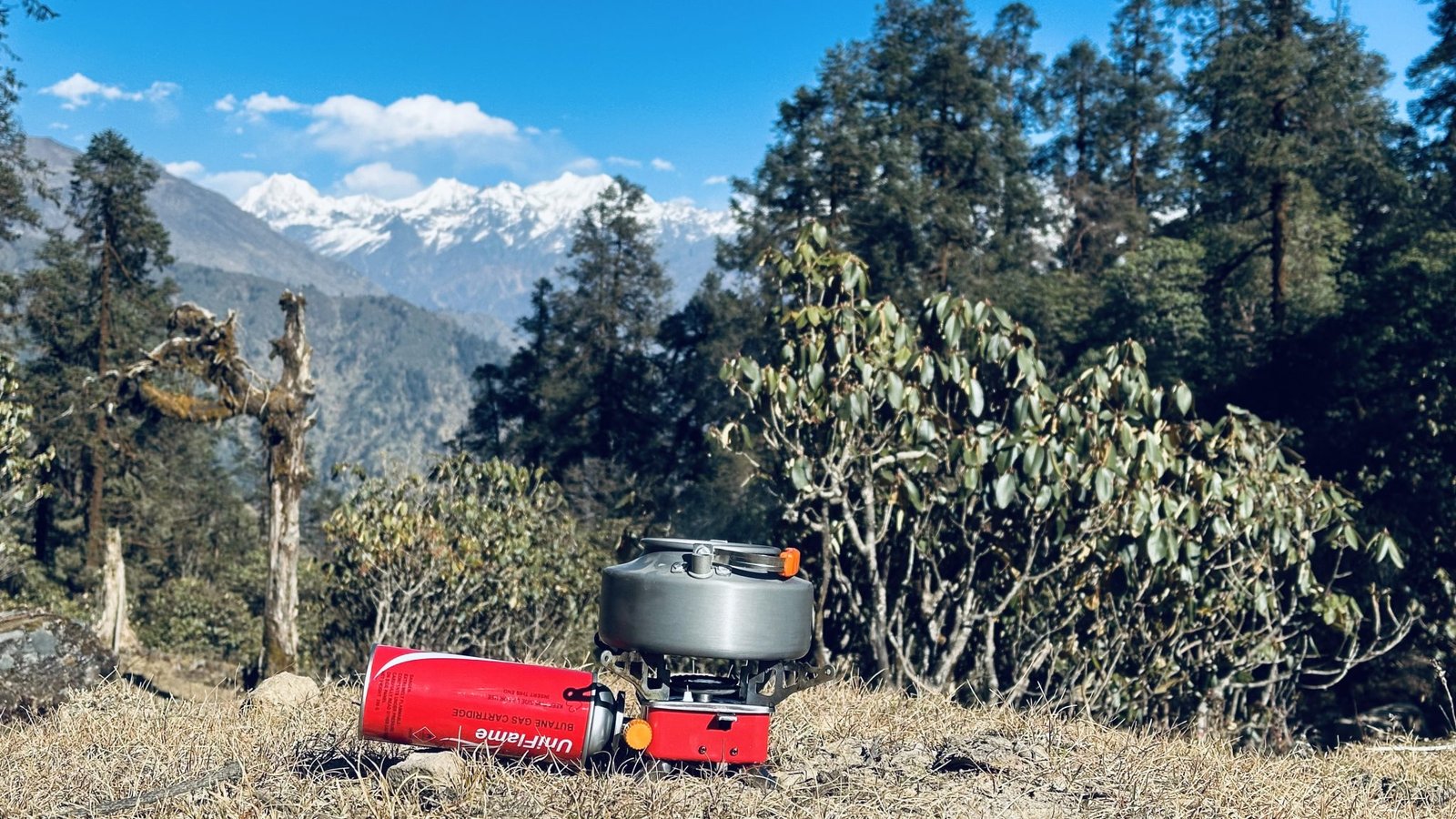
Featured photo: Anis via Openverse (CC0).