On this page
Time outdoors is good for you because it tends to get you moving, exposes you to daylight that helps set your body clock, and gives your mind a break from screens and indoor pressures. Research has linked regular time in green and natural spaces with better mood, lower stress and better reported health, though it is not a cure for illness.
This explainer walks through the main benefits that research and health agencies point to, what is known and what is still uncertain, how much time might be worth aiming for and how to get outside safely. It ends with simple ways to fit more outdoor time into an ordinary week.
Key takeaways
- Being outdoors often means moving more, and regular physical activity is one of the best-supported ways to protect health.
- Daylight, especially in the morning, helps regulate your sleep and wake cycle.
- Many studies link time in nature with lower stress and better mood, but most show association rather than proof of cause.
- One large study from England associated about two hours a week in nature with better reported health and wellbeing.
- Short, regular outings count, and safety basics such as sun protection and checking the weather still apply.
How does spending time outdoors benefit your physical health?
Spending time outdoors benefits physical health mainly by making activity easier and more enjoyable. Walking, hiking, cycling, gardening and playing outside all count toward recommended activity levels. Health agencies such as the CDC recommend that adults get at least 150 minutes of moderate aerobic activity each week, plus muscle-strengthening activity on two days.
Outdoor activity has a few advantages over the same exercise indoors. Uneven ground works stabilizing muscles. Changing scenery can make a walk feel shorter. Many people also find it easier to keep an outdoor habit because it doubles as social time, errands or a commute.
UK, Canadian and Australian physical activity guidelines set similar weekly targets for adults, so the same practical goal applies to most readers.
What counts as outdoor activity?
| Activity | Typical effort | Easy way to start |
|---|---|---|
| Brisk walking | Moderate | A loop around your neighborhood after lunch |
| Hiking | Moderate to vigorous | A short, well-marked local trail |
| Cycling | Moderate to vigorous | A bike path or quiet park road |
| Gardening and yard work | Light to moderate | Weeding, digging or raking for half an hour |
| Outdoor play with kids | Varies | A trip to a park or playground |
| Swimming in supervised areas | Moderate to vigorous | Lifeguarded beaches or outdoor pools |
Does being outdoors improve mental health and mood?
Being outdoors is associated with better mood and lower stress for many people, and researchers have studied the link for decades. Time in green or blue spaces, such as parks, forests, rivers and coasts, is often linked with feeling calmer and more restored. Most of this research shows associations, so it cannot prove nature alone causes the benefit.
Several explanations are discussed in research. One, called attention restoration theory, suggests that natural settings let the mind rest from the focused attention that work and screens demand. Another points to stress reduction, the idea that natural scenes help the body settle. In Japan, the practice of shinrin-yoku, often translated as forest bathing, encourages slow, mindful time among trees.
What is known and what is uncertain?
- Fairly consistent: many people report feeling better during and after time in nature.
- Likely involved: physical activity, social contact and a break from daily stress all play a part.
- Still uncertain: how much of the benefit comes from nature itself rather than activity or other factors.
- Important: outdoor time can support wellbeing, but it is not a replacement for professional care. If you are struggling with your mental health, talk to a doctor or a mental health professional.
How does daylight affect sleep and energy?
Daylight affects sleep and energy because light is the main signal that sets your body’s internal clock, often called the circadian rhythm. Getting outdoor light, especially in the morning, helps your body know when to feel alert and when to wind down. Even on cloudy days, outdoor light is usually far brighter than indoor lighting.
Practical ways to use daylight:
- Step outside within an hour or two of waking, even for a few minutes.
- Take a short walk outside at lunch instead of eating at your desk.
- Keep evenings dimmer, especially in the hour before bed.
- On trips across time zones, use daylight at your destination to adjust faster.
What about vitamin D?
Your skin makes vitamin D when exposed to sunlight, which is one reason outdoor time matters. How much you make depends on season, latitude, skin type and time of day, and many people in northern regions make little in winter. Balance sun exposure with sun protection, and ask a doctor if you are concerned about your vitamin D levels.
Tip: Pair outdoor time with an existing habit, such as a morning coffee on the porch or a phone call on foot. Linking it to something you already do makes it easier to repeat.
How much time outdoors do you need?
There is no official minimum dose of nature, but one large study from England, published in 2019, found that people who reported at least 120 minutes in nature in the past week were more likely to report good health and high wellbeing than those with no nature contact. The time could come from one visit or several shorter ones.
That study had clear limits. It was based on a survey at one point in time, so healthier and happier people may simply get outside more. The authors described the two-hour figure as tentative. Still, it offers a practical, realistic target: roughly two hours a week, split however suits you.
| Weekly pattern | What it looks like |
|---|---|
| Daily short walks | About 20 minutes a day outside |
| Weekday plus weekend | Three 20-minute walks plus a one-hour weekend outing |
| One longer outing | A two-hour hike or park visit on the weekend |
| Mixed | Lunch walks, an evening in the garden and a weekend bike ride |
Does the type of outdoor space matter?
Researchers often separate green spaces, such as parks, woods and fields, from blue spaces, such as rivers, lakes and coasts. Both appear in studies of wellbeing, and many people simply have a favorite kind of place. The 2019 English study did not measure the quality of the places people visited, so it cannot say which settings help most. A practical approach is to use what is nearby and pleasant for you. A quiet, safe local park you visit often is likely more useful than a beautiful place you rarely reach. If you can, mix in occasional longer trips to bigger landscapes, such as a state park, a coastline or a forest trail.
Our guide on how to get outside more often has more ideas for building a routine that lasts.
Are there social and family benefits to being outdoors?
Time outdoors often brings social benefits because parks, trails and community spaces make it easy to meet friends, walk with family or join a group. Shared outdoor activities create relaxed time together without screens. For children, outdoor play supports movement, coordination, creativity and confidence, and researchers have also studied links with eye health.
Benefits for children
- More active play and movement
- Practice with balance, climbing and coordination
- Chances to explore, take small risks and build confidence
- Research linking more time outdoors in childhood with a lower risk of developing nearsightedness
Benefits for groups and communities
- Walking groups and hiking clubs offer company and motivation.
- Volunteering on trail work or park clean-ups connects people with places.
- Community gardens combine activity, food and social contact.
Can time outdoors help with focus and creativity?
Time outdoors may help focus and creativity by giving your brain a break from constant demands on attention. Many people find that a walk helps them think through problems or come back to work refreshed. Research in this area is promising but varied, so treat it as a useful habit to try rather than a guaranteed result.
Ways to test it for yourself:
- Take a short walk before a demanding task and notice how you feel.
- Hold walking meetings or phone calls outside when possible.
- Leave headphones off sometimes and pay attention to sounds and sights.
- Keep a simple note of your mood and energy on days with and without outdoor time.
If you have a busy schedule, our guide to outdoor habits for busy people suggests small changes that fit around work and family.
How do you get the benefits of being outdoors safely?
To get the benefits of being outdoors safely, protect your skin from the sun, dress for the weather, drink water, check air quality on smoky or polluted days and tell someone your plans for longer outings. Most outdoor time carries low risk, but simple habits prevent sunburn, heat illness, falls and tick bites.
- Sun: use sunscreen, a hat and sunglasses, and seek shade in the middle of the day. The CDC offers sun safety guidance.
- Heat and cold: dress in layers, carry water and adjust plans in extreme weather. Check forecasts from weather.gov or your national weather service.
- Air quality: on days with wildfire smoke or high pollution, consider indoor exercise. In the US, AirNow reports air quality.
- Ticks and insects: use repellent, wear long sleeves in tall grass and check for ticks afterward.
- Footwear and clothing: comfortable shoes and weather-appropriate layers make walking more pleasant. See our walking gear checklist for beginners.
- Health conditions: if you have a heart condition, asthma or other health concerns, ask your doctor before significantly increasing activity.
What are common barriers to getting outside, and how do you overcome them?
Common barriers to getting outside include lack of time, bad weather, no nearby green space, low motivation and safety concerns. Most can be eased with small adjustments, such as shorter outings, the right clothing, a walking partner or using local streets and small parks. The goal is regular contact with outdoor spaces, not perfect wilderness trips.
| Barrier | Practical fix |
|---|---|
| No time | Walk part of a commute or take calls outside |
| Bad weather | Keep a rain jacket and warm hat by the door |
| No nearby nature | Use tree-lined streets, small parks or a balcony garden |
| Low motivation | Schedule outings with a friend or group |
| Safety concerns | Walk in daylight, choose busy routes and tell someone where you are going |
| Mobility limits | Look for accessible paths and parks with level trails |
Next step: pick one small change for this week using our guide on how to get outside more often.
Frequently asked questions
What are the main benefits of being outdoors?
The main benefits of being outdoors include more physical activity, daylight that helps regulate sleep, and links in research with lower stress and better mood. Time outside also offers social contact and a break from screens. Much of the evidence shows association, so benefits likely come from several factors working together.
How much time should I spend outside each week?
There is no official target for nature time, but one large study from England linked at least 120 minutes a week with better reported health and wellbeing. It did not matter whether the time came from one visit or several. Health agencies separately recommend at least 150 minutes of moderate activity weekly.
Does being outside count if I am in a city?
Yes, city outdoor time can still be valuable. Parks, tree-lined streets, rivers, community gardens and even a balcony with plants offer daylight, fresh air and a change of scene. Walking or cycling outdoors in a city also adds physical activity, which is one of the best-supported health benefits.
Is it still good to go outside when it is cold or cloudy?
Yes, going outside in cold or cloudy weather can still help. Outdoor light is usually brighter than indoor light even under clouds, and movement keeps you warm. Dress in layers, protect hands and head, and watch for ice. Adjust or postpone plans during severe weather warnings.
Sources and further reading
- White et al. (2019), Spending at least 120 minutes a week in nature is associated with good health and wellbeing, Scientific Reports
- CDC physical activity and sun safety guidance
- National Weather Service
- AirNow
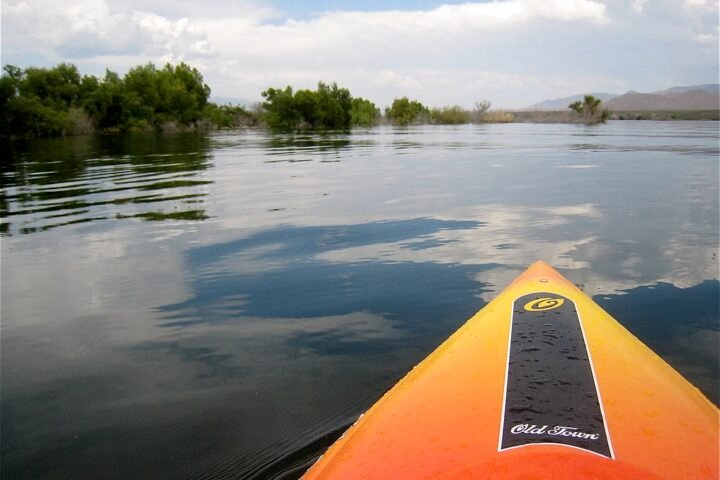
Featured photo: D Coetzee via Openverse (CC0).