On this page
To choose a campsite, first pick a campground or area that suits your trip, then choose a specific spot that is flat, well drained, sheltered from wind, clear of dead trees overhead and a sensible distance from water. A good site keeps you safe, helps you sleep and protects the land for the next camper.
Campsite choice happens twice. Before the trip, you decide where to camp: a developed campground, a walk-in site or a backcountry area. At camp, you decide exactly where to put your tent. This guide covers both decisions, with a checklist you can run through in a few minutes when you arrive.
Key takeaways
- Decide on the type of campground first, based on access, facilities and how much comfort you want.
- At the site, look up for dead branches, look down for flat, durable ground, and look around for wind and water flow.
- Avoid low spots, dry washes and the bottom of slopes, where water and cold air collect.
- Follow Leave No Trace guidance: use existing sites and camp at least 200 feet from lakes and streams in the backcountry.
- Arrive with daylight to spare so you can choose carefully instead of taking the last spot in the dark.
What should you look for when choosing a campsite?
When choosing a campsite, look for flat, durable ground, natural shelter from wind, good drainage, no dead trees or branches overhead and a safe distance from water. Then consider comfort factors such as shade, morning sun, privacy and distance to the toilet or water tap. Safety comes first, comfort second.
A quick way to remember the essentials is to look in three directions:
- Look up: check for dead trees, broken limbs and leaning trunks. Rangers often call these hazard trees.
- Look down: find level, smooth ground without roots, rocks or a dip that would pool water.
- Look around: notice wind direction, slope, nearby water and how close other campers are.
| Factor | What good looks like | Red flag |
|---|---|---|
| Ground | Flat, firm, durable surface | Dip, slope, roots or soft mud |
| Overhead | Clear or healthy trees | Dead limbs or leaning trunks |
| Drainage | Slightly raised area | Low spot, dry wash or gully |
| Wind | Natural break from brush, rocks or terrain | Exposed ridge or open saddle |
| Water | Reachable, but at a distance | Right at the water’s edge |
| Access | Easy to reach the toilet and car | Long walk in the dark over rough ground |
How do you pick the right type of campground?
To pick the right type of campground, match the level of facilities and access to your experience and trip goals. Developed campgrounds offer toilets, water and marked sites, which suits beginners. Walk-in and primitive sites offer more quiet but fewer services. Backcountry camping requires more skill, gear and planning.
| Campground type | Typical facilities | Best for |
|---|---|---|
| Developed campground | Toilets, water, picnic tables, fire rings | First-time campers, families |
| Walk-in or tent only | Basic toilets, short walk from parking | Quieter car camping |
| Primitive or dispersed | Few or no facilities | Experienced campers who are self-sufficient |
| Backcountry | None, except sometimes a pit toilet | Backpackers with permits where required |
If this is your first trip, a developed campground is usually the easiest place to learn. Our camping for beginners complete guide covers the basics of what to expect.
What to check before you book
- Read the campground rules on fires, pets, quiet hours and vehicle limits.
- Check whether sites need a reservation and when bookings open.
- Look at the site map for distance to toilets, water and parking.
- Check whether the site has a tent pad and how large it is.
- Look up typical weather and any seasonal alerts for the area.
In the US, many federal campgrounds are booked through Recreation.gov, and state parks use their own systems. In Canada, Parks Canada runs its own reservation service, while UK and Australian campsites are often booked directly or through national park and campsite listing sites.
How do you choose a flat, comfortable tent spot?
A flat, comfortable tent spot is level, smooth and large enough for your tent and its guylines. Lie down on the spot before pitching if you can. Even a slight slope can make you slide in the night, and one root under your hip can ruin your sleep. If the ground slopes a little, sleep with your head uphill.
Steps to test a spot:
- Walk the area and clear loose sticks, pine cones and small stones.
- Lay out the tent footprint or the tent itself to check the size.
- Lie down where you will sleep and feel for bumps and slope.
- Check that guylines and stakes will reach firm ground.
- Make sure doors face a direction that is easy to get in and out of.
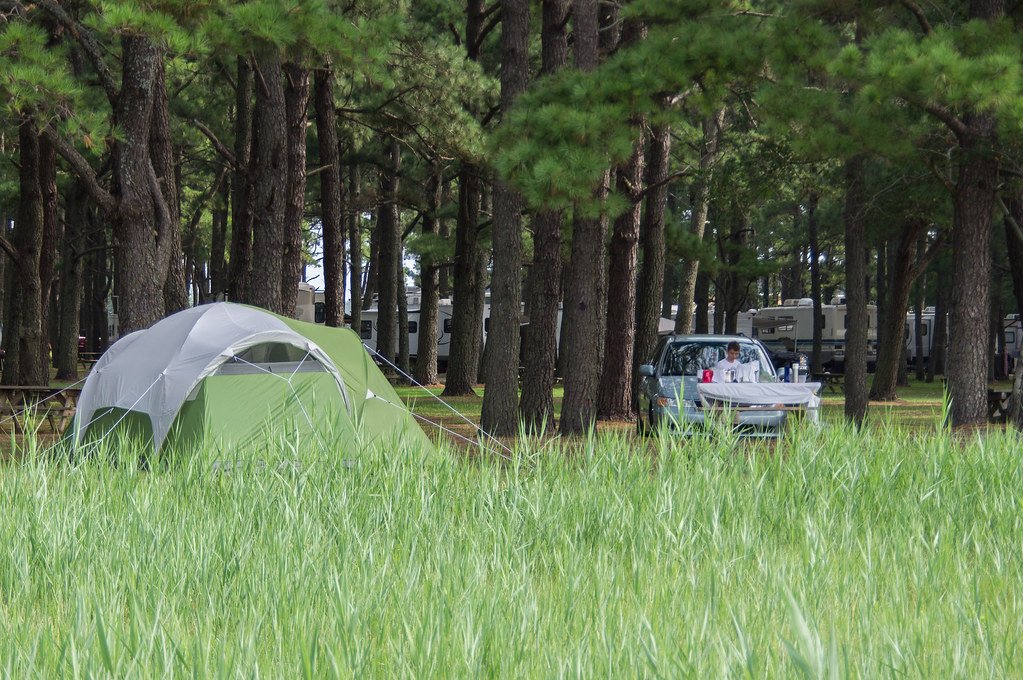
On designated campsites, use the tent pad provided. It is usually the flattest, best drained ground, and staying on it protects plants around the site. When you are ready to pitch, follow our step by step guide on how to set up a tent.
Tip: If you have a choice of pads, check which one gets morning sun. A sunny tent dries dew and condensation faster, which makes packing up easier.
How do you avoid flooding and drainage problems?
To avoid flooding and drainage problems, camp on slightly raised ground and stay out of low spots, dry stream beds and the bottom of slopes. Rain runs downhill and pools in hollows, and even a short storm can send water under your tent. In canyon and desert areas, flash floods can arrive with little warning.
Signs that a spot may flood:
- A dip or hollow that looks like it holds water.
- Flattened grass, debris lines or silt marks on the ground.
- Smooth gravel or sand in a channel, which can be a dry wash.
- A path that looks like a drainage line running through the site.
Do not dig trenches around your tent. It damages the site and is discouraged under Leave No Trace guidance. A well pitched rainfly and a footprint tucked fully under the tent floor do a better job. If heavy rain or flash flood warnings are in the forecast, check with rangers and consider another site or another date. The National Weather Service issues flood watches and warnings for US areas.
Why do wind and terrain matter?
Wind and terrain matter because they affect how warm you stay, how well your tent holds up and how much sleep you get. Exposed ridges and open fields catch strong gusts, while valley floors and hollows collect cold, damp air at night. The best spots often sit a little above the valley floor with natural shelter nearby.
Practical ways to use terrain:
- Use natural windbreaks: shrubs, boulders or a low rise can block the worst of the wind.
- Point the tent well: face the narrow or lowest end of the tent toward the wind.
- Avoid hollows on cold nights: cold air settles in low spots, so a slightly higher bench can feel warmer.
- Avoid summits and ridges in storms: high, exposed ground is a poor choice when thunderstorms are possible.
Choosing a sheltered spot is one of the simplest ways to sleep warmer. For more on that, see how to stay warm while camping.
How far should you camp from water?
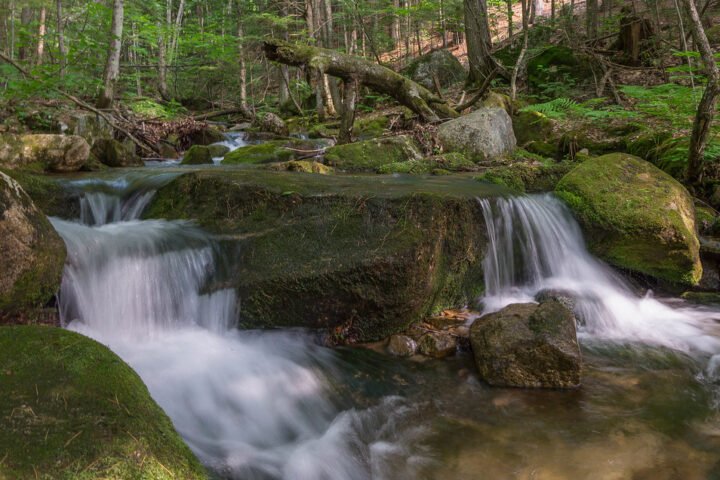
In the backcountry, Leave No Trace guidance is to camp at least 200 feet, or about 70 adult steps, from lakes and streams. This protects fragile shoreline plants, keeps water clean and gives wildlife access to water. In developed campgrounds, use the designated sites, which are already placed with this in mind.
Camping a sensible distance from water has other benefits:
- Less condensation on your tent from damp air near the water.
- Fewer insects in many areas.
- Less risk from rising water after rain upstream.
- Quieter nights, since running water can be loud.
You still want water within a reasonable walk for drinking and cooking. Plan to filter or treat water from natural sources. For full details on low impact camping, see Leave No Trace.
What safety hazards should you check for?
Safety hazards to check for at a campsite include dead trees and branches overhead, signs of flooding, steep drop-offs, loose rock above you, wildlife activity and insect nests. Take a few minutes to walk around the site before you unpack. Moving your tent before dark is much easier than moving it at midnight.
| Hazard | How to spot it | What to do |
|---|---|---|
| Hazard trees | Dead limbs, cracked trunks, leaning trees | Pitch away from the fall zone |
| Flooding | Low ground, dry washes, debris lines | Move to higher ground |
| Rockfall | Loose rock or scree above the site | Camp away from the base of slopes |
| Wildlife | Tracks, droppings, food scraps | Store food properly and follow local rules |
| Insects | Ant mounds, wasp nests, standing water | Shift a short distance away |
| Lightning | Open, high ground with storms forecast | Choose lower, less exposed terrain |
In bear country, follow the food storage rules for the area, which may require a bear box, hang or approved canister. The National Park Service publishes park specific rules on wildlife and food storage.
How do you choose a campsite for comfort and privacy?
For comfort and privacy, think about shade, sun, noise and how close you are to shared facilities and other campers. A site near the toilets is convenient but busy. A site at the end of a loop is often quieter. Afternoon shade helps in summer, while morning sun helps you warm up on cool trips.
Things to weigh:
- Shade: useful in hot weather, but sites under heavy trees stay damp longer.
- Morning sun: dries the tent and warms you up after a cold night.
- Noise: roads, generators and group sites can be loud.
- Distance to facilities: close enough to reach safely at night, far enough to avoid foot traffic.
- Neighbors: space between sites matters more on busy weekends.
When booking, many campgrounds publish photos and site details. Use them to check shade, size and layout before you commit.
How do you choose a campsite in the backcountry?
In the backcountry, choose established campsites where they exist, or durable surfaces such as rock, gravel, dry grass or bare soil when they do not. Stay out of meadows and fragile vegetation, follow permit rules and keep your group’s footprint small. A good backcountry site looks as if no one camped there after you leave.
Backcountry site checklist:
- Check permit conditions, which may name specific zones or designated sites.
- Use an existing site if one is available, rather than creating a new one.
- Keep tents, kitchen and gear on durable surfaces.
- Set up cooking and food storage away from sleeping areas, following local guidance.
- Stay at least 200 feet from lakes and streams.
- Leave the site as you found it, or better.
Make sure you carry everything on a full checklist before heading out, including warm layers and a light. Our first-time camping checklist is a good place to start.
What are common campsite mistakes to avoid?
Common campsite mistakes include arriving too late to choose carefully, pitching in a low spot, camping under dead trees, setting up on a slope and camping right next to water. Most of these come down to rushing. Giving yourself daylight and a few minutes to look around solves the majority of problems.
- Arriving after dark. You cannot see hazards or ground conditions well.
- Choosing the softest grass. Soft, green spots are often wet or fragile.
- Ignoring the forecast. Wind and rain change which spot is best.
- Pitching across a slope. You will roll toward one wall all night.
- Skipping the hazard check. Dead branches can fall even on calm nights.
- Making a new site. In the backcountry, use existing sites to limit damage.
Tip: Pick a backup spot before you unpack. If your first choice turns out to be wet or lumpy, you can move quickly without searching again.
Your tent also affects which spots work. A freestanding tent can go on hard ground or platforms, while a staked tent needs soil that holds stakes well. If you are still shopping, see how to choose a camping tent. Your next step is to practice pitching on your chosen spot with how to set up a tent.
Frequently asked questions
What is the best ground to pitch a tent on?
The best ground to pitch a tent on is flat, firm and durable, such as a designated tent pad, packed soil, gravel or dry grass. It should be slightly raised so rain drains away, and free of roots and sharp stones. Avoid soft, green spots in hollows, which often hold water or protect fragile plants.
How far should a tent be from a campfire?
Keep your tent well away from any campfire, upwind if possible, so sparks and embers do not land on fabric. Many tents are made of materials that melt or burn quickly. Use existing fire rings only, follow local fire rules and restrictions, and never leave a fire unattended or use any flame inside a tent.
Should you camp under trees?
You can camp under healthy trees, which offer shade and some wind protection, but always check overhead first. Avoid dead trees, broken limbs and leaning trunks, which can fall without warning, especially in wind. Sites under dense trees can also stay damp longer, so balance shelter against how quickly your tent will dry.
What time should you arrive at a campsite?
Aim to arrive with at least a couple of hours of daylight left. That gives you time to choose a good spot, check for hazards, pitch your tent and set up camp before dark. Arriving early is especially helpful at first come, first served campgrounds, where the best sites often go first.
Sources and further reading
Featured photo: Boris Burnayev via Openverse (CC0).