On this page
Before your flight, confirm your booking and flight time, check in online, gather your ID or passport, review your airline’s baggage rules, pack liquids and electronics so they are easy to screen, and plan to arrive at the airport with plenty of time. On the day, keep documents within reach and check your gate on the departures board.
Airports feel stressful mostly when something is missed: a passport left at home, a bag that is too big, or a late start. This checklist breaks the process into a timeline, from a week before you fly to the moment you board, so you can tick items off calmly and in order.
Key takeaways
- Start your checks about a week out, then finish packing and check in the day before.
- Your ID or passport is the one item you cannot replace at the airport, so check it first.
- Read your airline’s baggage limits for your exact fare, because they vary by airline and ticket type.
- Pack liquids, laptops and power banks in your carry-on so you can reach them at security.
- Arrive early enough for check-in, bag drop and security. Many airlines suggest more time for international flights.
What should you do a week before your flight?
A week before your flight, confirm your booking details, check your passport or ID is valid, look up entry requirements for your destination, review your baggage allowance, and arrange transport to the airport. This gives you time to fix problems, such as an expiring passport or a missing visa, before they ruin the trip.
One week out checklist:
- Confirm your flight number, departure time and airport, including the terminal if listed.
- Check that the name on your ticket matches your ID or passport exactly.
- Check your passport’s expiry date. Many countries require it to be valid for some months beyond your stay.
- Look up visa or entry requirements for your destination and any transit countries.
- Read your airline’s carry-on and checked bag rules for your fare type.
- Buy or confirm travel insurance if you want it.
- Book airport parking, a ride, or check public transport times.
- Tell your bank you are traveling if your bank asks for this.
For international trips, our international travel checklist of documents to bring covers passports, visas, insurance papers and backups in more detail. If you have not chosen cover yet, read how to choose travel insurance before you fly.
What should you do the day before your flight?
The day before your flight, check in online if your airline allows it, download or print your boarding pass, finish packing, weigh your bags if you can, charge your devices and confirm your ride to the airport. Then lay out your documents, wallet and phone in one place so nothing gets left behind in the morning.
Day before checklist:
- Check in online, usually opening about a day before departure for many airlines.
- Save your boarding pass to your phone and take a screenshot as backup.
- Check the flight status for schedule changes.
- Finish packing and set aside your carry-on with travel essentials.
- Weigh checked bags at home if you have a luggage scale.
- Charge your phone, power bank, headphones and laptop.
- Set an alarm with extra time built in.
- Put your passport or ID, wallet and phone in the same bag or pocket.
Tip: Keep digital copies of your passport, ID and booking confirmations somewhere you can reach offline. Our guide on how to keep copies of your travel documents explains simple, secure ways to do it.
What documents do you need at the airport?
At the airport, you need a valid photo ID for domestic flights or a valid passport for international flights, plus your boarding pass on paper or your phone. You may also need a visa, an electronic travel authorization, proof of onward travel, or other entry documents depending on your destination. Keep them together in an easy-to-reach pocket.
| Document | Domestic flight | International flight |
|---|---|---|
| Photo ID | Required | Usually your passport |
| Passport | Sometimes accepted as ID | Required |
| Boarding pass | Required | Required |
| Visa or travel authorization | Rarely | Depends on destination |
| Travel insurance details | Useful | Useful, sometimes required |
| Booking confirmations | Useful | Useful for immigration questions |
In the US, adults flying domestically need an acceptable ID, such as a REAL ID compliant license or a passport. Rules can change, so check tsa.gov for the current list of accepted IDs. For international trips, check the US State Department’s travel.state.gov for entry requirements by country.
Regional notes for UK, Canada and Australia
UK travelers can check foreign travel advice and entry rules on gov.uk. Canadian travelers can use the Government of Canada’s travel advice pages. Australian travelers can check Smartraveller. Each covers passports, visas and entry rules by destination.
How do you pack for airport security?
Packing for airport security means keeping liquids within the size limits and in one clear bag, placing laptops and large electronics where you can remove them quickly, and leaving banned items at home. Pack your carry-on in layers so screening items sit near the top. This speeds up the line and reduces the chance of a bag search.
Security packing checklist:
- Put liquids, gels and aerosols in travel-size containers that meet the limit.
- Place all of them in one clear, resealable bag.
- Pack your laptop and tablet near the top of your bag.
- Keep power banks and spare lithium batteries in your carry-on, not your checked bag.
- Check for forgotten items such as pocket knives, large scissors or full-size liquids.
- Wear shoes that slip off easily, in case you need to remove them.
- Empty your pockets into your bag before you reach the line.
In the US, the TSA liquids rule is often called 3-1-1: containers of 3.4 ounces (100 milliliters) or less, in one quart-size bag, one bag per passenger. Medications and baby formula have exceptions, but you may need to declare them. Limits and screening rules can vary by country and airport, so check before you go.
Our guide on how to pack a carry-on bag shows how to organize your bag so security is quick. For chargers and batteries, see travel tech essentials.
When should you arrive at the airport?
You should arrive at the airport early enough to check in, drop bags, clear security and reach your gate before boarding starts. Many airlines suggest arriving about two hours before a domestic flight and about three hours before an international flight. Allow more time at busy airports, during holidays, or if you are checking bags.
Factors that mean you should leave extra time:
- Checking bags rather than flying carry-on only.
- Flying at a large, busy airport or during a holiday period.
- Traveling with kids, pets, mobility needs or special equipment.
- Unfamiliar airport, or a terminal you need to reach by shuttle.
- Unreliable traffic, parking or public transport on the way.
Always follow your airline’s own guidance, which may be more specific. Check-in and bag drop counters often close a set time before departure, and that cutoff can be earlier than you expect.
What should you do when you arrive at the airport?
When you arrive at the airport, find your terminal, check the departures board, drop any checked bags, then go straight through security. After security, find your gate first, then get food or shop. Keep your boarding pass and ID in hand until you are past security, then store them safely.
Airport arrival checklist:
- Go to the correct terminal for your airline.
- Check the departures board for your flight status and check-in area.
- Drop checked bags at the counter or self-service bag drop.
- Keep your boarding pass and ID ready for security.
- Put liquids and electronics in bins as instructed.
- Repack your bag right after screening, and check you have everything.
- Walk to your gate and confirm the departure time.
- Then get food, water and use the restroom.
Tip: Take a photo of your checked bag and its tag receipt. If your bag is delayed, the photo makes it much easier to describe it to the airline.
What should be in your carry-on bag?
Your carry-on should hold everything you cannot lose or might need during the flight: documents, wallet, phone, medication, chargers, valuables, a change of clothes for long trips, snacks and an empty water bottle. If your checked bag is delayed, a well-packed carry-on keeps you comfortable for the first day.
Carry-on essentials:
- Passport or ID and boarding pass.
- Wallet, cards and some local currency if traveling abroad.
- Phone, charger and power bank.
- Prescription medication in original containers.
- Glasses, contact lenses and supplies.
- Valuables and electronics.
- Change of underwear and a basic outfit.
- Toiletries in travel sizes.
- Snacks and an empty refillable water bottle.
- Headphones, a book or downloaded entertainment.
- Warm layer such as a sweater, since cabins can feel cool.
For longer flights, our long-haul flight essentials list adds comfort items for sleep and hydration.
How do you handle delays, gate changes and missed flights?
To handle delays, gate changes and missed flights, keep your airline app notifications on, watch the departures boards, and stay near your gate as boarding time approaches. If your flight is canceled or badly delayed, contact the airline right away through the app, phone or counter, since rebooking options can fill up quickly.
What to do if plans change:
- Check the airline app for automatic rebooking options.
- Join the rebooking line and call or message the airline at the same time.
- Keep receipts for meals or hotels in case they can be claimed.
- Check your travel insurance policy for delay or missed connection coverage.
- Know your passenger rights, which vary by country and airline.
Insurance can sometimes help with costs from delays. Our guide to travel insurance explained describes typical coverage types so you know what to look for in your policy.
What are the most common airport mistakes?
The most common airport mistakes are forgetting your ID or passport, misreading baggage limits, packing liquids or power banks in the wrong bag, arriving too late, and going to the wrong terminal. Most of these are prevented by checking details a day before and keeping documents in one dedicated place.
- Forgetting documents. Put them in one place the night before.
- Assuming baggage rules. Read your exact fare’s allowance.
- Packing power banks in checked bags. Keep them in your carry-on.
- Leaving liquids buried in your bag. Pack them near the top.
- Cutting it close. Leave buffer time for traffic and lines.
- Ignoring gate changes. Check the boards and app regularly.
- Not checking passport validity. Some countries need months of validity left.
Printable airport checklist: before you leave home
The printable airport checklist below gathers the key tasks into one quick list you can save or print before you leave home. Tick each item the day before your flight and again before you walk out the door. If every line is checked, you are ready for the airport.
| Item | Why it matters |
|---|---|
| Passport or ID packed and valid | You cannot fly without it |
| Boarding pass saved or printed | Needed at security and the gate |
| Visa or travel authorization | Some destinations require it before boarding |
| Baggage allowance checked | Avoids fees and repacking at the counter |
| Liquids in one clear bag | Speeds up security screening |
| Laptop and power bank in carry-on | Batteries belong in the cabin |
| Medication in carry-on | Stays with you if bags are delayed |
| Phone and devices charged | Boarding pass and maps stay available |
| Ride or parking confirmed | Protects your buffer time |
| Flight status checked | Catches schedule changes early |
Once your airport day is sorted, the rest of the trip gets easier. Our step by step guide on how to plan a trip helps with everything else, from budgets to bookings.
Frequently asked questions
How early should I get to the airport?
Many airlines suggest arriving about two hours before a domestic flight and about three hours before an international one. Add extra time if you are checking bags, flying from a large airport, traveling at a busy time or with children. Always follow your airline’s own advice, and note when check-in and bag drop close.
What should I do the night before a flight?
The night before a flight, check in online, save your boarding pass, finish packing, charge your devices and set an alarm with spare time. Put your passport or ID, wallet and phone together in one place. Check your flight status and confirm how you are getting to the airport in the morning.
Can I bring a power bank on a plane?
You can usually bring a power bank on a plane in your carry-on, but not in checked luggage, because of lithium battery safety rules. Some airlines also limit the battery capacity or number of power banks you can carry. Check your airline’s rules and the security agency for your departure country before you fly.
What ID do I need to fly domestically in the US?
To fly domestically in the US, adults need an acceptable photo ID, such as a REAL ID compliant driver’s license or a US passport. The full list of accepted IDs is published by the TSA and can change. Check tsa.gov before your trip, especially if your license is not REAL ID compliant.
What should I do if I miss my flight?
If you miss your flight, contact your airline as soon as possible through its app, phone line or airport counter. Many airlines can rebook you, though fees and options depend on your fare. Act quickly, because seats on the next flights can fill up. Check your travel insurance policy for possible coverage.
Sources and further reading
- Transportation Security Administration
- US State Department: travel.state.gov
- UK government foreign travel advice
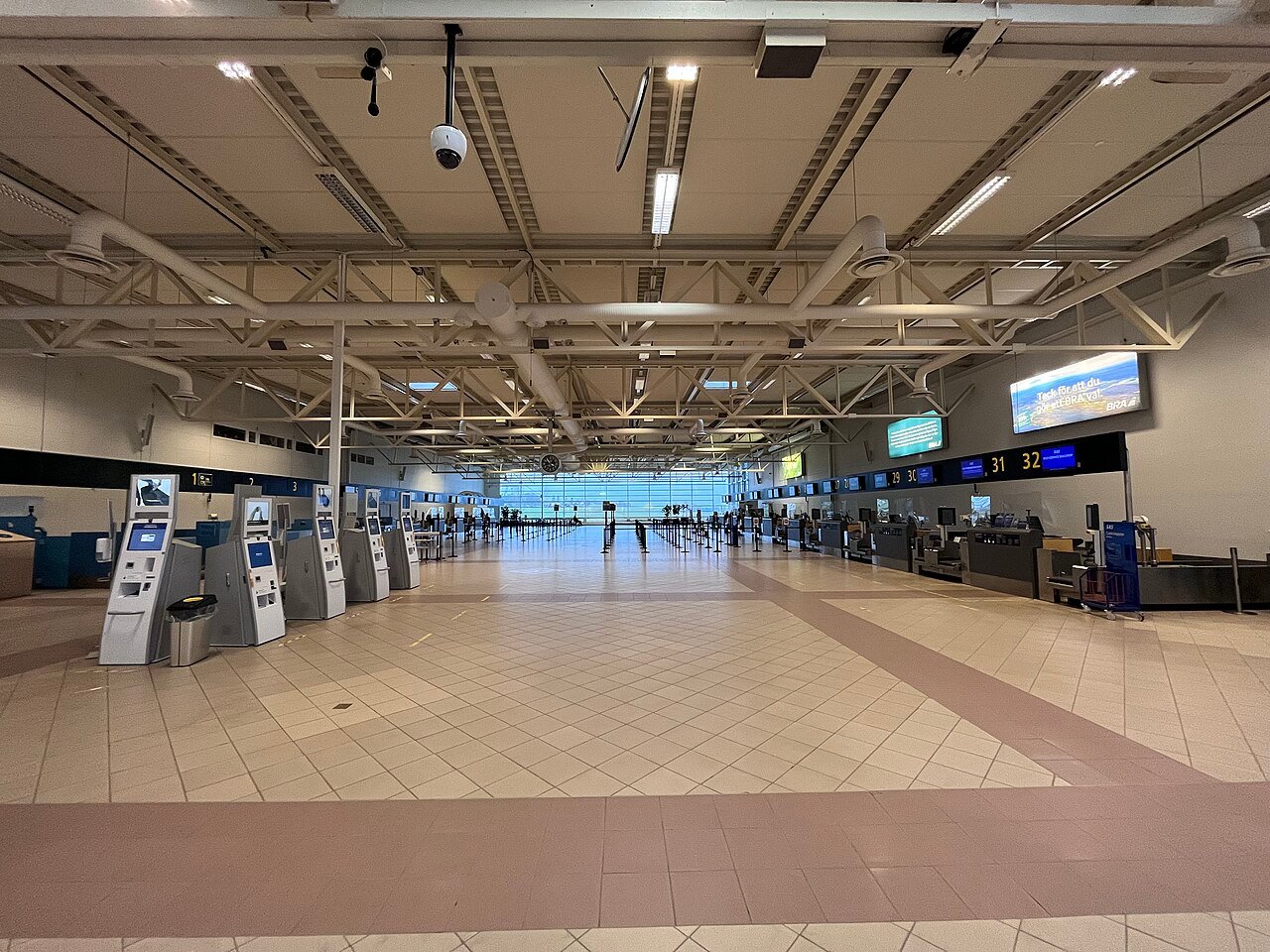
Featured photo: Rasunda1937 via Openverse (CC0).