On this page
To stay organized while traveling, keep one central place for every booking and document, give each item in your bag a fixed home, use pouches or packing cubes to group things, and run a quick reset routine each evening. Organization on the road is less about gear and more about small, repeated habits.
This list covers how to organize your plans and documents, your luggage, your money and your electronics, plus daily routines that stop chaos from building up. It works for a short city break, a multi-city trip or a long road trip, and it is written for travelers in the US, UK, Canada and Australia.
Key takeaways
- Keep every booking, ticket and confirmation in one place, with an offline copy.
- Give each item a permanent home in your bag, and always put it back there.
- Use packing cubes or pouches to group clothing, toiletries, cables and documents.
- Run a five-minute reset each evening: charge devices, repack, check tomorrow’s plan.
- Split money and cards across at least two places so one loss does not stop your trip.
Why does staying organized while traveling matter?
Staying organized while traveling matters because it saves time, money and stress. When you know where your passport, charger and booking details are, you move through airports, check-ins and day trips calmly. Disorganization leads to missed trains, lost items, repeated purchases and wasted hours searching through bags in hotel rooms.
The payoff shows up in small moments:
- Faster transitions. Packing up and checking out takes minutes, not an anxious hour.
- Fewer losses. Items with a fixed home are easy to spot when they are missing.
- Less spending. You do not buy a second charger or another toothbrush because you could not find the first.
- More attention for the trip. When logistics are under control, you notice the place you came to see.
Organization starts before you leave. A clear plan and a complete packing list, such as our travel essentials checklist, make everything that follows easier.
How do you organize travel plans and bookings?
Organize travel plans and bookings by keeping every confirmation, ticket and reservation in one central place, such as a single document, a dedicated email folder or a trip planning app. Order it by date, include addresses and check-in times, and save an offline copy on your phone in case you lose signal.
1. Create one master trip document
List each day with transport, accommodation, booking references, addresses, check-in times and contact numbers. Keep it short and scannable.
2. Use an email folder or label
Forward every confirmation to one folder as soon as you book. Searching a single folder is far quicker than digging through your inbox.
3. Try a trip planning app
Some apps collect bookings automatically from your email and build a timeline. Our guide to useful travel apps for planning a trip explains the main types and what to look for.
4. Save everything offline
Download tickets, maps and confirmations so they work without data. Screenshots are a simple backup.
5. Share the plan
Send a copy to someone at home. It helps them reach you and doubles as a backup if your phone is lost.
| What to track | Where to keep it | Backup |
|---|---|---|
| Flights and trains | Master document and airline or rail app | Screenshot or printout |
| Accommodation | Master document with address and check-in time | Email folder |
| Tours and tickets | App or email folder | Offline download |
| Rental cars | Master document with pickup details | Printed confirmation |
| Emergency contacts | Phone and paper card | Shared with someone at home |
How do you organize your luggage while traveling?
Organize your luggage while traveling by using packing cubes or pouches to group items, giving each group a permanent spot in your bag, and packing heavy items close to your back or the wheels. Keep a small, easy-to-reach section for daily essentials so you are not unpacking everything to find sunscreen or a charger.
6. Use packing cubes or pouches
Group clothing by type or by day, and keep toiletries, cables and medications in their own pouches. Our guide on how to pack a carry-on bag shows a simple layout.
7. Give everything a home
Decide where each item lives, such as passport in the inner zip pocket and chargers in the top pouch, and always put it back.
8. Separate clean and dirty clothes
A lightweight laundry bag or a spare cube keeps worn clothes away from clean ones and makes laundry stops quick.
9. Keep an essentials zone
Put items you reach for every day, like your phone charger, sunglasses, snacks and a rain layer, in an outer pocket or the top of your bag.
10. Choose luggage that suits the way you organize
Bags with clamshell openings, internal dividers and well-placed pockets make organizing easier. Our guide on how to choose carry-on luggage covers the features worth looking for. Backpackers can use the same ideas in our guide on how to pack a backpack efficiently.
Tip: Pack the same way for every trip. When your toiletries, cables and documents always live in the same pouches and pockets, you can pack in minutes and spot a missing item instantly.
How do you keep documents and valuables organized?
Keep documents and valuables organized by storing your passport, ID, cards and cash in one secure, dedicated spot on your body or in your daypack, with a backup card and copies stored separately. Use a hotel safe or locked bag for items you do not need that day, and check them each time you move.
11. Use a travel document wallet
A single wallet or pouch for passport, boarding passes and key cards keeps everything together at airports and borders.
12. Split your money
Carry one card and daily cash with you. Keep a backup card and emergency cash somewhere else, such as a locked bag in your room.
13. Keep copies
Store digital copies of your passport, ID and insurance details in a secure place you can reach from any device, plus a paper copy in a different bag.
14. Do a valuables check at every move
Before leaving a room, train or café, check for passport, phone, wallet and keys. A quick routine prevents most losses.
For more on protecting what you carry, read our guide on how to keep your valuables safe while traveling.
How do you organize electronics and chargers when traveling?
Organize electronics and chargers when traveling by keeping all cables, plugs and adapters in one dedicated pouch, using a charger with multiple ports to cut clutter, and charging everything at the same time each night. Label or color-code cables if you carry several, and keep your power bank and phone cable in an easy-reach pocket.
15. Use one tech pouch
A single pouch for cables, wall chargers, adapters and earbuds ends the hunt for a lost cord.
16. Reduce the number of chargers
A multi-port charger and cables that work with more than one device mean fewer items to track.
17. Charge on a schedule
Plug everything in when you get back each evening. Morning starts are much smoother with full batteries.
18. Back up your photos
Set your phone to back up photos when on Wi-Fi, so a lost phone does not mean lost memories.
Our travel tech essentials guide to chargers, adapters and power banks explains what to bring.
What daily routines keep you organized on a trip?
Daily routines keep you organized on a trip by stopping small messes from building up. A five-minute evening reset to charge devices, repack used items and check tomorrow’s plan, plus a quick morning check of essentials before you leave, will prevent most of the stress that comes from scrambling on travel days.
19. Evening reset
- Plug in your devices.
- Put dirty clothes in the laundry bag.
- Repack anything you took out.
- Check tomorrow’s times, tickets and directions.
- Lay out what you will wear and carry.
20. Morning check
Before you leave your room, check phone, wallet, keys, passport if needed, water and any tickets for the day.
21. Track spending as you go
Log purchases each evening in a notes app or budget app. It keeps your budget on track and helps you spot card problems early. Our guide on how to travel on a budget has more money tips.
22. Keep a small “out” bag
A small daypack or crossbody bag with daily essentials means you are not hauling your full luggage around or reorganizing it every time you go out.
How do you stay organized on a road trip or multi-city trip?
Stay organized on a road trip or multi-city trip by packing a small overnight bag for each stop so you do not unpack everything every night, keeping car essentials in fixed bins, and reviewing your route and bookings at the start of each day. The more you move, the more a consistent system matters.
23. Use an overnight bag
On road trips and fast-moving itineraries, a small bag with one or two nights of essentials saves you from unloading the whole car or suitcase.
24. Organize the car in zones
Keep snacks and water in one bin, navigation and chargers in the front, emergency items in the trunk, and trash bags handy. Our road trip car essentials guide lists what belongs where.
25. Review each morning
Check the day’s route, check-in time and any reservations before you set off.
26. Repack fully every few stops
A full repack every few days keeps clutter from creeping in. Our guide on how to plan a multi-city trip helps you pace your stops so there is time for it.
What are common travel organization mistakes?
Common travel organization mistakes include scattering bookings across apps and emails, packing without a system, keeping all cards and cash in one place, letting chargers and cables tangle loose in your bag, skipping offline backups, and never resetting your bag. Most of these come from rushing, and they get worse as a trip goes on.
- Bookings everywhere. Scattered confirmations lead to missed check-ins.
- No fixed homes. Items that wander are items that get lost.
- One wallet for everything. A single loss can stop your trip.
- No offline copies. Weak signal at the wrong moment is stressful.
- Overpacking. More stuff means more to organize. Pack lighter.
- Skipping the evening reset. Small messes grow into big ones.
- Unpacking fully at every stop. On short stays, live out of a small bag instead.
Which organizing tools are worth bringing?
Organizing tools worth bringing include packing cubes or zip pouches, a tech pouch, a document wallet, a small laundry bag, a toiletry bag that meets carry-on liquid rules, and a daypack for daily outings. Choose a few simple tools that match the way you pack rather than buying every gadget available.
| Tool | What it organizes | Who benefits most |
|---|---|---|
| Packing cubes | Clothing by type or day | Most travelers |
| Tech pouch | Cables, chargers, adapters | Anyone with several devices |
| Document wallet | Passport, cards, tickets | International travelers |
| Laundry bag | Worn clothes | Longer trips |
| Toiletry bag | Liquids and personal care | Carry-on travelers |
| Daypack or crossbody bag | Daily essentials | City and day trips |
Start with what you already own, then add tools that solve a real problem from a past trip. For your next step, use our travel planning checklist for beginners to set up your next trip with these habits built in.
Frequently asked questions
How do I keep my suitcase organized while traveling?
Use packing cubes or pouches to group items, give each group a fixed spot, and separate clean and dirty clothes with a laundry bag. Keep daily essentials in an outer pocket or at the top. Repack anything you take out each evening, and on short stays, live out of a small bag rather than unpacking fully.
What is the best way to organize travel documents?
Keep your passport, ID, boarding passes and key cards in one dedicated document wallet or pocket, and always return them there. Save digital copies somewhere secure that you can reach from any device, and carry a paper copy in a separate bag. Keep all bookings in one master document or email folder with offline backups.
Do packing cubes really help you stay organized?
Packing cubes help many travelers because they group items, make it easy to find things without unpacking, and keep a bag tidy over a long trip. They also make it easier to move between accommodations. They do not reduce weight, so combine them with a lighter packing list. Zip pouches or bags can do a similar job.
How do I keep track of my travel expenses?
Log purchases each evening in a notes app, spreadsheet or budget app, and check your bank app regularly for unexpected charges. Set a daily spending target before you leave. Keeping receipts for larger purchases in one envelope or pouch helps too, especially if you may need them for insurance claims or reimbursement.
How can I stay organized on a long trip?
Build simple routines and repeat them: an evening reset, a morning check and a full repack every few days. Do laundry on a regular schedule, back up photos when you have Wi-Fi, and review your bookings each week. Replace or discard items you are not using so your bag stays light and easy to manage.
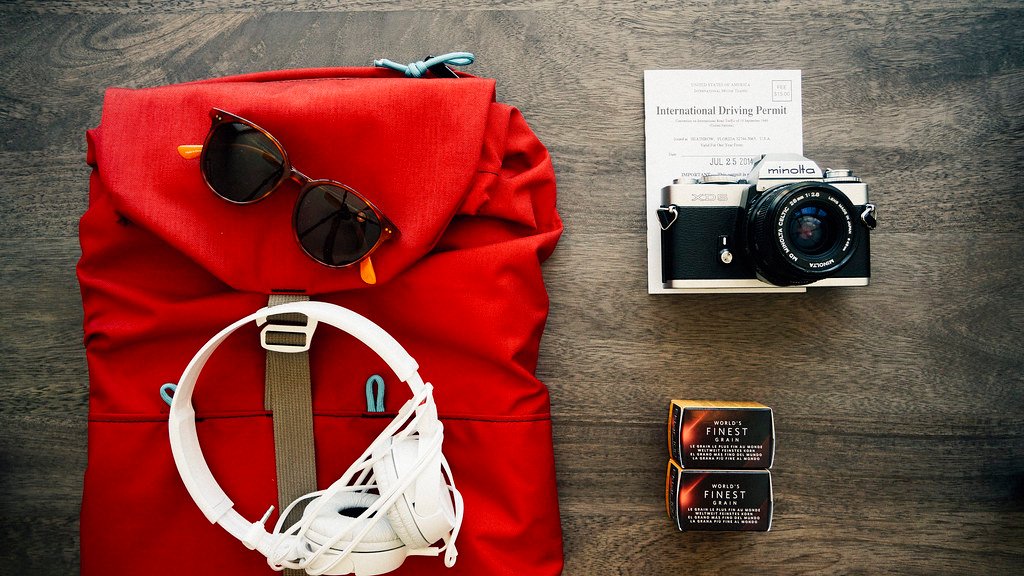
Featured photo: pixellaphoto via Openverse (CC0).