On this page
To walk safely at night, make yourself visible with reflective gear and a light, choose well-lit routes with sidewalks, walk facing traffic where there is no sidewalk, and stay alert by keeping headphones low or off. Tell someone your route if you walk alone, carry a charged phone, and wear shoes with good grip for dark, uneven ground.
Night walking can be peaceful and is often the only time busy people can fit in exercise. The tips below are grouped by visibility, route choice, personal safety, gear and weather, with a gear table, a short pre-walk checklist and the common mistakes to avoid.
Key takeaways
- Be seen: wear reflective items on moving parts of your body and carry or wear a light.
- Pick familiar, well-lit routes with sidewalks, and save new routes for daylight.
- Where there is no sidewalk, walk facing oncoming traffic, as far from the road as you safely can.
- Stay alert. Keep music low or use one earbud, and look up from your phone.
- Share your route and expected return time, and carry a charged phone.
- Adjust for weather and season: rain, ice and early darkness add risk.
Is it safe to walk at night?
Walking at night can be safe when you make yourself visible to drivers, choose well-lit routes you know, and stay aware of your surroundings. The biggest risks are usually traffic, trips and falls on uneven ground, and personal safety concerns in isolated areas. Simple preparation reduces most of these risks.
Traffic is a key concern. Drivers often struggle to see pedestrians in the dark, especially those in dark clothing. The National Highway Traffic Safety Administration advises pedestrians to walk on sidewalks when available, face traffic when there is no sidewalk, and wear reflective materials or use a flashlight at night.
Uneven pavement, curbs, roots and potholes are harder to see after dark. A light and sensible footwear make a big difference.
Personal safety varies by place and time. Your instincts, local knowledge and route choice all matter. If an area feels unsafe, choose another route or walk with company.
How do you make yourself visible when walking at night?
Make yourself visible when walking at night by wearing reflective materials on your ankles, wrists and torso, adding a light such as a headlamp or clip-on LED, and choosing bright or light-colored outer layers. Reflective items on moving parts of your body catch drivers’ attention better than items on your torso alone.
1. Wear reflective gear
Reflective vests, bands, strips on jackets and shoes bounce light back to drivers. Reflective bands on ankles and wrists move as you walk, which helps drivers recognize you as a person.
2. Carry or wear a light
A headlamp lights the ground ahead and makes you visible. A clip-on LED, either steady or flashing, on your front or back adds visibility from behind. Carry spare batteries or keep rechargeable lights topped up.
3. Choose light or bright colors
Dark clothing blends into the night. Light or bright layers help, but reflective materials do much more after dark than color alone.
4. Light your pet too
If you walk a dog, use a reflective or lighted collar and leash.
| Visibility gear | Where to wear it | Why it helps |
|---|---|---|
| Reflective ankle and wrist bands | Lower legs and arms | Movement catches drivers’ attention |
| Reflective vest or jacket | Torso | Large reflective surface |
| Headlamp | Head | Lights your path and shows where you are |
| Clip-on LED light | Front and back | Visible from a distance |
| Reflective shoe details | Feet | Movement near the ground |
| Light-colored outer layer | Body | Helps in low light |
Tip: Test your visibility. Ask someone to stand where a driver would be and shine a flashlight toward you. You will quickly see which parts of your outfit reflect light and which do not.
How do you choose a safe night walking route?
Choose a safe night walking route by sticking to familiar, well-lit streets or paths with sidewalks, regular foot traffic and good sight lines. Avoid isolated trails, unlit parks and roads with no shoulder after dark. Try new routes in daylight first so you know the surface, crossings and any tricky sections before walking them at night.
5. Walk familiar routes
Night is not the time to explore. Use routes you know well in daylight.
6. Choose well-lit, busy areas
Streets with lighting, open shops and other people tend to feel and be safer than empty, dark paths.
7. Prefer sidewalks and dedicated paths
Sidewalks and separated walking paths keep you away from traffic. Avoid narrow roads with no shoulder.
8. Plan a loop near home
A short loop near home lets you cut the walk short if the weather turns or you feel uneasy.
9. Scout routes in daylight
Note potholes, broken curbs, steps and poorly lit sections. Our guide on how to find good walking routes near you explains how to find and test routes.
How should you walk near traffic at night?
When walking near traffic at night, use sidewalks whenever possible. Where there is no sidewalk, walk facing oncoming traffic so you can see vehicles approaching, and stay as far from the road as safely possible. Cross at marked crossings or intersections, make eye contact with drivers, and never assume a driver has seen you.
- Use sidewalks and paths whenever they are available.
- Face oncoming traffic where there is no sidewalk.
- Cross at crosswalks or intersections, where drivers expect pedestrians.
- Look left, right and left again before crossing, and keep looking as you cross.
- Make eye contact with drivers before stepping out.
- Watch for turning vehicles and cars backing out of driveways.
- Avoid distractions such as texting while crossing.
UK readers will find similar advice in the Highway Code, including walking on the right-hand side of the road, facing oncoming traffic, where there is no pavement. Rules and road layouts vary, so follow local guidance wherever you are.
How do you stay personally safe walking at night?
Stay personally safe when walking at night by telling someone your route, carrying a charged phone, staying alert to your surroundings and trusting your instincts. Walk with a friend or group when you can, keep valuables out of sight, and change your route or head somewhere busy if anything feels wrong.
10. Share your route
Tell someone where you are going and when you expect to be back. Many phones and apps can share your live location with trusted contacts.
11. Stay alert
Keep headphones low or use only one earbud so you can hear traffic, cyclists and people around you. Keep your eyes up rather than on your screen.
12. Trust your instincts
If a person, place or situation makes you uneasy, cross the street, change direction or head to a busy, well-lit place such as a shop.
13. Walk with others
Walking with a friend, partner or group adds safety and company. Some communities have walking groups that meet in the evening.
14. Carry essentials
Bring your phone, ID, a small amount of money and your keys. Keep valuables out of sight.
15. Know when to call for help
If you feel threatened or see an emergency, call 911 in the US or your local emergency number.
What should you wear for night walking?
For night walking, wear reflective items, a light, comfortable shoes with good grip and layers suited to the temperature. Evenings often get cooler quickly, so bring an extra layer. In rain, add a waterproof jacket with reflective details. Avoid all-dark outfits, which make you much harder for drivers to see.
- Shoes with good grip: Choose supportive, well-fitted walking shoes with tread that handles wet surfaces. Our guide on how to choose walking shoes explains what to look for, and hiking boots vs trail shoes helps if you walk on rougher paths.
- Layers: Temperatures drop after sunset. A light insulating layer and a windproof or waterproof jacket keep you comfortable.
- Hat and gloves: Useful on cold evenings.
- Reflective details: Look for jackets, shoes and accessories with built-in reflective strips.
For a full kit list, see our walking gear checklist for beginners.
How do weather and season affect night walking?
Weather and season affect night walking by changing visibility, footing and how quickly you get cold. Rain and fog make you harder to see and reduce traction. Ice and wet leaves can be slippery. Winter brings early darkness, so more walks happen at night. Adjust your gear, route and pace for the conditions.
| Condition | Extra risk | What to do |
|---|---|---|
| Rain | Poor visibility, slippery ground | Extra reflective gear, waterproof jacket, slower pace |
| Fog | Drivers see you later | Bright light, reflective gear, avoid busy roads |
| Ice and frost | Slips and falls | Shoes with good grip, traction aids if needed, short steps |
| Wet leaves | Slippery surfaces | Watch footing, choose cleared paths |
| Cold | Getting chilled | Layers, hat, gloves |
| Early winter darkness | More time walking at night | Plan lit routes, carry a light every day |
If you travel in winter, our guide on how to travel in winter offers tips for staying safe in cold, dark conditions away from home.
Night walking tips for different situations
Night walking tips vary by situation. Walking with a stroller needs extra lighting on the stroller itself. Nordic walking with poles needs clear paths and visible pole tips. Walking a dog needs a lighted collar. Fitness walking at pace needs smooth, well-lit routes where you can see the surface ahead.
Walking with a stroller
Add lights and reflective strips to the stroller frame so it is visible from the front, sides and back. Choose smooth sidewalks and well-lit crossings. Our guide to walking with a stroller covers gear and route choice.
Nordic walking
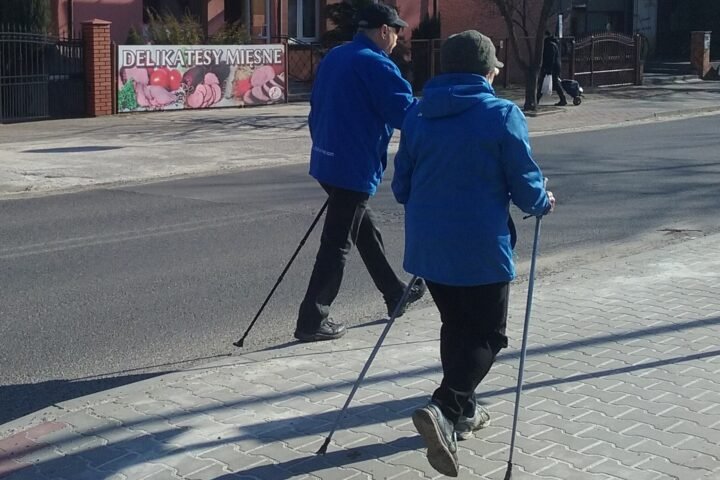
Poles add stability on uneven ground, but they can catch in cracks you cannot see. Use a headlamp and familiar paths. See Nordic walking for beginners for technique basics.
Walking a dog
Use a reflective or lighted collar and a short leash near roads. Keep your dog close at crossings.
Fitness walking
If you walk at night for exercise, choose a lit loop where you can keep a steady pace safely. Our guide on how to start walking for exercise helps you build a routine.
Common night walking mistakes
The most common night walking mistakes are wearing dark clothing with no reflective gear, walking with the flow of traffic on roads without sidewalks, wearing noise-canceling headphones, trying unfamiliar routes after dark and not telling anyone where you are going. Each one is easy to fix before you head out.
- Wearing all-dark clothing without reflective items
- Walking with your back to traffic on roads without sidewalks
- Listening to loud music in both ears
- Looking at your phone while crossing
- Exploring new or isolated routes after dark
- Forgetting a light or letting batteries run down
- Wearing shoes with worn or slippery soles
- Not sharing your route or return time
Tip: Keep a small night walking kit by the door: a headlamp, reflective bands and a clip-on light. When everything is in one place, it is easy to grab and go.
What should you check before a night walk?
Before a night walk, check that your light is charged, your reflective gear is on, your phone has battery, and someone knows your route. Look at the weather, choose a familiar route and dress in layers. A quick check takes less than a minute and makes the walk safer and more relaxed.
- Light charged or spare batteries packed
- Reflective bands, vest or jacket on
- Phone charged and with you
- Route chosen and shared with someone
- Weather checked
- Comfortable shoes with good grip
- Extra layer for cooling temperatures
- Keys, ID and a small amount of money
Evening walks are a great way to fit movement into a busy day. For more ideas, see our guide on outdoor habits for busy people.
Frequently asked questions
Which side of the road should you walk on at night?
When there is no sidewalk, walk on the side of the road facing oncoming traffic, so you can see vehicles approaching and step aside if needed. In the US this means the left side. Use sidewalks whenever they are available, and stay as far from the traffic lane as you safely can.
What should you wear to walk at night?
Wear reflective items such as bands on your ankles and wrists, a reflective vest or jacket, and a headlamp or clip-on light. Choose comfortable shoes with good grip and layers suited to the temperature. Avoid all-dark clothing, because drivers can find it very hard to see pedestrians who are not wearing reflective gear.
Is it safe to walk alone at night?
Walking alone at night can be safe if you choose familiar, well-lit routes, stay alert, carry a charged phone and share your route with someone. Trust your instincts and change direction or head to a busy place if something feels wrong. Walking with a friend or group adds extra safety.
Should you wear headphones when walking at night?
It is safer to avoid headphones or keep the volume low when walking at night, so you can hear traffic, cyclists and people around you. If you do listen to music or podcasts, use only one earbud or open-ear headphones, and stay especially alert near roads and crossings.
What kind of light is best for walking at night?
A headlamp is often best for walking at night because it lights the ground ahead and keeps your hands free. Adding a clip-on LED light on your back makes you more visible from behind. Choose a light that is bright enough for your route, and keep it charged or carry spare batteries.
Sources and further reading
Featured photo: Image Catalog via Openverse (CC0).