On this page
To choose where to stay in a city, start with what you plan to do, then pick a neighborhood close to those places or a short walk from good public transport. Balance location against budget, safety, noise and the type of stay you want. A slightly pricier room in the right area often saves time and transport costs.
Where you stay shapes the whole trip: how much you walk, how much you spend getting around, how safe you feel at night and how rested you are each morning. This decision guide walks through the factors in order, with a simple scoring method you can use for any city.
Key takeaways
- Decide what matters most first: sights, food, nightlife, quiet, budget or easy transport.
- Staying near a major transit line or station often matters more than being in the exact center.
- Research neighborhoods, not just hotels. The area sets the feel of your stay.
- Read recent reviews for noise, safety and cleanliness, and check the location on a map yourself.
- For short trips, location usually beats a lower price farther out.
What should you consider when choosing where to stay in a city?
When choosing where to stay in a city, consider location, transport links, budget, neighborhood character, safety, noise and the type of accommodation that suits your trip. Start with your priorities and plans, then narrow down neighborhoods that fit them before comparing individual hotels or rentals. This keeps you from choosing a nice room in the wrong place.
The main factors, roughly in order of importance for most trips:
- What you plan to do: sights, business, food, nightlife, shopping or relaxing.
- Getting around: walking distance, metro or train lines, airport links.
- Budget: total cost including transport, not just the nightly rate.
- Neighborhood feel: lively or quiet, historic or modern, local or touristy.
- Safety: how the area feels day and night, especially walking home.
- Accommodation type: hotel, vacation rental, hostel or guesthouse.
- Practical details: noise, elevators, air conditioning, luggage storage, check-in times.
If you have not researched the city yet, start with our guide on how to research a destination before traveling. It covers maps, local transport and seasonal events that affect where you might want to stay.
How do you decide which neighborhood is best?
Decide which neighborhood is best by mapping the places you most want to visit, then looking for areas that sit close to them or on a direct transit line. Then check each area’s character, safety and price. The best neighborhood is the one that fits your plans and style, not necessarily the most famous one.
A simple neighborhood shortlist method:
- Mark your top sights, restaurants or meeting places on a digital map.
- Look for clusters. The area in the middle of the biggest cluster is often a good starting point.
- Add the main metro, train or tram lines to the map view.
- Shortlist two or three neighborhoods near those clusters or lines.
- Read neighborhood guides and recent traveler reviews for each one.
- Use street view to look at the streets around your shortlist.
| Neighborhood type | Pros | Cons | Best for |
|---|---|---|---|
| Historic center | Walk to major sights | Higher prices, crowds, noise | First-time visitors, short trips |
| Lively nightlife area | Restaurants, bars, energy | Late-night noise | Couples, groups, night owls |
| Residential area | Quieter, local feel, often cheaper | Fewer sights nearby | Longer stays, families |
| Business district | Good transport, many hotels | Quiet in the evening | Business trips, weekend deals |
| Near main station | Easy arrivals and day trips | Can feel busy or less charming | Multi-city trips, early departures |
| Near the airport | Convenient for early flights | Far from the city | One-night layovers |
Tip: Search the neighborhood name with words like “where to stay” and “quiet” or “noise” in travel forums. Local tips often mention streets or areas worth avoiding.
How important is location compared to price?
Location is usually more important than price for short city trips, because a central or well-connected base saves time, transport costs and energy every day. For longer stays, a cheaper area farther out can make sense if it has reliable transit. Compare the total cost of staying farther out, including fares and travel time.
How to compare fairly:
- Add the daily transport cost for each option.
- Estimate travel time to your main sights and multiply by the number of days.
- Consider late nights: will you need a taxi back to a cheaper area?
- Think about rest breaks. Being close lets you return to rest during the day.
A rough rule many travelers use is that the shorter the trip, the more location matters. On a weekend break, an extra hour of travel each day is a big share of your time. On a two-week stay, a quieter, cheaper base with a good train line may be the better choice. Our guide on how to create a travel budget helps you see where accommodation fits into your overall spending.
How do public transport links affect where you stay?
Public transport links matter because they determine how quickly and cheaply you can reach the places you want to visit. Staying within a short walk of a metro, train or tram station on a major line can make an area farther out feel central. Check how late transit runs and whether there is a direct airport link.
Transport checks before you book:
- Find the nearest station and walk the route on a map.
- Check which lines stop there and where they go.
- Look at how late the last services run, especially on weekends.
- Check for a direct airport train or bus.
- Note any hills or stairs on the walk, especially with luggage.
- Look for bike share or scooter options if you plan to use them.
If you will arrive late at night or leave early in the morning, a short, simple route from the airport or station makes travel days much easier. Our guide on how to make travel days less stressful has more ideas for smoother arrivals and departures.
How do you check if a neighborhood is safe?
Check if a neighborhood is safe by reading recent traveler reviews, looking at official travel advice, and asking hosts or hotels about the area. Look at street view for lighting, busy streets and shops. Areas that are busy and well lit in the evening often feel more comfortable when walking back to your accommodation.
Safety research steps:
- Read your government’s travel advice for the country and city. US travelers can use travel.state.gov, and UK travelers can check gov.uk.
- Read recent reviews that mention walking at night or feeling safe.
- Look at street view for lighting, open shops and foot traffic.
- Ask your hotel or host about the area and the best route from transit.
- Check whether the accommodation has a secure entrance and staffed reception or clear self check-in.
Safety also means avoiding common traps around tourist hotspots. Our guide on how to avoid common tourist scams explains what to watch for in busy areas, train stations and nightlife districts.
Should you stay in a hotel, rental, hostel or guesthouse?
Whether you should stay in a hotel, rental, hostel or guesthouse depends on your budget, group size, trip length and how much service you want. Hotels offer convenience and support. Vacation rentals offer space and kitchens. Hostels offer low cost and social spaces. Guesthouses often offer a local feel with a personal touch.
| Type | Best for | Watch out for |
|---|---|---|
| Hotel | Short trips, convenience, late arrivals | Higher prices in central areas |
| Vacation rental | Families, groups, longer stays | Cleaning fees, local rules, self check-in |
| Hostel | Solo travelers, tight budgets | Shared rooms, noise |
| Guesthouse or B&B | Local feel, personal service | Fewer amenities, set check-in times |
| Aparthotel | Longer stays with some service | Fewer facilities than full hotels |
For a detailed comparison, our guide on hotel vs vacation rental explains the trade-offs in cost, space, flexibility and support.
How do you read reviews and listings for location?
Read reviews and listings for location by checking the exact address on a map, reading recent reviews for mentions of noise, safety and transport, and looking at what reviewers say about the walk to stations. Listing photos show the room, not the street, so use maps and reviews to understand the surroundings before you book.
What to look for in reviews:
- Mentions of street noise, bars or construction nearby.
- Comments about the walk to the nearest station.
- Notes about hills, stairs or no elevator.
- Feedback on safety at night.
- How recent the reviews are.
Red flags in listings:
- No exact address or map location until after booking.
- Vague descriptions like “close to everything” with no distances.
- Photos that only show the room interior.
- Many recent reviews mentioning noise, cleanliness or check-in problems.
Read a mix of positive and negative reviews. A single bad review may be bad luck, but several recent ones mentioning the same problem are worth taking seriously.
How do your travel style and group affect where to stay?
Your travel style and group affect where to stay because families, couples, solo travelers, business travelers and groups each need different things. Families often prefer quieter areas with space and parks. Solo travelers often value safety and social spaces. Night owls want lively areas. Business travelers want transport links and quiet rooms.
| Traveler | Priorities | Neighborhood ideas |
|---|---|---|
| Families | Space, quiet, parks, kitchen | Residential areas near transit |
| Solo travelers | Safety, social spaces, central location | Well-connected, busy areas |
| Couples | Atmosphere, restaurants, walkability | Historic or dining districts |
| Business travelers | Transport, quiet, work space | Business districts or near stations |
| Groups | Space, shared areas, budget | Rentals in lively but practical areas |
| Night owls | Bars, late transport | Nightlife districts, with a quiet room |
If this is your first trip abroad, our first-time international travel tips cover other planning steps, from money to communication, that go along with choosing where to stay.
What are common mistakes when choosing where to stay?
Common mistakes when choosing where to stay include booking only on price, ignoring transport links, choosing a famous area without checking noise, trusting listing photos over maps, and booking too far from the places you want to see. Another frequent mistake is not checking the exact address before booking a vacation rental.
- Choosing on price alone. Factor in transport time and cost.
- Ignoring transit. Check the walk to the nearest station.
- Forgetting about noise. Nightlife areas and main roads can be loud.
- Trusting photos only. Use maps and street view.
- Booking far from your plans. Map your must-see places first.
- Skipping recent reviews. Conditions change over time.
- Overlooking check-in details. Late arrivals need flexible check-in.
Tip: If you are torn between two areas, choose the one closer to where you will spend your evenings. Getting home late is often harder than getting out in the morning.
How do you make the final decision?
Make the final decision by scoring your shortlisted options against your top priorities, such as location, transport, budget, safety and noise. Give each one a simple rating, then compare totals. This keeps the decision practical and helps you avoid being swayed by one nice photo or a small price difference.
A simple scoring method:
- Pick your top five priorities.
- Rate each option from one to five on each priority.
- Add the scores for each option.
- Check the top choice against your budget.
- Read the latest reviews one more time before booking.
- Book a flexible rate if your plans might change.
If your trip covers more than one city, our guide on how to plan a multi-city trip helps you choose bases and connections for each stop. Before you go, use our international travel checklist of documents to bring so your booking confirmations and travel papers are ready.
Frequently asked questions
Is it better to stay in the city center?
Staying in the city center is often best for short trips and first-time visitors, because you can walk to many sights and save time. However, central areas can be more expensive and noisier. For longer stays or tighter budgets, a quieter area with a fast, direct transit line can be a better choice.
How far from the city center is too far?
There is no fixed distance that is too far. What matters is travel time and convenience. Many travelers are comfortable with a short transit ride on a direct line, but long rides with several changes eat into each day. Check how late transit runs, since getting back at night can be the hardest part.
How do I know if a neighborhood is touristy or local?
Look at maps, reviews and street view. Touristy areas tend to have many souvenir shops, chain restaurants and tour offices. Local areas usually have more groceries, everyday shops and residential streets. Neighborhood guides, travel forums and hosts can also describe the feel of an area before you book.
Should I book a hotel near the airport?
Booking near the airport makes sense for a very early flight, a late arrival or a short layover. For longer stays, it usually means spending a lot of time and money traveling into the city. Most travelers do better staying in the city and allowing enough time to reach the airport.
What should I check before booking accommodation in a city?
Before booking, check the exact location on a map, the walk to the nearest transit, recent reviews about noise and safety, check-in times, cancellation terms and the total price including fees and taxes. Also confirm details that matter to you, such as an elevator, air conditioning or luggage storage.
Sources and further reading
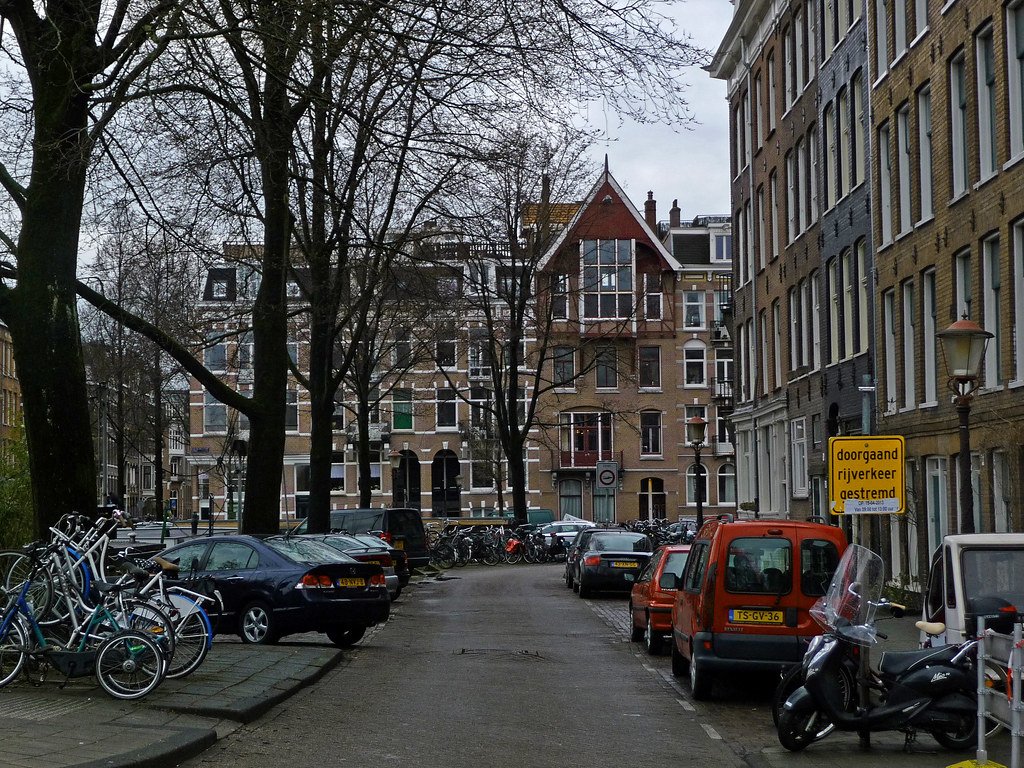
Featured photo: Amsterdam free photos pictures of the Dutch city via Openverse (CC0).