On this page
Backpack capacity is the volume a pack can hold, measured in liters. As a rough guide, packs under 30 liters suit day trips and daily carry, 30 to 50 liters suit overnight and weekend trips, and 50 liters and up suit multi-day hikes or long travel with bulky gear.
Those bands are a starting point, not a rule. The right number depends on how much you carry, how compact your gear is, the weather, and whether the bag has to fit an airline’s carry-on limit. This guide explains what the liter figure really measures, how to translate it into real gear, and how to pick a size you will not regret.
Key takeaways
- Capacity is listed in liters (L). One liter is about 61 cubic inches, so a 40 L pack holds roughly 2,440 cubic inches.
- Brands measure volume differently, so two packs with the same number can feel quite different in use.
- Pick capacity from your bulkiest likely load, not your lightest one, then add a small margin.
- Torso fit matters as much as volume. A big pack that fits well carries better than a small one that does not.
- For flying, the outside dimensions decide whether a bag counts as carry-on, not the liter rating.
What does backpack capacity in liters actually mean?
Backpack capacity in liters is the internal volume a pack can hold when it is full and closed. A 30 liter pack, in theory, holds the same space as thirty one-liter bottles. The number usually covers the main compartment and often includes lids, pockets and stretch panels, which is why listed figures vary between brands.
Think of the liter rating as the size of the box, not a promise about what will fit. Soft clothing compresses into corners. Rigid items like a bear canister, a laptop or a hard-shell toiletry case waste space around their edges. Two people can fill the same 40 liter pack very differently.
Do all brands measure liters the same way?
No. There is an industry test method for measuring pack volume, but brands do not all use it, and some count external pockets, mesh panels or an extended collar while others count only the main body. Treat a listed capacity as a close estimate. If you are between two sizes, compare packs in a store with your own gear, or check how the brand describes what the figure includes.
How do liters convert to cubic inches?
One liter equals about 61 cubic inches. Older US packs were often listed in cubic inches, so a quick conversion helps when you compare older gear or read older trail guides.
| Liters | Approx. cubic inches |
|---|---|
| 20 L | 1,220 |
| 30 L | 1,830 |
| 40 L | 2,440 |
| 50 L | 3,050 |
| 65 L | 3,965 |
What size backpack do you need for each type of trip?
The size backpack you need comes down to trip length and how much gear the trip requires. As a rule of thumb, 15 to 30 liters covers daily carry and day hikes, 30 to 50 liters covers one or two nights, and 50 liters or more covers longer trips, winter conditions or shared group gear.
The table below shows common capacity bands and what each one tends to suit. Use it as a map, then adjust for your own kit.
| Capacity | Typical use | What it usually holds |
|---|---|---|
| 10 to 20 L | Errands, short walks, city days | Water, snacks, a light layer, phone and wallet |
| 20 to 30 L | Day hikes, commuting with a laptop | The Ten Essentials, rain jacket, lunch, extra layer |
| 30 to 40 L | Long day hikes, light overnight trips, carry-on travel | Day gear plus a warm layer, or a few days of clothes |
| 40 to 50 L | Weekend backpacking, one-bag travel | Compact sleep system, small shelter, two days of food |
| 50 to 65 L | Multi-day backpacking | Full camping kit, several days of food, cooking gear |
| 65 L and up | Long trips, winter camping, carrying gear for others | Bulky insulation, a four-season tent, extra fuel |
Day trips and daily carry
For a day on the trail, the pack needs to hold your safety basics, food, water and spare layers. The Ten Essentials for hiking take up more room than many beginners expect once you add a rain shell and an insulated jacket. A 20 to 30 liter pack handles most three-season day hikes. If you hike in cold weather or carry gear for a child, look closer to 30 liters or a bit above.
Overnight and weekend trips
One or two nights in the backcountry is where volume starts to depend heavily on your gear. A compact down sleeping bag and a small tent can fit in 40 liters. A synthetic bag, a larger tent and a full cook set may push you toward 50 liters or more.
Multi-day trips
Food is the variable that grows. Each extra day adds food weight and bulk, and longer trips often mean more fuel and more layers. Many backpackers on trips of four days or more land in the 50 to 65 liter range.
Travel and one-bag trips
For travel, a pack in the 30 to 45 liter range is a popular choice for people who want to avoid checking a bag. Airline limits are set by outside dimensions and sometimes weight, so check your carrier before you buy.
Tip: Lay out every item for your most demanding planned trip on the floor before you shop. The pile tells you more than any size chart.
How do you choose the right backpack capacity for your gear?
Choosing the right backpack capacity starts with your bulkiest realistic load. List the trip you plan to do most often, gather the gear for it, and estimate the space it fills. Then choose a pack with a modest margin, enough for food and a spare layer, without so much room that you are tempted to overpack.
- Pick your most common trip type, not your dream trip.
- Gather the gear for that trip, including food and water.
- Note the bulkiest items, such as the sleeping bag, tent and insulated jacket.
- Estimate total volume, or test the gear in a store pack of a known size.
- Add a small margin for food, a warm layer or a bit of shopping.
- Check the pack’s torso range and hip belt fit before you buy.
Why your gear’s packed size matters more than the pack
The same trip can need very different volumes depending on gear. Down insulation compresses smaller than synthetic insulation of similar warmth. A freestanding tent with long poles can take more space than a trekking pole shelter. A bear canister, where required, takes a fixed block of space that cannot be squeezed. When you upgrade to more compact gear, your ideal pack size often drops.
Should you size up or down?
Size up if you hike in cold or wet places, carry gear for others, or use bulky older gear. Size down if your kit is compact, you hike in warm weather, or you want to keep weight in check. Extra space tends to fill up, so a pack that is far too large often leads to a heavier load than you need.
If you are still deciding between a lighter bag for day use and a larger one for camping, our comparison of a daypack vs. a hiking backpack walks through the differences in frame, suspension and features.
How does backpack capacity relate to fit and comfort?
Backpack capacity and fit are separate measurements. Capacity describes how much the pack holds, while fit depends on your torso length and hip size. A pack that matches your torso puts most of the weight on your hips, which matters more as capacity grows. Larger packs carry heavier loads, so fit becomes more important.
Many hiking packs come in more than one torso size, and some brands list slightly different capacities for each size. A small and a large version of the same model may differ by a few liters. That is normal, so check the figure for the size you will actually wear.
How capacity affects suspension
Packs under about 30 liters often have a simple frame sheet or no frame at all, because they carry light loads. As capacity rises, packs usually add a stiffer frame, a padded hip belt and load lifter straps. Those features help when the load gets heavy. They also add some weight of their own.
Why a full pack carries better than a half-empty one
A pack that is far bigger than your load lets gear shift and sag. Compression straps help pull the load in close to your back. If your pack often feels half empty, a smaller size may carry better. For a step-by-step guide to adjusting straps and finding your torso length, see how to fit a hiking backpack.
What features change how much a backpack really holds?
Features that change real capacity include the lid, stretch pockets, side pockets, hip belt pockets, an extendable collar and external attachment points. These let you carry more than the main compartment alone suggests, or keep often-used items handy. They also explain why two packs with the same listed liters can feel different once loaded.
| Feature | How it affects usable space |
|---|---|
| Floating or removable lid | Adds top storage, and some can be taken off to save weight |
| Extendable collar | Lets you overfill the main body for food or a bulky layer |
| Front stretch pocket | Holds a wet rain jacket or layers you swap often |
| Side water bottle pockets | Frees inside space for other gear |
| Hip belt pockets | Keeps snacks and a phone reachable without stopping |
| Compression straps | Shrink the pack when it is not full |
| Daisy chains and loops | Let you strap gear outside, though it can snag or swing |
Is it better to carry gear inside or outside?
Inside is usually better. Gear strapped to the outside can catch on branches, shift your balance and get wet. Outside attachment points work well for items like trekking poles or a foam pad, but most of your load should sit inside, close to your back.
Roll-top versus zip openings
Roll-top packs can expand or shrink a little depending on how many times you roll the opening. Zippered travel packs open like a suitcase, which makes packing easier but limits overfilling. If you value flexibility, a roll-top or extendable collar gives you some give on days when you carry extra food.
How do you compare capacity when buying a travel or hiking backpack?
Comparing capacity across backpacks works best when you look beyond the headline number. Check what the figure includes, the outside dimensions, the empty weight, the torso range and the opening style. Then compare packs within the same category, since a travel pack and a hiking pack of equal liters are built for different jobs.
- Listed liters: note whether pockets and the lid are included.
- Outside dimensions: these decide carry-on eligibility.
- Empty weight: a heavier pack may carry better, or may simply be heavier.
- Torso range: make sure your measurement falls inside it.
- Access: top-loading, panel-loading or clamshell opening.
- Weather protection: most pack fabrics are water resistant, not fully waterproof, so plan for a liner or cover in rain.
For a full walkthrough of the decision, start with our hub guide on how to choose a travel backpack, then use our side-by-side method for comparing travel backpacks.
What about carry-on size limits?
Airlines set carry-on limits by length, width and depth, and some also set a weight limit. Rules differ by airline and fare type, and budget carriers can be stricter. A soft pack can sometimes squeeze into a sizer when it is not full, but a stuffed pack may not. Always check your airline’s current rules before you travel.
UK, Canada and Australia note: carry-on limits are set by each airline, not by country, so a bag that works on one carrier may not work on another. Check the specific airline’s website for the route you are flying.
What are the most common backpack capacity mistakes?
The most common backpack capacity mistakes are buying for a rare dream trip, choosing too large a pack and then filling it, ignoring torso fit, and trusting the listed liters without checking what they include. Each one leads to a pack that feels heavy, awkward or too small on the trips you actually take.
- Buying for the trip you might take one day. Pick the size for the trips you do most often.
- Going too big “just in case”. Empty space invites extra gear, and extra gear adds weight.
- Ignoring food volume. Food for several days takes more room than many beginners plan for.
- Forgetting the bear canister. Where canisters are required, check that one fits inside.
- Skipping the fit check. A pack in the right size but the wrong torso length will still be uncomfortable.
- Assuming water resistance means waterproof. Line the pack with a bag in wet weather.
Tip: If you can only own one pack for now, many people find a mid-range size, roughly 35 to 45 liters, covers long day hikes, light overnights and carry-on travel reasonably well.
How should you pack a backpack to use its capacity well?
Packing a backpack well means placing heavy items close to your back and near the middle, filling gaps with soft items, and keeping essentials within reach. Good packing can make a smaller pack hold your whole kit and help a larger pack carry steadily. It also makes it easier to judge whether you truly need more liters.
- Put the sleeping bag or other light, bulky gear at the bottom.
- Place the heaviest items, such as food and water, in the middle, close to your spine.
- Fill gaps with soft clothing to stop gear from shifting.
- Keep the rain jacket, first aid kit and snacks near the top or in outer pockets.
- Tighten the compression straps once everything is in.
Try packing your gear at home before you buy, if a store or friend can lend you packs to test. Once you see how much space your kit takes, the right capacity usually becomes obvious.
What should you do next?
Start with your most common trip, gather the gear, and use the capacity bands above to narrow your choice to one or two sizes. Then focus on fit and features. Our guide on how to choose a travel backpack is the best next step, with a full checklist for narrowing down your options.
Frequently asked questions
Is a 40 liter backpack big enough for a week of travel?
A 40 liter backpack is enough for a week of travel for many people who pack light, wear layers and plan to do laundry. It is usually not enough for a week of backpacking with a tent and food. For city travel, packing cubes and a short clothing list help a 40 liter pack go further.
What size backpack is best for a day hike?
A pack of about 20 to 30 liters suits most day hikes. That range holds water, food, a rain jacket, a warm layer and the Ten Essentials. Choose the upper end for cold weather, long routes or if you carry gear for others. Choose the lower end for short, warm, well-traveled trails.
Does a bigger backpack weigh more?
A bigger backpack usually weighs more empty, because it uses more fabric and often has a sturdier frame and hip belt. The bigger effect is what you put inside. Extra space tends to get filled, so a pack much larger than you need often leads to a heavier total load on the trail.
How many liters is a carry-on backpack?
There is no single liter limit for carry-on bags, because airlines set limits by outside dimensions and sometimes weight. Many travelers find packs of roughly 30 to 45 liters fit common carry-on sizes, but this varies with the pack’s shape and how full it is. Always check your airline’s current rules.
Should I include external pockets when comparing liters?
Yes, if you can find out whether a brand includes them. Some listed capacities count the lid and outer pockets, while others count only the main compartment. When comparing two packs, read the product details or ask the retailer what the figure covers, so you compare like with like.
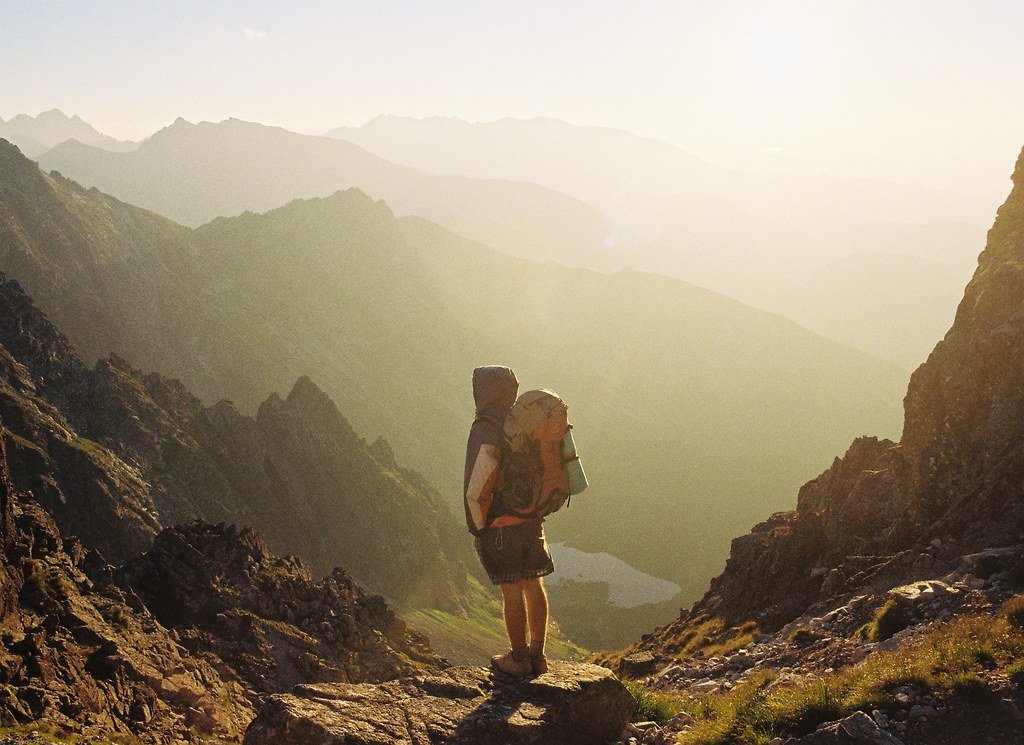
Featured photo: Image Catalog via Openverse (CC0).