On this page
To choose a sleeping bag, start with the lowest temperature you expect, then pick a bag whose comfort rating is at or below it. Next, choose the insulation (down for light weight and packability, synthetic for damp conditions and lower cost), a shape that fits how you sleep, and the right length. Finally, pair it with a sleeping pad that insulates you from the ground.
A sleeping bag is one of the most important purchases for camping and backpacking, because a cold night can ruin a trip. This buying guide explains each decision in plain terms, so you can compare any bag on a shelf or product page without relying on marketing language.
Key takeaways
- Choose by temperature rating first, using the comfort rating if the bag has a standardized ISO or EN rating.
- Down insulation is lighter and packs smaller for the warmth; synthetic insulation copes better with moisture and usually costs less.
- Mummy bags are warmest for their weight, rectangular bags are roomiest, and semi-rectangular bags sit in between.
- Get the right length: too short compresses insulation, too long leaves cold space to heat.
- Your sleeping pad provides insulation underneath you, so the bag and pad work as one system.
- Car campers can prioritize comfort and price, while backpackers usually prioritize weight and packed size.
What should you consider when choosing a sleeping bag?
When choosing a sleeping bag, consider five things in order: temperature rating, insulation type, shape, size and fit, and weight and packed size. The temperature rating keeps you safe and comfortable, the insulation affects weight and performance in damp weather, and the shape and fit decide how warm and comfortable the bag feels.
Here is a quick overview of the main decisions:
| Decision | What to look for | Why it matters |
|---|---|---|
| Temperature rating | Comfort rating at or below your expected low | Determines whether you sleep warm |
| Insulation | Down or synthetic | Affects weight, packed size, cost and wet performance |
| Shape | Mummy, semi-rectangular, rectangular or quilt | Trades warmth for room to move |
| Size | Length and width that fit your body | Avoids cold spots and compressed insulation |
| Weight and packed size | Matches how you travel | Critical for backpacking, less so for car camping |
| Features | Hood, draft collar, zipper design | Fine tunes warmth and comfort |
The right choice also depends on how you camp. A car camper can carry a heavier, roomier bag. A backpacker carries every ounce, so the warmth-to-weight balance matters much more.
How do sleeping bag temperature ratings work?
Sleeping bag temperature ratings estimate the lowest temperature at which a bag keeps a typical sleeper comfortable or safe. Many bags are tested to the ISO 23537 standard, which replaced the older EN 13537. These give a comfort rating, a lower limit rating and an extreme rating. For most people, the comfort rating is the best number to shop by.
| ISO or EN rating | What it means | How to use it |
|---|---|---|
| Comfort | A standard sleeper, often considered a cold sleeper, stays comfortable in a relaxed position | Best guide for most people and for cold sleepers |
| Lower limit | A standard sleeper, often considered a warm sleeper, stays warm curled up | Use only if you sleep warm |
| Extreme | A survival rating with a risk of hypothermia | Never plan around this number |
Not all bags use standardized testing. Some brands give a single rating based on their own methods, which makes direct comparison harder. When you see a single number without a standard named, treat it with caution.
Ratings also assume the sleeper uses an insulated sleeping pad and wears a base layer. Many people choose a bag rated roughly 10°F (about 5 to 6°C) colder than the coldest night they expect, as a buffer for unexpected weather and individual differences. Our guide to sleeping bag temperature ratings explained covers the testing method and how to read each label in more detail.
Tip: Look up the expected overnight low for the campground or trail itself, not the nearest town. Valleys, high elevations and open areas can be much colder than a weather report for a city suggests.
Should you choose a down or synthetic sleeping bag?
Choose a down sleeping bag if you want the lightest weight and smallest packed size for the warmth, and you can keep the bag dry. Choose a synthetic bag if you camp in damp conditions, want a lower price or prefer easy care. Down usually lasts longer with good care, while synthetic insulation can lose loft over time.
| Feature | Down | Synthetic |
|---|---|---|
| Warmth for weight | Higher | Lower |
| Packed size | Smaller | Larger |
| Performance when damp | Loses loft unless treated | Keeps more warmth when damp |
| Drying time | Slower | Faster |
| Price | Usually higher | Usually lower |
| Long-term durability | Long lasting with good care | Can lose loft with repeated compression |
| Care | Needs gentle washing and thorough drying | Easier to wash |
What does fill power mean for down sleeping bags?
Fill power measures how much space one ounce of down fills, which reflects its quality and loft. Higher fill power down traps more warmth for its weight, so a bag needs less of it. Fill weight, the total amount of down, also matters. Compare both numbers together rather than shopping by fill power alone.
What is treated or water-resistant down?
Treated down has a water-resistant finish that helps it keep loft longer in damp conditions. It does not make a bag waterproof, so you still need to protect it from rain and condensation. Some brands also certify their down under standards such as the Responsible Down Standard, which covers animal welfare in the supply chain.
Which sleeping bag shape is best?
The best sleeping bag shape depends on whether you value warmth and weight or room to move. Mummy bags taper toward the feet and include a hood, so they are warmest for their weight. Rectangular bags are roomy and comfortable but heavier and less warm. Semi-rectangular bags are a middle ground. Quilts drop the back and hood to save weight.
- Mummy: close fitting, efficient and warm, with a hood. Best for backpacking and cold nights. Restless sleepers may feel confined.
- Semi-rectangular or modified mummy: more room at the shoulders and knees, still fairly warm. A good all-round choice for many campers.
- Rectangular: plenty of room, often unzips flat like a blanket, and some can zip together. Best for car camping in mild weather.
- Double: two-person bags for couples car camping.
- Quilt: no zipper or back insulation, relies on the sleeping pad underneath. Popular with lightweight backpackers in mild to cool conditions.
Side sleepers and people who move a lot at night often prefer a semi-rectangular shape or a bag with stretch construction. If you have only ever slept in a rectangular bag, try lying in a mummy bag in a store before you buy.
How should a sleeping bag fit?
A sleeping bag should fit with a little room to move but no large empty spaces your body has to heat. Your head should sit comfortably in the hood and your feet should touch the footbox without pressing the insulation flat. Match the length to your height, and check shoulder width if you are broad or sleep on your side.
Most bags come in regular and long lengths, and some in short or wide versions. Check the manufacturer’s height range for each size. Some brands also make bags designed around women’s typical proportions, often with extra insulation in the footbox and torso. These can suit anyone who fits the shape and tends to sleep cold.
Fit checks when you try a bag:
- Get in wearing the layers you would sleep in.
- Zip the bag fully and cinch the hood around your face.
- Roll onto your side and back to see if the bag moves with you.
- Press your feet down to check they do not compress the footbox.
- Check that you can reach the zipper and draft collar easily.
What features matter on a sleeping bag?
The features that matter most on a sleeping bag are a well-shaped hood, a draft collar around the neck, a draft tube behind the zipper, an anti-snag zipper and a comfortable footbox. These details stop warm air escaping and cold air getting in. Extras such as stash pockets and pad sleeves add convenience rather than warmth.
| Feature | What it does | Who benefits most |
|---|---|---|
| Insulated hood | Holds warmth around your head | Cold weather campers |
| Draft collar | Stops warm air escaping at the neck | Anyone camping below mild temperatures |
| Draft tube | Insulated strip behind the zipper | All bags with long zippers |
| Anti-snag zipper | Reduces fabric catching | Everyone, especially at night |
| Two-way zipper | Lets you vent at the feet | Warm sleepers, variable weather |
| Shaped footbox | Gives feet room without compression | Back sleepers and tall users |
| Pad sleeve or straps | Keeps the bag on the pad | Restless sleepers, quilt users |
| Water-resistant shell | Sheds condensation and light moisture | Down bags, humid conditions |
Why does your sleeping pad matter as much as your bag?
Your sleeping pad matters as much as your bag because the insulation underneath you is crushed by your body weight and provides little warmth. The pad stops the cold ground from drawing heat away. A warm bag on a poorly insulated pad can still leave you cold, so think of the bag and pad as one sleep system.
Sleeping pads are rated by R-value, which measures resistance to heat flow. Higher numbers insulate better. Our guide on sleeping pad R-value explained shows how to match R-value to the season, and our guide on how to choose a sleeping pad covers foam, self-inflating and air pads.
How do you choose a sleeping bag for car camping vs. backpacking?
For car camping, choose a sleeping bag for comfort, room and value, since weight and packed size matter less. For backpacking, choose for warmth-to-weight ratio and packed size, usually a down or high-quality synthetic mummy bag or a quilt. Many people start with a car camping bag and add a lighter bag later if they move into backpacking.
| Use | Priorities | Common choice |
|---|---|---|
| Summer car camping | Comfort, room, price | Synthetic rectangular or semi-rectangular |
| Three-season car camping | Warmth and comfort | Synthetic or down semi-rectangular |
| Three-season backpacking | Weight, packed size, warmth | Down or synthetic mummy, or a quilt |
| Winter camping | Warmth, hood and draft protection | Cold-rated mummy with draft collar |
| Humid or wet climates | Moisture resistance | Synthetic or treated down with a water-resistant shell |
If you are new to camping, our camping for beginners guide explains how the sleeping bag fits with the rest of your first-trip gear.
What are common mistakes when buying a sleeping bag?
The most common mistakes when buying a sleeping bag are shopping by the lower limit or extreme rating instead of the comfort rating, ignoring the sleeping pad, choosing the wrong length and buying a heavy bag for backpacking. Another frequent mistake is assuming a summer bag will be fine for spring or fall nights in the mountains.
Other mistakes to avoid:
- Comparing bags with standardized ratings against bags with brand-only ratings as if they were equal.
- Buying a bag that is far warmer than you need for summer use, then overheating.
- Choosing a mummy bag without trying it if you are a restless side sleeper.
- Storing the bag compressed in its stuff sack between trips, which reduces loft.
- Washing a down bag with regular detergent or drying it on high heat.
How do you care for a sleeping bag so it stays warm?
Caring for a sleeping bag keeps the insulation lofty and warm for years. Air it out after each trip, store it loosely in a large sack rather than compressed, and use a liner to keep body oils off the fabric. Wash only when needed, following the care label, with a cleaner suited to down or synthetic fill.
Dry the bag thoroughly after washing, usually on low heat in a large dryer, and for down bags many people add clean dryer balls to help break up clumps. Never store a damp bag, as moisture can damage the insulation and cause odors.
Frequently asked questions
What temperature sleeping bag do I need?
Choose a sleeping bag whose comfort rating is at or below the coldest temperature you expect, and many campers add a buffer of several degrees for unexpected weather. Check the forecast low for your campsite elevation. If you sleep cold, rely on the comfort rating rather than the lower limit rating.
Is a down or synthetic sleeping bag better?
Neither is better for everyone. Down is lighter and packs smaller for the same warmth, making it popular for backpacking. Synthetic insulation keeps more warmth when damp, dries faster and usually costs less, making it a good choice for wet climates, car camping and budget-conscious campers.
Can I use a sleeping bag without a sleeping pad?
You can, but you will likely sleep colder and less comfortably. The insulation under your body compresses, so it provides little warmth against the cold ground. A sleeping pad adds insulation and cushioning. Even in summer, a basic foam or air pad makes a noticeable difference to warmth and comfort.
How long does a sleeping bag last?
How long a sleeping bag lasts depends on the insulation, how often you use it and how you care for it. Down bags can last many years with gentle washing and loose storage, while synthetic bags may lose loft sooner with repeated compression. Storing any bag uncompressed and dry helps it last.
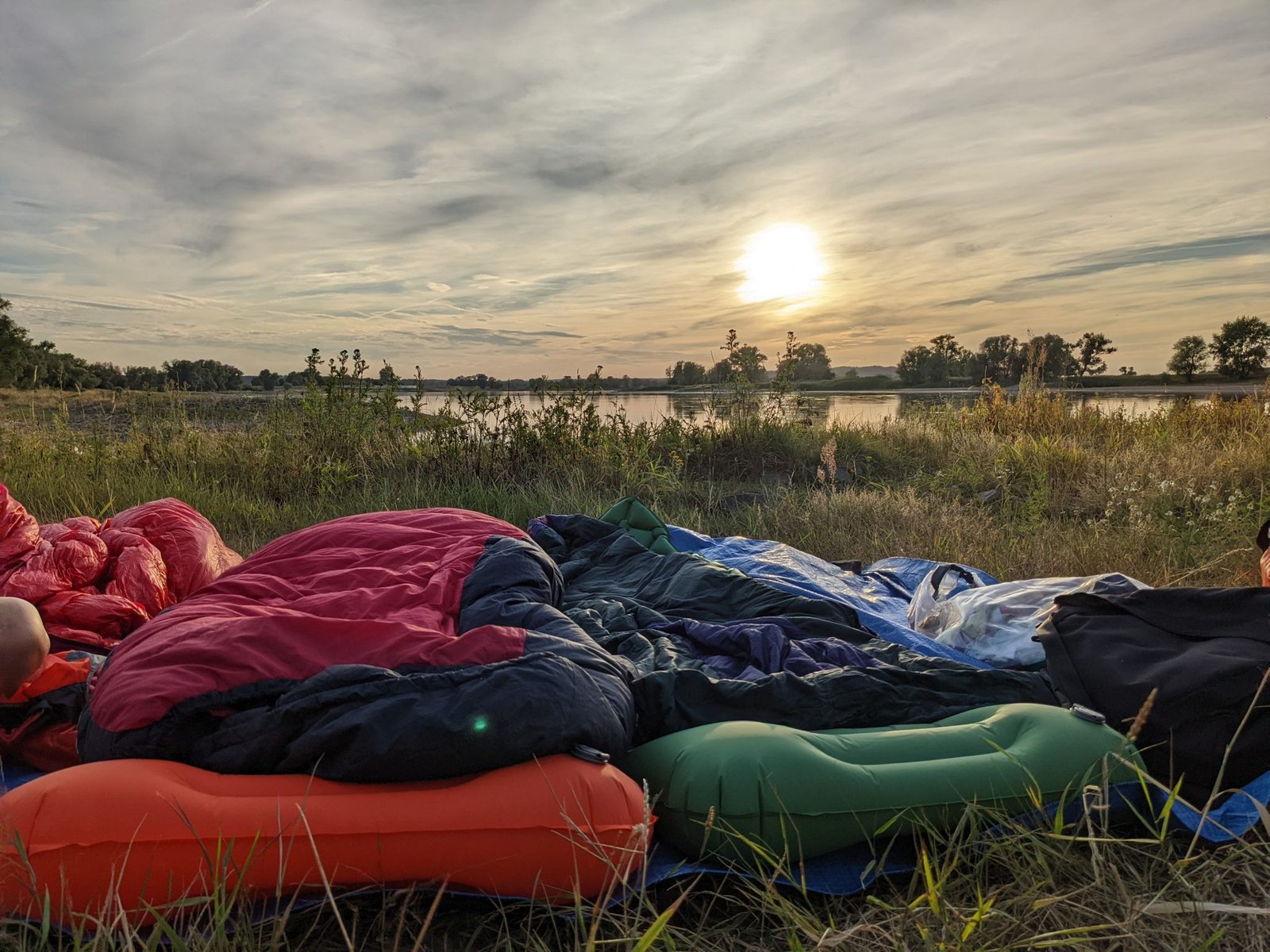
Featured photo: Frank Bueltge via Openverse (CC0).