On this page
To identify poison ivy, look for three leaflets on one stem, with the middle leaflet on a longer stalk. Poison oak also has three leaflets, but they are often lobed like an oak leaf. Poison sumac is different: it is a woody shrub with seven to thirteen leaflets in pairs and grows mainly in wet, swampy ground.
All three plants contain urushiol, an oily resin that causes an itchy, blistering rash in most people who touch it. Learning to spot them, in every season, is the best way to avoid a miserable week after a hike or a camping trip. This guide covers what each plant looks like, where it grows, common lookalikes and what to do if you touch one.
Key takeaways
- “Leaves of three, let it be” works for poison ivy and poison oak, but not for poison sumac, which has more leaflets.
- Poison ivy can be a ground cover, a shrub or a climbing vine, and old vines look like a hairy rope on tree trunks.
- Poison oak leaflets are usually lobed, and poison sumac grows in wet areas with pale, drooping berries.
- Urushiol stays on clothing, gear, tools and pet fur, so wash everything that touched the plant.
- Wash exposed skin quickly, and seek emergency care for trouble breathing, swelling of the face or a large, severe rash.
What do poison ivy, oak and sumac have in common?
Poison ivy, poison oak and poison sumac are related plants that all produce urushiol, an oily resin found in their leaves, stems and roots. When you brush against or damage the plant, the oil can transfer to your skin and cause an allergic rash. The rash, itching and blisters look much the same no matter which plant caused them.
According to the CDC, most people who are exposed to urushiol develop a skin reaction, and only a tiny amount is needed. A few facts matter for hikers and campers:
- The oil spreads by contact: You can get it from the plant itself or from clothing, boots, tools, gear or pets that touched it.
- It lasts: Urushiol can stay active on objects for a long time, so unwashed gear can cause a rash on a later trip.
- Smoke is dangerous: Burning these plants releases urushiol in smoke, which can cause serious breathing problems. Never burn them.
- All seasons: Bare winter stems and vines still contain the oil.
In the United States, these plants grow in nearly every state except Alaska and Hawaii, so most hikers will meet at least one of them sooner or later.
How do you identify poison ivy?
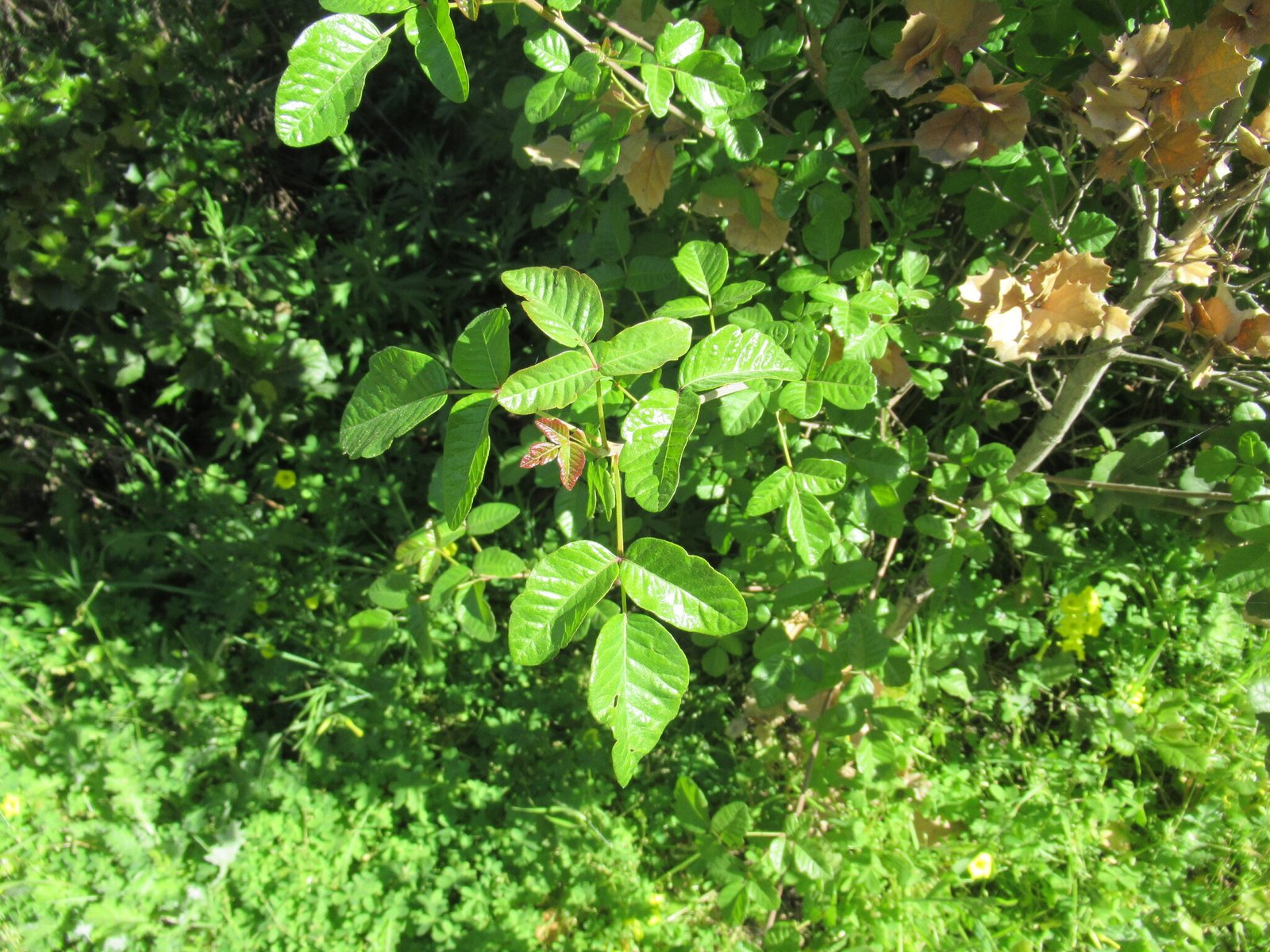
Identify poison ivy by its three leaflets per leaf, with the middle leaflet on a longer stalk than the two side leaflets. The leaflets can be glossy or dull, smooth edged or toothed, and they change color with the seasons. Poison ivy grows as a ground cover, a low shrub or a climbing vine with hairy aerial roots.
Poison ivy varies a lot, which is why it fools people. Look for these features together, not just one:
- Count the leaflets: there should be three on each leaf stem.
- Check the middle leaflet: it usually sits on a longer stalk than the side two.
- Look at the arrangement: leaves alternate along the stem rather than sitting in exact pairs.
- Look for vines: older plants climb trees and fences with fuzzy, hair-like roots.
- Check for berries: clusters of small whitish or pale green to yellowish berries may appear in late summer and fall.
Eastern poison ivy is often a climbing vine, while western poison ivy is usually a low shrub. In spring, new leaves can be reddish. In summer they turn green, and in fall they can be bright red, orange or yellow. In winter, look for the hairy rope-like vines on tree trunks.
Tip: A thick, hairy vine on a tree trunk is a strong sign of poison ivy, even in winter when there are no leaves. Do not grab it for balance or use it for firewood.
How do you identify poison oak?
Identify poison oak by its three leaflets with rounded lobes or scalloped edges, often resembling oak leaves. It usually grows as a shrub but can climb as a vine, especially in the West. Like poison ivy, it changes color through the seasons and may carry clusters of pale berries in late summer and fall.
There are two main types in the US:
- Pacific poison oak: Found along the West Coast. It can be a shrub, a dense thicket or a climbing vine, and leaves often turn red in summer or fall.
- Atlantic poison oak: Found mainly in the Southeast. It is usually a low shrub with fuzzy, lobed leaflets.
Poison oak leaflets can be shiny or dull and sometimes have fine hairs on the underside. Because the leaf shape varies, use the same group of clues as for poison ivy: three leaflets per stem, alternate leaves and pale berries. If a three-leaflet shrub looks like small oak leaves along a trail in California, Oregon or Washington, treat it as poison oak.
How do you identify poison sumac?
Identify poison sumac by its woody stems with seven to thirteen smooth-edged leaflets arranged in pairs along a reddish stem, with a single leaflet at the tip. It grows as a tall shrub or small tree in wet places like swamps, bogs and wet woods. Its berries are pale and hang in loose, drooping clusters.
Poison sumac breaks the leaves of three rule, so it is easy to miss. Watch for these clues:
- Leaflets: Seven to thirteen per leaf, in pairs, with one at the tip.
- Stems: Often red or reddish, especially where leaflets attach.
- Habitat: Wet, swampy or boggy ground, mostly in the eastern US.
- Berries: Glossy, pale yellow or cream colored, hanging downward.
Many harmless sumacs grow in drier ground and have red berries in upright, cone-shaped clusters. Poison sumac’s pale, drooping berries and wet habitat help tell them apart. If you are not sure, keep your distance.
How can you tell poison ivy from lookalike plants?
Tell poison ivy from lookalikes by checking several features together: three leaflets per leaf, alternate leaf arrangement, no thorns and, on vines, hairy aerial roots. Many common plants share one or two traits. Virginia creeper usually has five leaflets, boxelder seedlings have leaves in opposite pairs, and wild raspberries and blackberries have thorny stems.
| Plant | Leaflets | Key difference from poison ivy |
|---|---|---|
| Poison ivy | Three | Middle leaflet on longer stalk, alternate leaves, hairy vines |
| Poison oak | Three | Lobed leaflets like small oak leaves |
| Poison sumac | Seven to thirteen | Paired leaflets on red stems, wet habitat, pale drooping berries |
| Virginia creeper | Usually five | Leaflets spread from one point like a hand |
| Boxelder seedlings | Three to five | Leaves grow in opposite pairs |
| Raspberries and blackberries | Three to five | Thorny or prickly stems |
| Harmless sumacs | Many | Red, upright berry clusters, often in drier ground |
When in doubt, do not touch it. A quick photo and a careful look later is safer than handling a plant you cannot name. Many land managers and extension services publish local photo guides that show how these plants look in your area.
Where do poison ivy, oak and sumac grow?
Poison ivy, oak and sumac grow in many habitats, but they especially like edges: trail sides, forest borders, fence lines, riverbanks and disturbed ground. Poison ivy is widespread across much of the United States and southern Canada. Poison oak is most common on the West Coast and in the Southeast, while poison sumac favors wet, swampy areas.
Expect them in these places:
- Along the edges of trails, roads and campsites.
- Around tree trunks and on fences, where vines climb.
- Near streams, lakeshores and wetlands.
- In open woods and sunny clearings.
- In brushy areas where you might step off a trail for a break or bathroom stop.
That last point catches many people. Before you head off trail, scan the ground carefully. Our guide on how to go to the bathroom outdoors covers choosing a safe spot. The same checks help when you set up camp or string a line: our guide on how to pitch a tarp shelter reminds you to look around tie-off points, and how to choose a campsite covers scanning the ground before you pitch.
Regional note: UK readers are unlikely to meet these plants in the wild, though giant hogweed is a different plant hazard that can cause serious skin burns. Canadian readers will find poison ivy in many southern regions. In Australia, a related tree often called the rhus tree can cause similar skin reactions.
How do you avoid poison ivy on the trail?
Avoid poison ivy on the trail by staying on established paths, wearing long pants and sleeves in brushy areas, and checking the ground before you sit, kneel or step off trail. Clean your clothes, boots, gear and pets after any possible contact, since urushiol can linger and cause a rash later.
Build these habits into your hikes:
- Learn what the plants look like in your area before you go.
- Stay in the middle of the trail where possible, especially on narrow, overgrown paths.
- Wear long pants, long sleeves and closed shoes in areas with dense undergrowth.
- Check the ground before you sit for lunch or set down your pack.
- Keep dogs on a leash so they do not run through plants and bring the oil back to you.
- After the hike, wash clothes separately and wipe down boots, poles and gear.
A barrier layer and a small cleaning kit also fit naturally into the first aid part of the Ten Essentials for hiking. Some hikers carry a small bottle of soap or cleansing wipes for quick washing.
What should you do if you touch poison ivy?
If you touch poison ivy, oak or sumac, wash the skin as soon as possible with soap and plenty of cool water, or with rubbing alcohol or a poison plant wash, and scrub under your fingernails. Rinse often so the oil does not spread. Then wash clothing, gear and anything else that touched the plant.
The CDC recommends these first aid steps:
- Rinse the skin right away with soap and water, rubbing alcohol or a poison plant wash.
- Rinse frequently so the wash does not dry on the skin and spread the oil.
- Scrub under your fingernails with a brush.
- Remove and bag contaminated clothing until you can wash it.
- Clean tools, poles, boots and pack straps with soap and water.
For itching, the CDC mentions wet compresses, calamine lotion, hydrocortisone cream or oatmeal baths. Ask a pharmacist or doctor before using any medicine, especially for children, and read the label. For more general trail first aid, see our guide on basic first aid skills for hikers.
If water is scarce on the trail, treated water from a stream works for rinsing. Our guide on how to purify water in the backcountry covers safe methods.
When should you get medical help for a poison ivy rash?
Get emergency help right away for swelling of the face, lips or throat, or any trouble breathing, and if someone has inhaled smoke from burning plants. See a doctor for a rash on the face, eyes or genitals, a rash covering a large area, signs of infection or symptoms that do not improve with home care.
Use this guide to decide what to do:
| Situation | What to do |
|---|---|
| Mild, small rash with itching | Wash, use home care, monitor |
| Rash on face, eyes or genitals | Contact a doctor |
| Large area of rash or many blisters | Contact a doctor |
| Signs of infection such as pus or increasing pain | Contact a doctor |
| Trouble breathing or swelling of the face or throat | Call emergency services |
| Inhaled smoke from burning plants | Call emergency services |
| History of severe reactions to these plants | Seek medical care promptly |
In the US and Canada, call 911. In the UK, call 999 or 112, and in Australia, call 000. If you are far from help, use a satellite messenger or personal locator beacon if you carry one, and follow your emergency plan.
Common mistakes with poison ivy, oak and sumac
The most common mistakes are relying only on the leaves of three rule, ignoring bare winter vines, touching contaminated gear or pets, and burning brush that includes these plants. Another frequent mistake is waiting too long to wash after contact, which gives the oil more time to bind to skin.
Avoid these:
- Missing poison sumac: It has many leaflets, so the leaves of three rule does not help.
- Grabbing vines for balance: Hairy vines on trees are a common source of exposure.
- Forgetting gloves and tools: Oil on gloves, poles or trowels can cause a rash days later.
- Burning plants: Smoke can cause serious lung reactions. Never burn suspected plants.
- Petting a dog after a hike: Wash pets that ran through brush, wearing gloves.
- Assuming you are immune: Sensitivity can change over time.
If you are learning to read the land as part of building outdoor skills, our guide to basic navigation with a map and compass pairs well with plant identification, because both depend on paying close attention to your surroundings.
Frequently asked questions
Is the poison ivy rash contagious?
The rash itself is not contagious, and fluid from blisters does not spread it to other people. What spreads is urushiol oil that remains on skin, clothing, gear or pet fur. Once the skin and items are washed, the rash will not pass to someone else. New patches may appear because of slower reactions in some areas.
Can you get poison ivy in winter?
Yes. Poison ivy stems, vines and roots still contain urushiol in winter, even without leaves. Hairy vines on tree trunks are a common source of winter exposure, especially when people collect firewood or grab trees for balance. Never burn wood that may have poison ivy vines on it, since smoke can be dangerous.
How long after touching poison ivy does a rash appear?
A rash often appears within a day or two of contact, though timing varies. People who have never reacted before may take longer. Washing the skin quickly after contact can reduce or prevent a reaction. If the rash spreads to your face or a large area, or you have trouble breathing, get medical help.
Does leaves of three always mean poison ivy?
No. Many harmless plants, such as wild raspberries, blackberries and boxelder seedlings, also have three leaflets. Poison sumac has seven to thirteen leaflets, so the rule misses it entirely. Use several clues together, such as leaf arrangement, vines, berries and habitat, and avoid touching any plant you cannot identify with confidence.
Sources and further reading
Featured photo: Dorothy Johnson via Openverse (CC0).