On this page
Kayaking for beginners starts with three things: a stable recreational kayak, a properly fitted life jacket that you actually wear and calm, sheltered water close to shore. Learn a few basic strokes, check the weather and wind before you launch and paddle with a friend. Most people can enjoy their first outing within an hour of getting in the boat.
This guide explains the types of kayaks, the gear you need, how to get in and out, the core strokes, where to paddle and how to stay safe on the water. It is written for complete beginners planning their first paddle, whether you rent, take a lesson or borrow a boat.
Key takeaways
- Start on flat, sheltered water such as a small lake or slow river, and stay close to shore.
- Always wear a properly fitted life jacket approved for your country. Wear it, do not just bring it.
- Sit-on-top kayaks are the easiest for most beginners because they are stable and easy to get back on.
- Paddle with your torso, not just your arms, and hold the paddle with the blades facing the right way.
- Check the forecast and wind, dress for the water temperature and tell someone your plan.
- A lesson or guided tour is the fastest way to build skills and confidence.
What should you know before your first kayaking trip?
Before your first kayaking trip, know that the boat, the water and the weather matter more than fitness. Choose a stable recreational kayak, wear a life jacket, pick calm water close to shore and avoid wind and strong currents. Plan a short outing of an hour or two so you finish feeling good rather than tired.
Kayaking is one of the most approachable water sports. You sit low in the boat, which keeps it stable, and you move with a double-bladed paddle. You do not need to be a strong swimmer to enjoy calm water with a life jacket, but basic water confidence helps.
If you are still deciding which outdoor activity to try first, our list of beginner outdoor activities to try compares paddling with hiking, cycling and other easy starters.
A simple plan for a first paddle:
- Book a rental or lesson at a lake or calm river with an outfitter.
- Check the forecast for wind, storms and temperature.
- Dress for the water and pack a dry layer.
- Get a safety briefing and learn the basic strokes on shore.
- Paddle a short loop near the launch, staying close to shore.
- Finish early while you still have energy to paddle back.
Which type of kayak is best for beginners?
The best kayak for most beginners is a wide, stable recreational kayak, often a sit-on-top model. Sit-on-tops are easy to get on and off, simple to climb back onto after a fall and comfortable in warm weather. Sit-inside recreational kayaks keep you drier and warmer, which suits cooler conditions.
| Kayak type | Best for | Pros | Cons |
|---|---|---|---|
| Sit-on-top recreational | Warm weather, calm water, first-timers | Very stable, easy to reenter | You get wetter |
| Sit-inside recreational | Cooler days, lakes, slow rivers | Drier and warmer | Harder to reenter after a capsize |
| Inflatable | Storage and transport limits | Packs small, often stable | Slower, more affected by wind |
| Touring or sea kayak | Longer trips with training | Fast, tracks straight | Less stable for beginners |
| Tandem | Paddling with a partner or child | Shared effort, social | Needs teamwork to steer |
For a first trip, you will usually rent or borrow rather than buy. Ask the outfitter for a stable recreational boat and explain that you are new. They can help you choose the right size and adjust the seat and foot pegs.
What gear do you need for kayaking?
For kayaking you need a kayak, a paddle of the right length and a properly fitted life jacket, also called a personal flotation device or PFD. Add a whistle, sun protection, water, a dry bag for your phone and keys and clothing suited to the water temperature. Rentals usually include the boat, paddle and life jacket.
Essential kayaking gear
- Kayak: A stable recreational model sized to your body.
- Paddle: Length depends on your height, the boat’s width and your stroke style. Outfitters can help you choose.
- Life jacket: Approved for use in your country and fitted snugly.
- Whistle: Attach it to your life jacket to signal for help.
- Dry bag: Keeps your phone, keys and a spare layer dry.
- Water and snacks: Even short paddles can be hot and tiring.
- Sun protection: Hat, sunglasses with a strap and sunscreen. Water reflects sunlight.
Helpful extras
- A bilge pump or sponge for removing water from a sit-inside kayak
- A paddle leash on windy days
- Water shoes or sandals that stay on your feet
- A phone in a waterproof case for emergencies
How should a life jacket fit?
A life jacket should fit snugly and not ride up over your chin or ears when you lift the shoulders. Fasten every buckle and zipper. Choose one designed for paddling, which leaves your arms free to move. In the US, look for a Coast Guard approved life jacket. Canada, the UK and Australia have their own approval standards, so check local rules.
What should you wear kayaking?
What you wear kayaking depends on the water temperature, not just the air. Choose quick-drying synthetic or wool clothing, avoid cotton and bring a dry layer in a dry bag. In warm conditions, a swimsuit or quick-dry shorts and a sun shirt work well. In cold water, specialized clothing such as a wetsuit or drysuit may be needed.
- Warm water and air: Quick-dry shorts or swimwear, a sun shirt, hat and water shoes.
- Mild conditions: Add a synthetic or wool layer and a light waterproof jacket.
- Cold water: Cold water can be dangerous even on a warm, sunny day. Beginners should avoid paddling in cold water until they have proper clothing and training, or go with a guide who provides the right gear.
Tip: Expect to get wet, even if you do not capsize. Paddle drips, splashes and launching from shore all add up. Dress to stay comfortable when damp.
How do you get in and out of a kayak?
The easiest way to get in a kayak is from a shallow beach or low dock where the boat is stable. Place the kayak in shallow water parallel to shore, hold the paddle across the boat behind the seat for balance, sit down first and then bring your legs in. Getting out reverses the steps, keeping your weight low.
Launching from shore
- Place the kayak in calm, shallow water, parallel to the shore.
- Straddle the boat just behind the seat or stand beside it.
- Lay the paddle across the kayak behind the seat to help steady yourself.
- Sit down into the seat while keeping your weight low and centered.
- Swing your legs in one at a time.
- Adjust the foot pegs so your knees are slightly bent and touching the sides of a sit-inside kayak.
Getting out
Paddle into shallow water, swing your legs out to one side, plant your feet and stand up slowly while holding the kayak for support. Keep your weight centered until you are steady.
What are the basic kayaking strokes?
The basic kayaking strokes are the forward stroke for moving ahead, the reverse stroke for slowing and backing up, the sweep stroke for turning and the draw stroke for moving sideways. Use your torso and core rather than just your arms, keep the paddle blade fully in the water and move with smooth, relaxed motions.
How to hold the paddle
Hold the paddle with both hands slightly wider than shoulder width. Check that the blades face the right way: the curved or concave side should face you, scooping the water as you pull. If the blade has an asymmetrical shape, the shorter edge usually goes on the bottom. Keep your grip relaxed.
| Stroke | What it does | How to do it |
|---|---|---|
| Forward stroke | Moves you ahead | Plant the blade near your feet, rotate your torso and pull back to your hip |
| Reverse stroke | Slows, stops or moves you backward | Place the blade behind you near the hip and push forward |
| Sweep stroke | Turns the kayak | Make a wide arc from bow to stern on one side |
| Draw stroke | Moves you sideways | Reach out to the side and pull the blade toward the boat |
Forward stroke tips
- Sit up straight with your feet against the foot pegs.
- Wind up your torso, then unwind as you pull.
- Keep strokes close to the boat to travel in a straight line.
- Lift the blade out at your hip rather than pulling far behind you.
Like trail running and other endurance activities, kayaking rewards steady pacing over bursts of power. If you enjoy the fitness side of outdoor sports, our guide on how to start trail running uses the same build-gradually approach on land.
Where should beginners go kayaking?
Beginners should kayak on calm, sheltered water such as small lakes, protected bays, ponds and slow-moving rivers with easy access and little boat traffic. Avoid open water, strong currents, waves, tides and offshore winds. Choose places with a rental outfitter or guided tours, where staff can advise on local conditions and safe routes.
Good choices for a first paddle:
- Small lakes and reservoirs with easy launch points.
- Protected bays and coves sheltered from wind and waves.
- Slow, flat rivers with no rapids, weirs or dams.
- Places with outfitters that offer rentals, lessons and local knowledge.
Places to avoid as a beginner:
- Open ocean, large lakes with big waves and areas with strong tides
- Rivers with rapids, low-head dams or fast currents
- Busy boat channels and harbors
- Any water when strong wind is forecast
Check local paddling rules. Some lakes and parks require permits, inspections for invasive species or specific safety equipment.
How do you stay safe while kayaking?
Staying safe while kayaking means wearing your life jacket at all times, paddling with others, checking the weather and wind, dressing for the water temperature and staying close to shore. Tell someone your plan and return time. Learn what to do if you capsize, and turn back early if conditions change.
Kayaking safety checklist
- Wear your life jacket every time you are on the water.
- Check the forecast using a reliable source such as the National Weather Service in the US.
- Watch the wind. Wind can push you away from shore and make paddling back much harder.
- Paddle with a partner or group, especially when you are new.
- Stay close to shore so you can land quickly if you need to.
- Tell someone your plan, including where you launch and when you will return.
- Carry a whistle and a phone in a waterproof case.
- Avoid alcohol before and during paddling.
- Get off the water if you hear thunder or see lightning.
What to do if you capsize
Capsizing is part of learning, and a life jacket keeps you afloat. Stay calm, hold onto your kayak and paddle and get your breath back. A sit-on-top kayak can usually be flipped upright and climbed back onto from the side. Sit-inside kayaks are harder to reenter without practice and may need a partner or assistance. If you cannot get back in, stay with your boat, which is easier for rescuers to see, and kick toward shore if it is close and safe. Practicing a capsize in warm, shallow water with an instructor is one of the best ways to build confidence.
For US paddlers, the US Coast Guard Boating Safety site covers life jacket rules and general boating safety. UK, Canadian and Australian paddlers should check their national water safety guidance.
What are common beginner kayaking mistakes?
Common beginner kayaking mistakes include holding the paddle backward or upside down, paddling with only the arms, going too far on the first trip, ignoring wind and skipping the life jacket. Many beginners also dress for the air rather than the water. Each mistake is easy to fix with a short lesson and careful planning.
- Not wearing a life jacket. Wear it, buckled, every time.
- Holding the paddle wrong. Check blade direction before you launch.
- Using only your arms. Rotate your torso to save energy.
- Paddling downwind first. You may struggle to return against the wind. Start into the wind when possible.
- Going too far. Plan a short route and turn back early.
- Dressing for the air temperature. Cold water is risky even on warm days.
- Paddling alone. Bring a friend or join a guided group.
Frequently asked questions
Is kayaking hard for beginners?
Kayaking is generally easy to start on calm water. Most beginners can paddle a stable recreational kayak in a straight line after a short practice session. Steering, efficient strokes and handling wind take more time. A lesson, a calm location and a short first trip make the learning curve gentle and enjoyable.
Do you need to know how to swim to go kayaking?
Basic swimming ability and water confidence are strongly recommended, but a properly fitted life jacket is what keeps you afloat if you fall in. Non-swimmers should stick to calm, shallow water close to shore, paddle with experienced people or a guide and always wear a life jacket. A lesson can help build water confidence.
Is a sit-on-top or sit-inside kayak better for beginners?
For most beginners, a sit-on-top kayak is easier because it is stable, simple to get on and off and easy to climb back onto after a capsize. A sit-inside kayak keeps you drier and warmer in cooler conditions. Try both through rentals to see which feels more comfortable before you buy.
How long should my first kayaking trip be?
Plan a first kayaking trip of about one to two hours on calm water, including breaks. That gives you time to learn the strokes, explore a little and return before you get tired. Remember that you need energy to paddle back, so turn around earlier than feels necessary, especially if there is wind.
Sources and further reading
- US Coast Guard Boating Safety for life jacket and boating safety information.
- National Weather Service for US forecasts and marine weather.
- American Red Cross for water safety and swimming guidance.
Time on the water is a great way to unwind. Learn more about why time outdoors is good for you, then book a lesson or rental and plan your first short paddle.
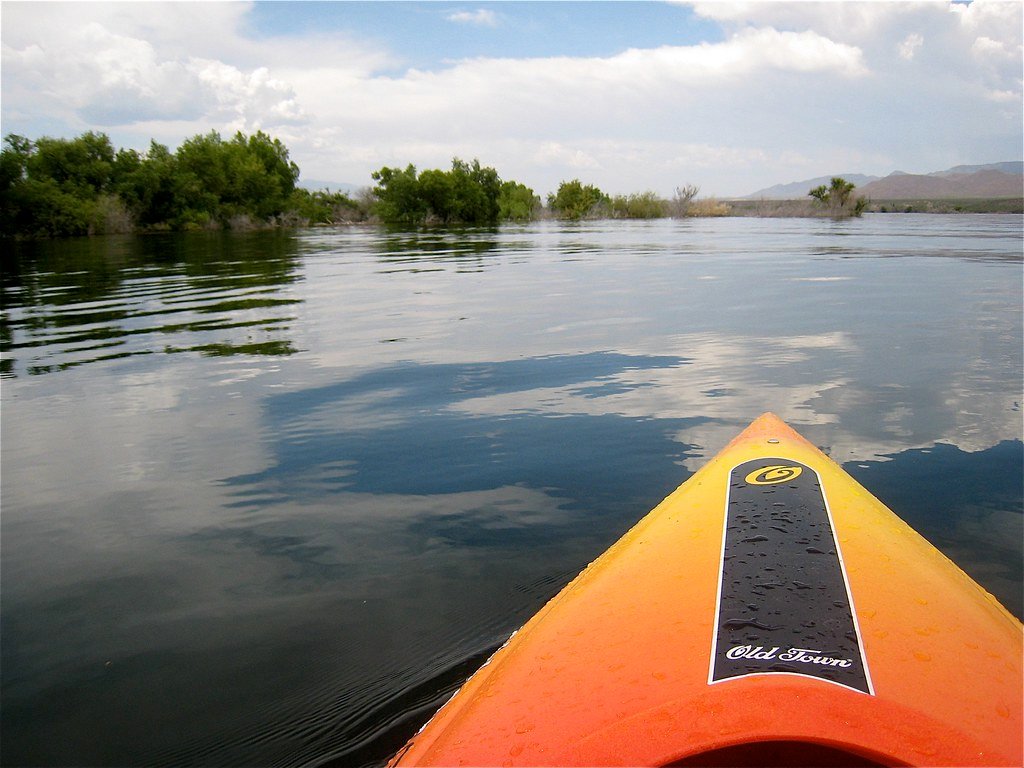
Featured photo: cogdogblog via Openverse (CC0).