On this page
Front-loading backpacks open like a suitcase with a long zipper, so you can see and reach everything at once, which suits travel, hostels and packing cubes. Top-loading backpacks open from the top under a lid or drawstring, which usually makes them simpler, lighter and better at carrying heavy loads on the trail. Choose by how you will use the bag.
Both designs carry your gear on your back, but they solve different problems. One is built around access and organization. The other is built around simplicity, weather resistance and load carrying. This comparison explains how each works, where each shines and how to pick the right one for your trips.
Key takeaways
- Front-loading packs, also called panel-loading or clamshell packs, open fully for easy access and organization.
- Top-loading packs open at the top and are the standard design for most hiking and backpacking packs.
- Front loaders suit city travel, one-bag trips, packing cubes and carry-on use.
- Top loaders suit trails, heavy loads, rough handling and wet weather.
- Hybrid packs add side or front zippers to a top-loading design for better access.
- Fit, capacity and suspension matter as much as the opening style.
What is the difference between front-loading and top-loading backpacks?
The difference between front-loading and top-loading backpacks is how you get into the main compartment. A front-loading backpack unzips around the front panel and opens flat like a suitcase. A top-loading backpack opens only at the top, usually with a drawstring collar and a lid or roll top, so you pack it from the bottom up.
That single design choice affects almost everything else: how you pack, how fast you find things, how the bag handles weather and how well it carries weight.
| Feature | Front-loading | Top-loading |
|---|---|---|
| Opening | Long zipper around the front panel | Drawstring, lid or roll top at the top |
| Access to items | See and reach everything at once | Dig from the top down |
| Packing style | Packing cubes, folded clothes | Stuff sacks, loose gear, compression |
| Typical use | Travel, city trips, one-bag travel | Hiking, backpacking, trekking |
| Weight | Often heavier due to zippers and panels | Often lighter and simpler |
| Weather resistance | Long zipper is a weak point in heavy rain | Fewer seams and openings to leak |
| Durability | Zipper can be a failure point when overstuffed | Fewer moving parts to fail |
| Load carrying | Good for moderate loads | Often better for heavy loads |
| Carry-on friendly | Usually designed with this in mind | Shape varies, can be tall and narrow |
These are typical patterns. Individual packs vary, and many designs mix features from both styles.
What is a front-loading backpack?
A front-loading backpack is a pack whose main compartment opens with a zipper that runs around the front panel, so the whole bag lays open like a suitcase. It is also called a panel-loading or clamshell backpack. This design makes packing fast and is common in travel backpacks built for carry-on use and one-bag trips.
How front-loading backpacks work
You lay the pack flat on its back, unzip the front and fold the panel open. Inside, there is usually one large compartment, sometimes with mesh pockets on the lid panel and compression straps to hold clothes in place. Packing cubes fit neatly, and you can reach a shirt at the bottom without taking anything else out.
Pros of front-loading backpacks
- See and reach everything at once.
- Easy to pack with packing cubes and folded clothes.
- Fast to unpack and repack in hostels, hotels and airports.
- Often designed with carry-on dimensions in mind.
- Usually include organized pockets for electronics and documents.
- Many have lockable zippers for extra security in shared spaces.
Cons of front-loading backpacks
- Long zippers add weight and are a potential failure point.
- Zippers are harder to seal against heavy rain.
- Overstuffing puts strain on the zipper.
- Boxy shapes may carry less comfortably under heavy loads.
- Less suited to rough trail use and bushwhacking.
What is a top-loading backpack?
A top-loading backpack is a pack whose main compartment opens only at the top, with a drawstring collar covered by a lid, or with a roll-top closure. You pack gear from the bottom up. Top loading is the standard design for hiking and backpacking packs because it is simple, durable and carries weight close to your back.
How top-loading backpacks work
You open the lid or unroll the top, loosen the drawstring and load the bag from the bottom. Heavier items usually go in the middle of the pack, close to your back, with lighter gear around them. The lid often has its own pocket for small items like snacks, a map and a headlamp.
Pros of top-loading backpacks
- Simple design with fewer zippers to fail.
- Often lighter for the same capacity.
- Better resistance to rain, since there is no long zipper.
- Tall, narrow shape helps carry weight close to your spine.
- Flexible capacity: many can be overfilled under the lid when needed.
- Well suited to rough handling, trail use and heavy loads.
Cons of top-loading backpacks
- Hard to reach items at the bottom without unpacking.
- Less organized inside unless you use stuff sacks.
- Slower to pack and unpack daily.
- Tall shapes can be awkward in airplane overhead bins.
- Fewer built-in pockets for electronics and documents.
Which is better for travel, front-loading or top-loading?
Front-loading backpacks are usually better for travel because they open like a suitcase, work well with packing cubes and make it easy to find things in hostels, hotels and airports. Top-loading packs can work for travel, especially on trips mixing cities and trekking, but daily access is slower and organization takes more effort.
Front loaders suit you if you:
- Travel with one bag and move between cities often.
- Use packing cubes and want to see everything.
- Need to take a laptop out at security checkpoints.
- Stay in hostels and want lockable zippers.
- Want a bag shaped for overhead bins.
If you are deciding between a backpack and a suitcase in the first place, our comparison of carry-on backpack vs rolling suitcase covers the trade-offs. For a full buying framework, read how to choose a travel backpack.
Which is better for hiking and backpacking?
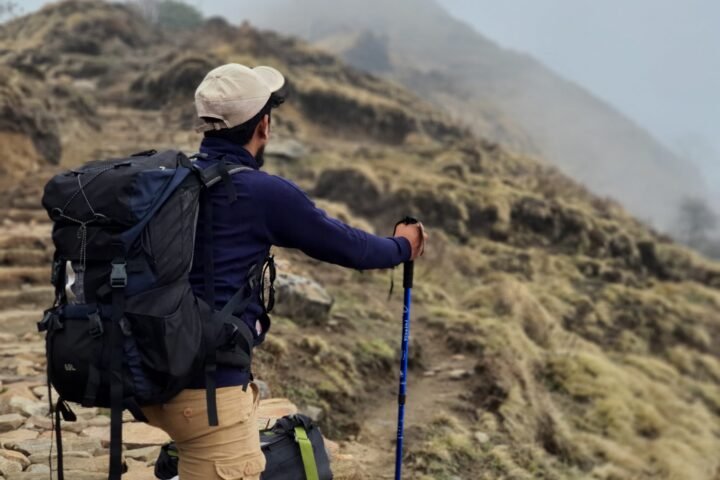
Top-loading backpacks are usually better for hiking and backpacking because their simple, tall shape carries weight close to your back, they have fewer zippers to fail and they resist rain more easily. Front-loading packs can work for light trips on good trails, but most trekking and multi-day hiking packs use a top-loading design.
Top loaders suit you if you:
- Carry heavier loads such as camping gear, food and water.
- Hike in wet weather or rough terrain.
- Prefer a lighter, simpler bag.
- Pack with stuff sacks rather than packing cubes.
- Need to strap extra gear to the outside.
For trail use, the pack must also hold your safety kit. Our guide to the ten essentials for hiking explained lists what to carry, and many hikers keep these items in the lid pocket of a top loader for quick access.
What is a hybrid backpack?
A hybrid backpack is a top-loading pack with extra access points, such as a front U-shaped zipper, a side zipper or a bottom sleeping bag compartment. It keeps the load carrying and weather resistance of a top loader while giving you a faster way to reach items deep inside. Many modern trekking and travel packs use this design.
Hybrid designs are a good choice if you:
- Travel and hike on the same trip.
- Want trail comfort without digging for everything.
- Use packing cubes some days and stuff sacks on others.
The trade-off is usually a little more weight and more zippers than a pure top loader. Check that any front or side zipper is sturdy and protected by a flap.
How do you pack a front-loading vs a top-loading backpack?
Packing a front-loading backpack works like packing a suitcase: lay it flat, fill it with packing cubes and close it with even pressure on the zipper. Packing a top-loading backpack works from the bottom up: light, bulky gear at the base, heavy items in the middle against your back and daily items in the lid.
Packing a front loader
- Lay the pack flat on its back and open the front panel.
- Place heavy cubes or shoes nearest the back panel.
- Fill the space with lighter cubes and soft items.
- Use the lid mesh pockets for flat items like chargers or socks.
- Close the zipper gently and avoid forcing it over bulges.
- Tighten compression straps to stop contents shifting.
Packing a top loader
- Put your sleeping bag or bulky soft gear at the bottom.
- Place the heaviest items in the middle, close to your back.
- Fill gaps with clothes and lighter gear.
- Put rain gear and snacks near the top.
- Use the lid for small items you need often.
- Cinch the drawstring and tighten all compression straps.
For more detail on balancing weight, read how to pack a backpack efficiently.
Tip: In a top loader, pack in color-coded stuff sacks so you can find gear by feel and color without unpacking the whole bag.
How do weather and security compare?
Weather and security differ clearly between the two backpack types. Top-loading packs usually handle rain better because there is no long zipper across the front. Front-loading packs usually offer better security in cities and hostels because their main zipper can often be locked. Either style benefits from a rain cover or pack liner in wet conditions.
Weather protection
Very few backpacks are fully waterproof on their own. Seams, zippers and fabric can let water in during steady rain. A rain cover keeps the outside drier, while a liner inside keeps your gear dry even if the pack fabric soaks through. Our comparison of a backpack rain cover vs pack liner explains when to use each.
Security
Front loaders often have zipper pulls designed to take a small lock. This deters casual theft in hostels and on trains, though no lock makes a bag theft-proof. Top loaders are harder to lock, but their drawstrings and lids are not quick to open either. In crowded areas, keep valuables in a small bag on your front, whichever pack you use.
How do you care for each type of backpack?
Caring for a front-loading or top-loading backpack follows the same basics: empty it after each trip, brush out dirt, spot clean stains and let it dry fully before storing. Front loaders need extra attention on zippers, which work best when kept clean. Top loaders need their drawstrings and buckles checked for wear.
- Clean grit from zipper teeth with a soft brush.
- Avoid forcing a zipper over an overstuffed bag.
- Check buckles, straps and drawstrings before each trip.
- Dry the pack fully before storing to prevent mildew.
- Store it loosely in a cool, dry place.
For step-by-step cleaning, see how to clean a backpack.
What are common mistakes when choosing between them?
Common mistakes when choosing between front-loading and top-loading backpacks include picking a style without thinking about your main use, ignoring fit and torso length, choosing too large a capacity and assuming zippers or fabric make a pack waterproof. The opening style matters, but fit and size usually matter more for comfort.
- Choosing by looks. Start with how you will use the pack most often.
- Ignoring fit. A pack that does not match your torso length will be uncomfortable either way. See how to fit a hiking backpack.
- Going too big. Larger packs tend to get filled. Read backpack capacity explained.
- Overstuffing a front loader. It strains the zipper and can cause it to split.
- Assuming it is waterproof. Most packs need a cover or liner in real rain.
- Not checking airline sizes. Compare the packed size with your airline’s carry-on limits.
What should you do next?
Once you know which opening style suits your trips, compare a few packs side by side on fit, capacity, weight and features. Our guide on how to compare travel backpacks walks through each spec in plain language, so you can choose with confidence and avoid paying for features you will not use.
Frequently asked questions
Is a front-loading backpack better than a top-loading one?
Neither design is better for everyone. A front-loading backpack is usually better for travel, city trips and packing cubes because it opens like a suitcase. A top-loading backpack is usually better for hiking and heavy loads because it is simpler, often lighter and handles rain better. Choose by your main use.
What is a panel-loading backpack?
A panel-loading backpack is another name for a front-loading backpack. Its main compartment opens with a zipper that runs around the front panel, so the bag opens wide like a suitcase. Some people call it a clamshell design. It is popular for travel because everything inside is easy to see and reach.
Are top-loading backpacks waterproof?
Top-loading backpacks are not usually fully waterproof, but they often resist rain better than front loaders because they have no long front zipper. Water can still enter through seams, fabric and the top opening in steady rain. Use a rain cover, a pack liner or both to keep your gear dry.
Can you use a top-loading backpack for travel?
You can use a top-loading backpack for travel, especially on trips that mix cities with trekking. Expect slower access to items at the bottom. Packing cubes or stuff sacks, a well-organized lid pocket and a hybrid design with a front or side zipper all make a top loader easier to live with.
Which backpack type is better as a carry-on?
Front-loading backpacks are usually better as carry-on bags because many are designed with rectangular shapes and sizes aimed at airline limits. Top loaders are often tall and narrow, which may not fit some overhead bins. Always check your airline’s current carry-on size rules and measure your pack when fully packed.