On this page
To avoid ticks while hiking, stay in the center of trails, wear long light-colored clothing treated with permethrin, use an EPA-registered insect repellent on exposed skin and check your body, gear and pets carefully after every hike. Shower soon after you get home and remove any attached tick promptly with fine-tipped tweezers.
Ticks live in grassy, brushy and wooded areas across much of North America, Europe and beyond, and some can spread diseases such as Lyme disease. You do not need to avoid the outdoors to stay safe. A few habits before, during and after each hike lower your chances of a bite and help you catch any tick early. This guide follows mainstream public health advice, including guidance from the US Centers for Disease Control and Prevention (CDC).
Key takeaways
- Ticks are most common in grassy, brushy and wooded areas, often along trail edges.
- Treat clothing and gear with permethrin, and use an EPA-registered repellent on skin.
- Walk in the middle of trails and avoid brushing against vegetation.
- Do a full tick check after every hike, including hair, ears, armpits, waist and behind the knees.
- Remove attached ticks quickly with fine-tipped tweezers, pulling straight up with steady pressure.
- See a doctor if you develop a rash, fever or flu-like symptoms in the weeks after a bite.
Where and when are ticks most common?
Ticks are most common in grassy, brushy and wooded areas, especially along trail edges, in leaf litter and in tall grass where animals pass. In many regions they are most active from spring through fall, though some ticks remain active on mild winter days. Risk varies by region, so check local health or park guidance.
Ticks do not jump or fly. They wait on low vegetation and grab onto people or animals brushing past, a behavior called questing. That is why staying on clear trail surfaces matters so much.
Places to be extra careful:
- Tall grass and brush along trail edges.
- Leaf litter under trees, especially when sitting or resting.
- Overgrown, narrow or little-used trails.
- Meadows and field edges.
- Areas where deer or other wildlife are common.
- Woodpiles and stone walls near campsites.
| Season | Typical tick activity | What to do |
|---|---|---|
| Spring | Often rising, young ticks very small | Start using repellent and doing checks |
| Summer | Often high in many regions | Full prevention routine on every hike |
| Fall | Activity continues in many areas | Keep prevention going |
| Winter | Lower, but possible on mild days | Stay alert in warm spells |
Activity patterns depend on the tick species and local climate. Your state or local health department, or the land manager for the trail, may have specific information.
What should you wear to avoid ticks while hiking?
To avoid ticks while hiking, wear long pants, long sleeves, closed shoes and socks, and tuck your pants into your socks and your shirt into your pants. Light-colored clothing makes ticks easier to spot. Clothing treated with permethrin adds strong protection, because it can kill or repel ticks that crawl onto the fabric.
Covering skin creates a barrier and forces ticks to crawl longer before reaching skin, giving you more time to spot them.
- Long pants and sleeves: breathable, lightweight fabrics stay comfortable in warm weather.
- Tuck in: pants into socks and shirt into waistband, even if it looks odd.
- Light colors: dark ticks stand out against light fabric.
- Closed shoes: avoid sandals on overgrown trails.
- A hat: useful on brushy trails and for people with long hair.
Our guide to outdoor clothing layering basics explains how to choose breathable layers that work in warm conditions. Good socks matter too; our guide on how to choose hiking socks covers height and material.
What is permethrin and how do you use it?
Permethrin is an insecticide used to treat clothing, footwear and gear, not skin. You can buy pretreated clothing or treat your own items with a spray made for fabric, following the label directions. Treated items can stay effective through several washes, as stated on the product label.
Important safety notes:
- Apply permethrin only to clothing and gear, never directly to skin.
- Treat items outdoors in a ventilated area and let them dry fully before wearing.
- Follow the product label for how long treatment lasts and how many washes it survives.
- Keep wet permethrin away from cats, since it is toxic to cats until dry.
Tip: Treat your hiking socks, pants and shoes, since ticks usually climb on from the ground. These are the items that matter most.
Which insect repellents work against ticks?
Repellents that work against ticks include products registered with the EPA that contain DEET, picaridin, IR3535, oil of lemon eucalyptus (OLE), para-menthane-diol (PMD) or 2-undecanone. Apply them to exposed skin following the label. Permethrin goes on clothing, not skin. Together, they offer the strongest protection.
The EPA offers an online tool to help you find registered repellents and see how long they protect. Key tips for using skin repellents:
- Read the label and follow it, including how often to reapply.
- Apply to exposed skin and, where the label allows, to clothing.
- Do not apply to cuts, wounds or irritated skin.
- For children, adults should apply repellent to their own hands first, then to the child, avoiding eyes, mouth and hands.
- Do not use products containing OLE or PMD on children under 3 years old.
- Wash repellent off skin when you return indoors.
| Product | Where it goes | Notes |
|---|---|---|
| Permethrin | Clothing, shoes and gear | Never on skin; follow label |
| DEET | Skin and some clothing | Widely used; follow label for concentration |
| Picaridin | Skin and some clothing | Often less odor; follow label |
| IR3535 | Skin | Follow label |
| Oil of lemon eucalyptus or PMD | Skin | Not for children under 3 |
| 2-undecanone | Skin | Follow label |
If you are pregnant or breastfeeding, the CDC notes that EPA-registered repellents are safe and effective when used as directed. If you have questions about a specific product, ask a pharmacist or doctor.
How do you avoid ticks on the trail?
Avoid ticks on the trail by walking in the center of the path, staying off overgrown edges and not brushing against tall grass and shrubs. Avoid sitting directly on the ground, logs or leaf litter. Take quick clothing checks during breaks, and brush off any ticks you see before they reach your skin.
Trail habits that help:
- Stay in the middle. Wider, well-maintained trails expose you to less vegetation.
- Avoid shortcuts. Cutting across grass or brush increases tick contact.
- Choose your rest spot. Sit on a rock, bench or a sit pad rather than leaf litter or long grass.
- Do quick checks. At breaks, look at your legs, socks and waist.
- Hike with a partner. Checking each other’s backs and hair is easier than checking alone.
- Plan your route. Using a map helps you choose maintained trails. Our guide to basic navigation with a map and compass can help you stay on the right path.
If you need to step off trail, for example for a bathroom break, choose a spot with less ground vegetation and do a quick check afterward. Our guide on how to go to the bathroom outdoors covers how to choose a spot responsibly.
How do you avoid ticks while camping?
Avoid ticks while camping by choosing a campsite on clear, open ground away from tall grass, brush and woodpiles, and keeping your tent zipped shut. Treat your tent and gear with permethrin if the manufacturer allows it, check your gear before bringing it inside the tent and do a full body check before bed.
Camping tips for tick areas:
- Pick a campsite with bare ground or short grass. See our guide on how to choose a campsite.
- Keep tent doors closed and store packs off the ground or in the vestibule.
- Shake out clothing and sleeping bags before use.
- If you use a tarp, pitch it over clear ground. Our guide on how to pitch a tarp shelter covers setup basics.
- Check children and pets each evening.
How do you check for ticks after a hike?
Check for ticks after a hike by examining your clothing, gear and whole body, including hidden areas such as under the arms, in and around the ears, inside the belly button, behind the knees, between the legs, around the waist and in the hair. Shower soon after coming indoors and tumble dry your clothes on high heat.
The CDC recommends these steps after time outdoors in tick areas:
- Check your clothing and gear. Ticks can ride in on clothes, packs and pets.
- Tumble dry clothes on high heat. About 10 minutes on high heat can kill ticks on dry clothing. Damp clothes may need longer. If clothes need washing first, use hot water.
- Shower soon after coming indoors. Showering within about two hours may help wash off unattached ticks and is a good time for a check.
- Do a full body check. Use a hand mirror or a partner for areas you cannot see.
- Check children and pets. Ticks often attach in children’s hair and behind ears.
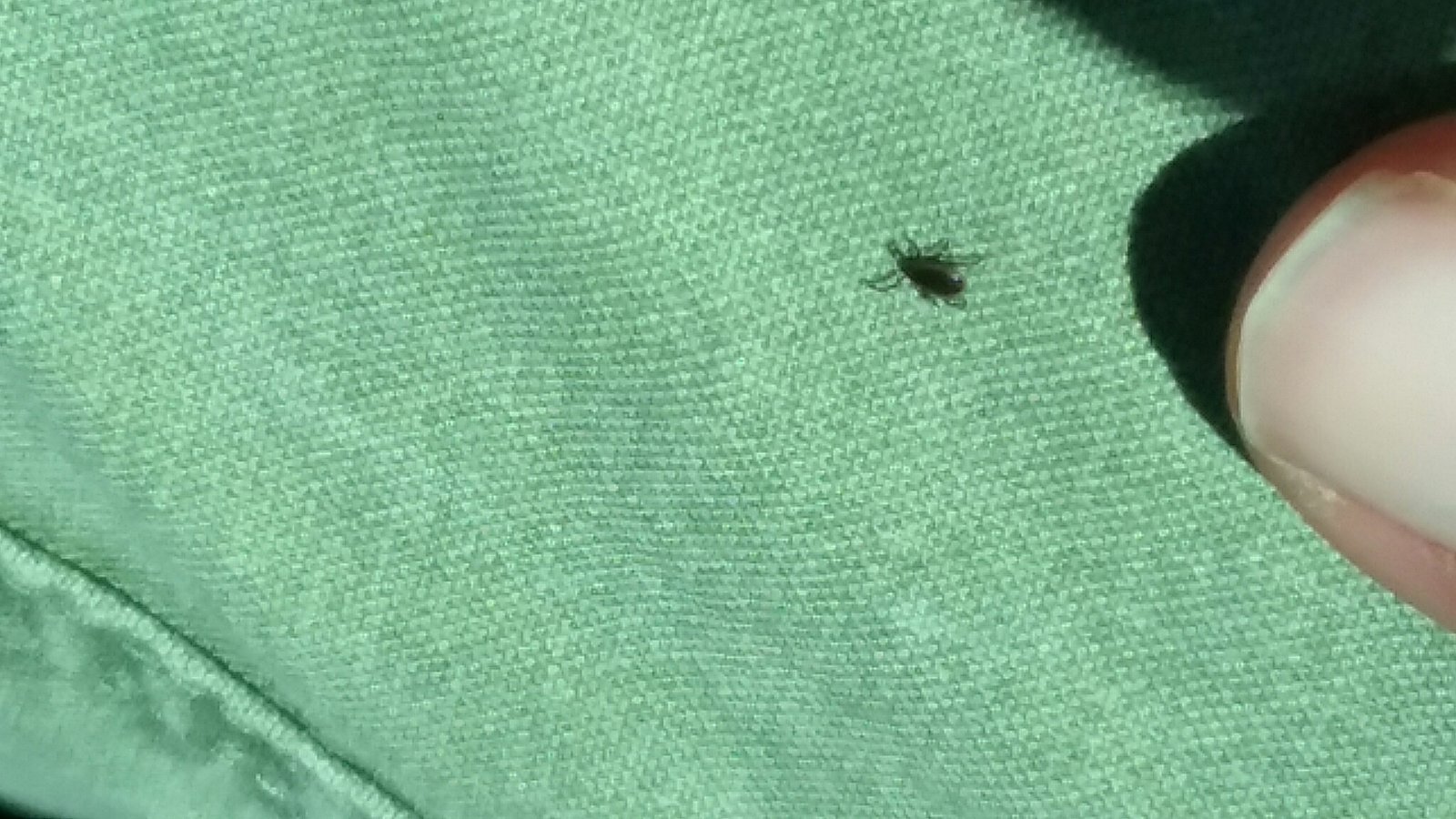
Ticks can be very small, especially young ones, and may look like a freckle or speck of dirt. Look closely and run your fingers through your hair to feel for small bumps.
Tip: Keep a small mirror, fine-tipped tweezers and a sealable bag in your car or pack so you can do a check and remove a tick right at the trailhead.
How do you safely remove a tick?
Remove a tick by grasping it with clean, fine-tipped tweezers as close to the skin’s surface as possible and pulling upward with steady, even pressure. Do not twist or jerk. After removal, clean the bite area and your hands with rubbing alcohol or soap and water. Dispose of the tick safely.
Steps for tick removal, following CDC guidance:
- Use clean, fine-tipped tweezers.
- Grasp the tick as close to the skin as you can.
- Pull upward with steady, even pressure. Do not twist or jerk.
- If mouthparts break off and stay in the skin, try to remove them with tweezers. If you cannot easily remove them, leave the area alone and let the skin heal.
- Clean the bite area and your hands with rubbing alcohol or soap and water.
- Dispose of the tick by putting it in alcohol, sealing it in a bag or container, wrapping it tightly in tape or flushing it down the toilet.
- Note the date and where you were. Some people photograph the tick for identification.
Avoid folk remedies such as painting the tick with nail polish, smothering it with petroleum jelly or using heat. The goal is to remove the tick quickly, not wait for it to detach.
A note for UK, Canada and Australia readers
Tick advice is broadly similar in the UK and Canada. In Australia, advice on removal can differ, especially for people with tick allergies, so follow guidance from your national health service, such as the NHS in the UK, the Government of Canada or healthdirect in Australia.
When should you see a doctor after a tick bite?
See a doctor if you develop a rash, fever, chills, fatigue, headache, muscle or joint aches or other flu-like symptoms in the weeks after a tick bite, or if you cannot remove the whole tick. Tell the doctor about the bite, when it happened and where you were hiking. Seek urgent care for severe symptoms.
Most tick bites do not cause illness, but some ticks carry diseases. Removing ticks quickly matters: the CDC notes that in most cases a tick must be attached for 36 to 48 hours or more before the Lyme disease bacterium can be transmitted. Other tick-borne infections can spread faster, so do not wait to remove a tick.
Contact a doctor if:
- A rash appears around the bite or elsewhere, including an expanding red rash.
- You develop fever, chills, aches or fatigue.
- The bite area becomes very red, swollen, painful or shows signs of infection.
- You could not fully remove the tick.
A doctor can decide whether you need treatment or testing. Our guide on basic first aid skills for hikers covers other common trail injuries, and our Ten Essentials for hiking explained shows how to build a first aid kit you always carry.
What are common tick prevention mistakes?
Common tick prevention mistakes include skipping repellent on short hikes, walking along brushy trail edges, wearing shorts and sandals in tall grass, forgetting to check hair and hidden areas, not checking pets and gear and removing ticks by twisting, burning or smothering them. Waiting to shower or check also gives ticks more time to attach.
Other mistakes to avoid:
- Assuming you are safe in your backyard: ticks can live in yards near wooded or grassy areas.
- Applying permethrin to skin: it is for clothing and gear only.
- Forgetting reapplication: skin repellents wear off, especially with sweat and water.
- Only checking legs: ticks often crawl upward to the waist, armpits and hairline.
Ticks share habitats with other trail hazards. Our guide on how to identify poison ivy, oak and sumac helps you avoid another common problem along trail edges. Your next step: treat your hiking socks and pants before your next spring or summer hike and pack tweezers in your first aid kit.
Frequently asked questions
What is the best way to avoid ticks while hiking?
The most effective approach combines several habits: wear permethrin-treated clothing, use an EPA-registered skin repellent, stay in the center of trails, tuck pants into socks and do a full tick check after every hike. Showering soon after you get home and drying clothes on high heat add extra protection.
Does DEET keep ticks away?
Yes. DEET is one of several active ingredients in EPA-registered repellents that help repel ticks when used on skin. Others include picaridin, IR3535, oil of lemon eucalyptus, PMD and 2-undecanone. Follow the label directions for application and reapplication, and combine repellent with permethrin-treated clothing for stronger protection.
Where do ticks hide on your body?
Ticks often attach in warm, hidden areas. Check under the arms, in and around the ears, inside the belly button, behind the knees, between the legs, around the waist and in the hair. Use a mirror or a partner for your back and scalp, and check children and pets too.
How quickly should you remove a tick?
Remove a tick as soon as you find it. The CDC notes that in most cases a tick must be attached for 36 to 48 hours or more to transmit the Lyme disease bacterium, but other infections may spread faster. Use fine-tipped tweezers, pull straight up with steady pressure and clean the area.
Should I see a doctor after a tick bite?
Not every bite needs a doctor visit. Watch the area and your health for several weeks. Contact a doctor if you develop a rash, fever, chills, aches, fatigue or other flu-like symptoms, if the bite looks infected or if you could not remove the whole tick. Mention when and where the bite happened.
Sources and further reading
Featured photo: gsexauer via Openverse (CC0).