On this page
To compare tent designs, look at how each shape uses its poles, how much livable space it creates, how it handles wind and rain, and how easy it is to pitch. Dome tents are the all-round default, tunnel tents give space for their weight, cabin tents give standing room, and specialist shapes trade simplicity for performance.
Tent design is the part of a tent that decides almost everything else. The shape determines headroom, stability, how many stakes you need and how quickly you can get under cover in a storm. This guide walks through the common designs, puts them side by side in a table and gives you a simple way to match a shape to your trips.
Key takeaways
- Dome tents are the most versatile design and a safe first choice for most campers.
- Tunnel tents offer a lot of space for their weight but depend on good staking and pitching into the wind.
- Cabin tents maximize headroom for car camping but catch more wind.
- Geodesic and semi-geodesic designs add pole crossings for strength in wind and snow.
- Trekking pole, tipi and air tents each solve a specific problem: low weight, group space or fast pitching.
What are the main tent designs?
The main tent designs are dome, tunnel, cabin, geodesic, semi-geodesic, A-frame, tipi, trekking pole and inflatable air tents. Each one arranges poles or air beams differently, which changes headroom, wind resistance, weight and pitching time. Most camping tents sold for beginners are domes or cabin styles, while backpackers often choose semi-geodesic or trekking pole designs.
Here is a quick overview before we look at each design in detail.
| Design | Best for | Main strength | Main trade-off |
|---|---|---|---|
| Dome | General camping | Balanced and easy to pitch | Sloped walls reduce usable space |
| Tunnel | Groups, windy open sites | Space for the weight | Needs careful staking and orientation |
| Cabin | Car camping, families | Standing room and vertical walls | Catches wind, heavy |
| Geodesic | Exposed, snowy or windy sites | Very stable | More poles, more weight |
| Semi-geodesic | Backpacking in mixed weather | Good stability for the weight | Less space than a cabin |
| A-frame or ridge | Simple shelters, tarps | Simple, light | Little headroom |
| Tipi or bell | Groups, base camps | Tall center, roomy | Large footprint, central pole |
| Trekking pole | Ultralight backpacking | Very light | Needs good pitching skill |
| Inflatable air | Car camping, festivals | Fast pitching | Bulky, needs a pump |
If you are new to tents in general, start with our guide on how to choose a camping tent, then come back here to narrow down the shape.
How does a dome tent work?
A dome tent uses two or more flexible poles that cross at the top and bend into arches, creating a rounded shape that stands on its own. Dome tents balance stability, weight, cost and ease of pitching, which is why they are the most common design for beginners, weekend campers and many backpackers.
The crossing poles share the load from wind and rain, and the curved walls shed water well. Most domes are freestanding, so you can pick them up and move them before staking.
Pros of dome tents:
- Quick to pitch, often with color coded poles and clips.
- Freestanding, which helps on hard or rocky ground.
- Stable in moderate wind when guyed out.
- Widely available in many sizes.
Cons of dome tents:
- Sloped walls mean headroom drops off near the edges.
- Large family domes can flex in strong wind.
- Vestibule space varies a lot between models.
Domes suit most three-season camping. If you want to understand the difference between freestanding and staked designs in more depth, see freestanding vs non-freestanding tents.
What are the pros and cons of tunnel tents?
Tunnel tents use parallel hoops of poles to create a long, tube-like shape, giving plenty of interior space for their weight. They perform well in wind when pitched with the narrow end facing the wind, but they are not freestanding, so they rely on stakes and guylines to stay up and stay taut.
Tunnel tents are popular in places with frequent wind and rain, including the UK and northern Europe, because the long shape can be very stable when pitched correctly. Many tunnel designs include large porches or vestibules for gear and cooking in bad weather. Never cook inside a closed tent, though, because of fire and carbon monoxide risk.
Pros:
- Lots of usable floor area and headroom along the length.
- Good space to weight ratio.
- Large porches for gear storage.
Cons:
- Must be staked to stand, so poor on rock or very soft sand.
- Side-on wind can push on the long walls.
- Takes a little practice to pitch tight.
When does a cabin tent make sense?
A cabin tent makes sense when you camp near your car and want standing room, near vertical walls and space for cots or several sleepers. The upright shape makes changing clothes and moving around much easier. The trade-off is weight, bulk and more wind exposure, since flat walls act like sails.
Cabin tents are a favorite for family camping and long stays at campgrounds. Many include room dividers, large windows and wide doors. They are not designed for exposed ridges or alpine sites.
Good fit for:
- Families with young children.
- Campers who use cots or air mattresses.
- Long stays where comfort matters more than weight.
Watch out for:
- Larger footprint, which may not fit small campsite pads.
- More guylines needed in breezy conditions.
- Longer setup time with more poles.
Remember that a tent’s person rating is a sleeping count, not a comfort count. Our guide to tent capacity ratings explained shows how to size up for gear and comfort.
What are geodesic and semi-geodesic tents?
Geodesic and semi-geodesic tents use several poles that cross at multiple points to form triangles across the tent body. Those crossings spread wind and snow loads, making these designs very stable. Full geodesic tents are common in mountaineering, while semi-geodesic tents use fewer crossings to save weight for backpacking in mixed weather.
The more poles cross, the stiffer the structure becomes. That stiffness is valuable on exposed sites, high camps and in winter. It also adds weight and pitching time, so full geodesic designs are usually more tent than a summer campground needs.
| Feature | Semi-geodesic | Full geodesic |
|---|---|---|
| Pole crossings | A few | Many |
| Stability | Good to very good | Very high |
| Weight | Moderate | Higher |
| Typical use | Three-season and shoulder season backpacking | Winter, alpine and expedition use |
| Pitch time | Moderate | Longer |
If you are deciding whether you need that level of strength, read three-season vs four-season tents to see what four-season designs add and when they are worth it.
How do A-frame, tipi and bell tents compare?
A-frame, tipi and bell tents are classic designs with simple pole layouts. A-frames use a ridge between two upright poles, tipis rise from a single center pole, and bell tents add a short wall around a tall center. They trade some efficiency for simplicity, headroom or a social, roomy interior.
A-frame or ridge tents
The traditional A-frame is easy to understand and very simple. Modern versions are often tarps or minimal shelters. The steep walls shed rain but limit headroom except along the ridge.
Tipi and pyramid shelters
A single tall pole in the center creates a lot of height in a small footprint. Pyramid shelters are popular with lightweight backpackers and winter campers because they shed snow well. The center pole takes up space, and the shape needs a lot of stakes.
Bell tents
Bell tents are usually canvas or polycotton, with a tall center pole and a low vertical wall. They are common at glamping sites and festivals. They are heavy and slow to pitch but very comfortable for long stays.
Are trekking pole tents a good choice?
Trekking pole tents are a good choice for experienced backpackers who already hike with poles and want to save weight. Instead of dedicated tent poles, the shelter uses your trekking poles as supports. That cuts weight and packed size, but these tents need careful staking and practice to pitch taut and stable.
They are usually non-freestanding, so the stakes and guylines carry the structure. On rocky ground or sand, you may need alternative anchors. Many are single wall, which can mean more condensation on cool, still nights.
Consider one if:
- You already use trekking poles on every hike.
- Low pack weight is a priority.
- You are comfortable practicing your pitch before trips.
Skip it for now if:
- You are new to camping and want simple, forgiving setup.
- You camp mostly on hard or rocky sites.
- You want lots of headroom and interior space.
How do inflatable air tents compare with pole tents?
Inflatable air tents replace poles with air beams that you pump up, which makes pitching fast and simple once the tent is staked. They are popular for car camping and festivals. Compared with pole tents, they are often heavier and bulkier to pack, and you need to carry a pump and know how to repair a beam.
Air beams flex in gusts and then spring back, which some campers like. A puncture is less common than people fear, but it can happen, so check that the tent comes with a repair kit and that individual beams can be replaced.
| Feature | Air tent | Pole tent |
|---|---|---|
| Pitching speed | Fast after staking | Moderate |
| Packed size | Often bulky | Usually smaller |
| Weight | Often heavier | Varies widely |
| Repair in the field | Patch kit or spare beam | Pole splint or sleeve |
| Best use | Car camping | Any type of camping |
What else changes between tent designs?
Beyond the shape, tent designs differ in wall construction, door layout, vestibule size and ventilation. Double wall tents separate the inner tent from the rainfly to reduce condensation, while single wall tents save weight. Door count and placement affect how easily two or more people can get in and out without climbing over each other.
Single wall vs double wall
- Double wall: an inner tent plus a separate rainfly. Better at managing condensation, more forgiving for beginners.
- Single wall: one waterproof layer. Lighter and quicker to pitch, but condensation can build up inside.
Doors and vestibules
Two doors are worth a lot in a tent for two or more people. Vestibules give you dry space for boots and packs. Check vestibule size, not just floor area.
Ventilation
Look for high and low vents and a fly that can be pitched with a gap above the ground. Good airflow reduces condensation on cool nights.
How do you choose the right tent design for your trips?
To choose the right tent design, start with where you camp most often, how you get there and the worst weather you expect. Car campers can prioritize space with a cabin or tunnel. Backpackers should weigh pack weight against stability. Exposed or snowy sites call for geodesic strength.
Follow these steps:
- List the three types of trips you take most often.
- Note whether you walk in or park next to your site.
- Write down the typical and worst case weather for those places.
- Count sleepers plus space for gear, kids or pets.
- Choose the simplest design that handles your worst realistic conditions.
- Practice pitching at home before your first trip.
Tip: Pitch your new tent in the backyard or a park first, and time yourself. Then do it again with gloves on or after dark. Your first real pitch should not be your first pitch.
| Your situation | Designs to consider first |
|---|---|
| First tent, mixed use | Dome |
| Family car camping | Cabin, tunnel or air tent |
| Windy, open sites | Tunnel or semi-geodesic |
| Lightweight backpacking | Semi-geodesic or trekking pole |
| Winter or alpine | Geodesic or pyramid |
| Long stays, comfort first | Bell or cabin |
What are common mistakes when comparing tent designs?
Common mistakes when comparing tent designs include choosing by peak height alone, ignoring how a shape behaves in wind, buying a non-freestanding tent for rocky sites and trusting the person rating as a comfort guide. Each one leads to a tent that looks great in the store and frustrates you at camp.
- Judging by peak height. A dome’s peak can be tall, but usable headroom may be small.
- Ignoring wind orientation. Tunnel tents need the narrow end into the wind.
- Underestimating stakes. Non-freestanding designs depend on good anchors.
- Overlooking vestibules. Gear storage outside the inner tent keeps the sleeping area clean.
- Skipping a practice pitch. Every design has a learning curve.
If you are planning your very first trip, our camping for beginners complete guide covers the rest of the setup, from sleep systems to campsite basics. Your next step is to read how to choose a camping tent and apply your chosen design to a full shortlist.
Frequently asked questions
What is the most stable tent design?
Geodesic tents are generally the most stable design because several poles cross at many points, spreading wind and snow loads across the structure. Semi-geodesic tents offer much of that stability with less weight. Any design becomes more stable when it is pitched tight, staked well and guyed out, so setup skill matters as well.
Is a dome or tunnel tent better?
A dome tent is better for most beginners because it is freestanding, quick to pitch and forgiving on different ground. A tunnel tent is better when you want more space for the weight and camp on open sites where you can stake it well. In wind, tunnels perform best with the narrow end facing the wind.
Are cabin tents good in wind?
Cabin tents are not ideal in strong wind because their tall, flat walls catch gusts. They work well at sheltered campgrounds, especially when every guyline is staked. If you expect windy weather, choose a sheltered site, pitch the smallest wall into the wind and consider a dome or tunnel design instead.
Do I need a freestanding tent?
You do not always need a freestanding tent, but it makes life easier on rocky ground, wooden platforms and campsites with hard soil. Freestanding designs also let you move the tent before staking. Non-freestanding tents can be lighter and roomier, but they depend on solid anchors and more pitching practice.
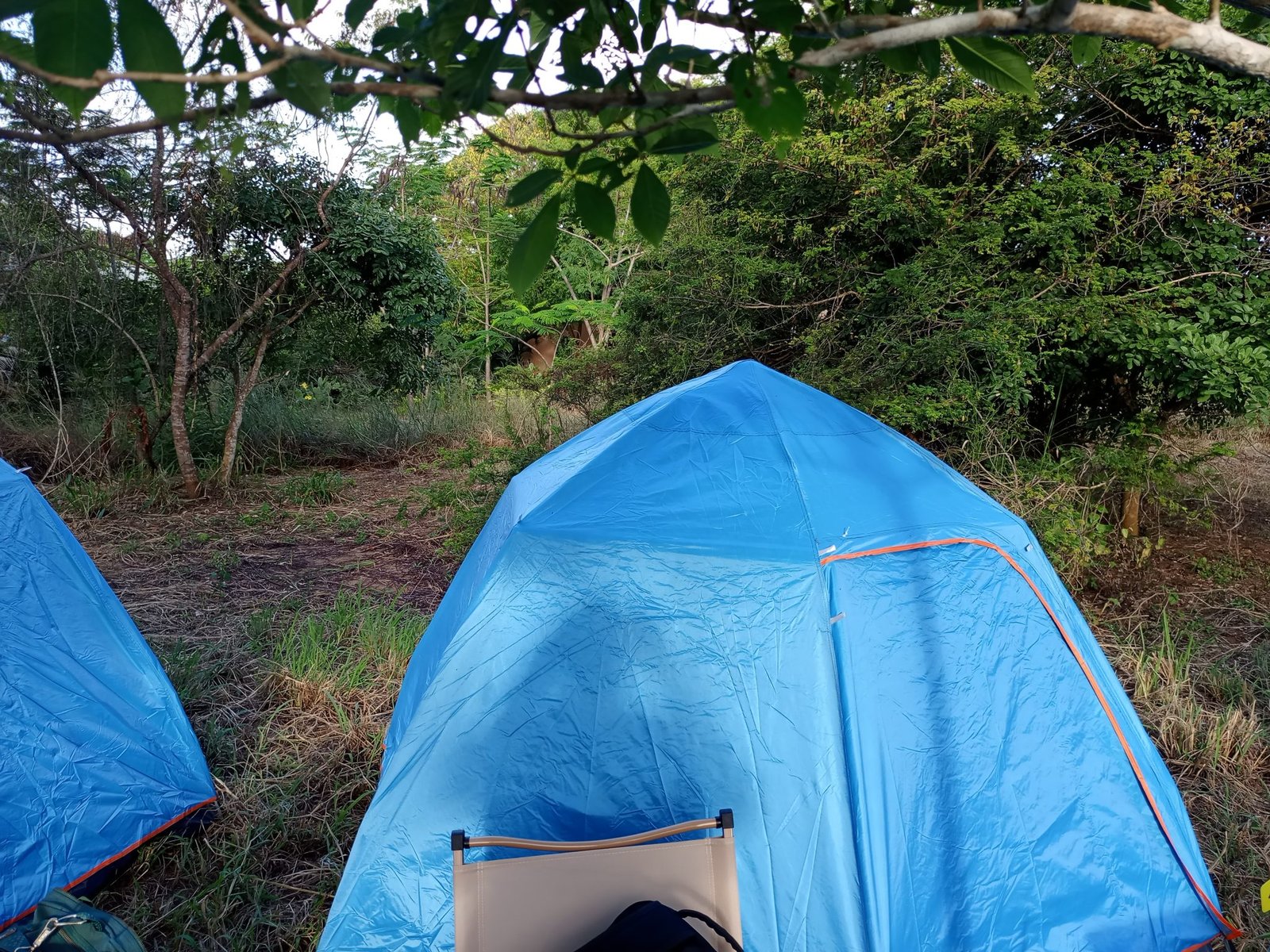
Featured photo: Mohammed Kateregga via Openverse (CC0).