On this page
A tent capacity rating is the maker’s estimate of how many people can lie side by side on the floor, usually on standard sleeping pads with little room left over. There is no single industry standard, so a “2-person” tent from one brand can be roomier or tighter than another. Check floor dimensions, not just the number.
This explainer covers how capacity ratings are set, which measurements tell you more, when to size up and how to estimate the space your group really needs. It is a research-based guide, so it focuses on how to read specifications rather than recommending particular tents.
Key takeaways
- A person rating usually means sleepers lying shoulder to shoulder, with gear stored outside or in vestibules.
- Brands set their own ratings, so compare floor length, floor width, floor area and peak height instead.
- Many campers size up by one person for comfort, gear storage, wide pads, tall sleepers, kids or dogs.
- Backpackers often accept a snug fit to save weight, while car campers can choose space freely.
- Laying out your pads at home and measuring them is the quickest way to know what fits.
What does a tent capacity rating mean?
A tent capacity rating tells you the maximum number of people the manufacturer thinks can sleep in the tent, usually lying side by side on standard sleeping pads. It assumes a snug fit and rarely includes room for packs, boots or a dog. Treat it as an upper limit, not a comfort guide.
Because each brand sets its own ratings, the same number can mean different amounts of space. One 2-person tent may have a wide rectangular floor, while another tapers toward the feet and fits two people only if both use narrow pads. That is why the rating is a starting point and the floor plan tells the real story.
Why capacity ratings feel small
Ratings are often built around the narrowest common sleeping pads. Many standard pads are about 20 inches wide, and wider or longer pads take up more of the floor. Add sleeping bags that spread out, people who roll in their sleep and gear you want to keep dry inside, and a tent that is technically big enough can feel crowded.
How do manufacturers decide tent capacity?
Manufacturers usually decide tent capacity by how many sleeping pads fit across the floor, then balance that against weight, cost and the tent’s intended use. Backpacking tents are often rated tightly to keep weight down, while family tents may count every possible sleeping spot. No universal rule governs the person number.
That means the rating says as much about the tent’s purpose as its size. A lightweight backpacking 2-person tent is designed for two people who accept close quarters. A car camping 2-person tent may be built for comfort and offer more width and headroom. Read ratings in the context of the tent’s category.
Which tent measurements matter more than the person rating?
The tent measurements that matter more than the person rating are floor length, floor width at head and foot, total floor area, peak height and vestibule area. Wall shape matters too, because steep walls create more usable space than sloped ones. Together these tell you how a tent will actually feel inside.
| Measurement | What it tells you | What to look for |
|---|---|---|
| Floor length | Room for tall sleepers | Your height plus room for a pillow and bag |
| Floor width | How many pads fit across | Width of all pads side by side |
| Floor shape | Rectangular or tapered | Tapered floors fit fewer wide pads |
| Floor area | Total sleeping space | Useful for comparing similar tents |
| Peak height | Sitting or standing room | Can you sit up without touching the roof? |
| Wall angle | Usable headroom | Steeper walls feel larger |
| Vestibule area | Covered gear storage | Space for packs and boots outside the inner tent |
| Doors | Access for each sleeper | Two doors help in tents for two or more |
Floor area vs usable space
Two tents with the same floor area can feel very different. A dome with near-vertical walls gives more room to sit up and move. A tunnel or tapered tent may have the same square footage but lose usable space where the walls slope inward. Our guide on how to compare tent designs explains how shape affects interior space.
Peak height
Peak height is measured at the tallest point, which may be a small area. A high peak in the center does not guarantee headroom near the walls. Look for photos or specifications showing the height across the tent, and consider whether you will spend time inside on rainy days.
Tip: Check whether listed dimensions describe the inner tent floor or the rainfly footprint. The fly usually covers a larger area, but only the inner floor is sleeping space.
How much space does each person need in a tent?
Each person needs enough floor width for a sleeping pad plus a little elbow room, and enough length for their height plus a pillow and the end of the sleeping bag. As a rough rule of thumb, many campers want somewhat more than their pad width per person if they plan to keep any gear inside.
To estimate your own needs:
- Measure the width of each sleeping pad your group uses.
- Add the widths together to get the minimum floor width.
- Add a few inches per person for elbow room and bag spread.
- Measure the tallest person and add space at both ends.
- Compare these figures with the tent’s floor dimensions, including any taper.
- Decide what gear must stay inside, and add room for it.
Lay the pads on a floor at home and mark the tent’s footprint with tape. It quickly shows whether the tent works for your group.
When should you size up a tent?
You should size up a tent by one person if you want room for gear, use wide or thick pads, are taller than average, camp with children or a dog, expect rainy days inside or simply like space. The extra weight and cost are usually small compared with the gain in comfort, especially for car camping.
| Rated capacity | Snug fit | Comfortable fit for many campers |
|---|---|---|
| 1-person | One sleeper, minimal gear | One sleeper with gear in the vestibule |
| 2-person | Two sleepers on narrow pads | One sleeper with gear inside, or two who accept close quarters |
| 3-person | Three sleepers on narrow pads | Two adults with gear, or two adults and a dog |
| 4-person | Four sleepers on narrow pads | Two adults and one or two small children |
| 6-person and up | Many sleepers side by side | Families who want gear storage and space to move |
These are general patterns, not rules. The right choice depends on the tent’s floor dimensions and how your group sleeps.
How do kids and dogs change tent capacity?
Young children take up less length than adults, but they often move around in their sleep and need space for extra layers, toys and a parent nearby. Dogs vary widely in size, and many prefer to curl up near the door or at someone’s feet. A medium or large dog can take up as much floor as a person. Count your dog as a sleeper, and consider a tent with two doors so a restless pet does not climb over everyone at night.
How do you read a tent specification sheet?
A tent spec sheet often lists a trail weight, a packaged weight, floor dimensions, floor area, peak height, vestibule area and the number of doors. Trail weight usually covers only the essential parts, while packaged weight includes stakes, stuff sacks and extras. For capacity, focus on the floor dimensions and peak height first. Then look at vestibule area, because covered storage outside the inner tent can make a snug tent feel much more livable.
When a snug fit makes sense
Backpackers often accept a snug tent to save weight and packed size, especially in good weather when gear can stay in the vestibule. A smaller tent also warms up a little faster on cool nights because there is less air space. If you carry the tent on your back, the trade-off between space and weight becomes real.
How does tent capacity differ for backpacking and car camping?
Tent capacity matters differently for backpacking and car camping because weight changes the equation. Backpackers carry every ounce, so they often choose the smallest tent that fits, sometimes splitting the load between two people. Car campers can choose larger tents with more headroom, bigger vestibules and room to stand, since a vehicle carries the weight.
Backpacking tents
- Ratings are often tight, with tapered floors.
- Vestibules hold packs and boots.
- Splitting the tent body, fly and poles between partners spreads the weight.
- Many solo backpackers choose a 2-person tent for space, if the extra weight is acceptable.
Car camping and family tents
- Larger tents may offer standing height, room dividers and multiple doors.
- Big tents are harder to pitch in wind and need a larger, flat site.
- A tent rated for six or more often suits fewer people with gear and space.
- Check the campsite size, since some tent pads cannot fit very large tents.
Seasons matter too. Winter trips mean bulkier bags and more gear inside, so many campers want extra space. See three-season vs four-season tents for how tent types differ in cold conditions.
How do tent design and structure affect capacity?
Tent design affects capacity because pole layout, wall angle and floor shape decide how much of the floor is usable. Domes with crossing poles tend to have steep walls and good headroom. Tunnel tents can be spacious for their weight but depend on guylines. Non-freestanding designs may have sloped walls that reduce usable space.
Structural choices also affect how a tent pitches on different ground. Our comparison of freestanding vs non-freestanding tents explains how pole structure affects setup, weight and campsite flexibility. For a full overview of choosing a shelter, see how to choose a camping tent.
What are common tent capacity mistakes?
The most common tent capacity mistakes are trusting the person number without checking floor dimensions, forgetting about gear storage, ignoring tapered floors and wide pads, and choosing a family tent too large for available campsites. Many first-time campers also forget that rainy days mean spending more time inside, which makes extra space more valuable.
- Comparing only person ratings. Compare floor length, width and area across brands instead.
- Ignoring pad width. Wide pads may not fit side by side in a tapered floor.
- Forgetting tall sleepers. Feet and heads pressing on the walls can bring condensation onto your bag.
- Buying a huge tent for two. Large tents need more space, more stakes and more effort to pitch.
- Not checking vestibules. Without covered storage, gear ends up inside or in the rain.
Next step: if you are new to camping, read our camping for beginners guide to plan the rest of your first trip.
Frequently asked questions
Does a 2-person tent really fit two people?
A 2-person tent usually fits two people lying side by side on standard pads, but often with little room for gear. Many campers find it snug, especially with wide pads or tall sleepers. If you want space for bags inside or more comfort, consider a 3-person tent or one with large vestibules.
Should I buy a tent one size bigger than I need?
Many campers buy one size bigger for comfort, gear storage and rainy days. For car camping, the extra weight rarely matters. For backpacking, consider whether the added weight and packed size are worth it. Checking floor dimensions against your pads and height helps you decide more precisely.
Are tent capacity ratings standardized?
Tent capacity ratings are not standardized across the industry. Each brand decides how many people a tent sleeps, often based on standard sleeping pad widths. That is why two tents with the same person rating can differ in floor size and headroom. Compare actual dimensions to get a fair picture.
What size tent do I need for a family of four?
A family of four often looks at tents rated for four to six people, depending on children’s ages, gear and how much headroom they want. Check floor dimensions against your pads, the height of the tallest adult and the size of the campsite pad before choosing a very large tent.
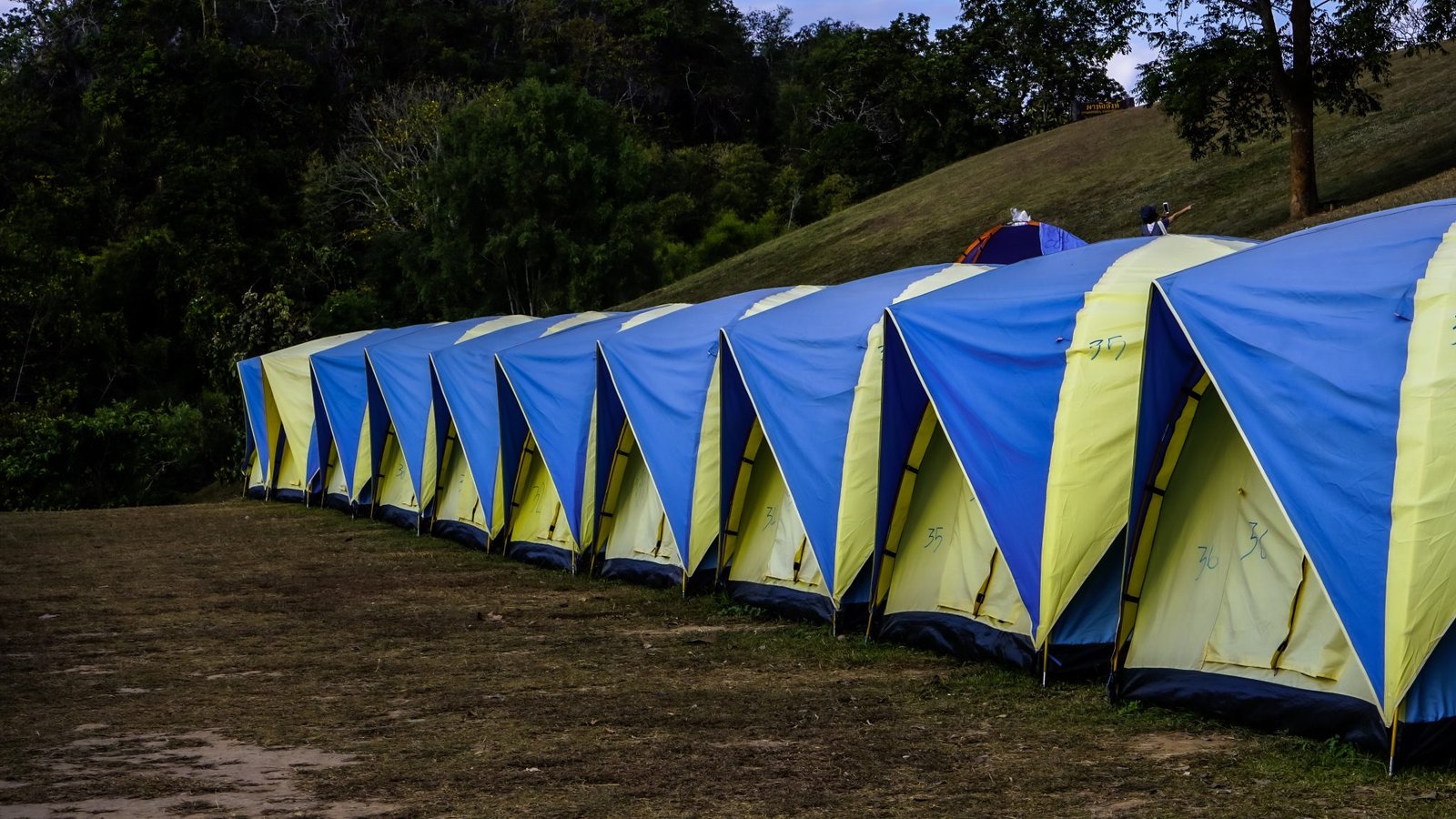
Featured photo: oonjira chantanupa via Openverse (CC0).