On this page
To cook while camping, choose a simple cooking method such as a camp stove, set up a stable kitchen area away from your tent, and plan easy meals you prep at home. Keep cold food in a well iced cooler, cook meat thoroughly, wash up away from water sources, and store food securely so wildlife cannot reach it.
Camp cooking does not need to be complicated. A stove, one or two pots, a cooler and a short menu are enough for great meals outdoors. This guide covers the main cooking methods, how to set up a camp kitchen, food safety, easy meal ideas, cleanup and the safety rules every camper should follow.
Key takeaways
- A two burner or single burner camp stove is the easiest and most reliable way for beginners to cook outdoors.
- Prep ingredients at home, such as chopping vegetables and marinating meat, to save time and mess at camp.
- Keep cold foods at 40°F or below in a cooler with plenty of ice, and use a food thermometer for meat.
- Never cook or run a stove inside a tent, because of fire and carbon monoxide risk.
- Store food and scented items securely, following local rules in bear country.
- Clean dishes away from lakes and streams, and pack out all food scraps.
What are the main ways to cook while camping?
The main ways to cook while camping are a camp stove, a campfire with a grill grate, a portable grill, a Dutch oven over coals, and no cook meals. Camp stoves are the most reliable for beginners because they light easily and give steady heat. Campfires add flavor and fun but depend on fire rules and weather.
Each method has strengths:
| Method | Best for | Pros | Cons |
|---|---|---|---|
| Camp stove | Most meals, coffee, quick dinners | Reliable, controllable heat | Needs fuel canisters or bottles |
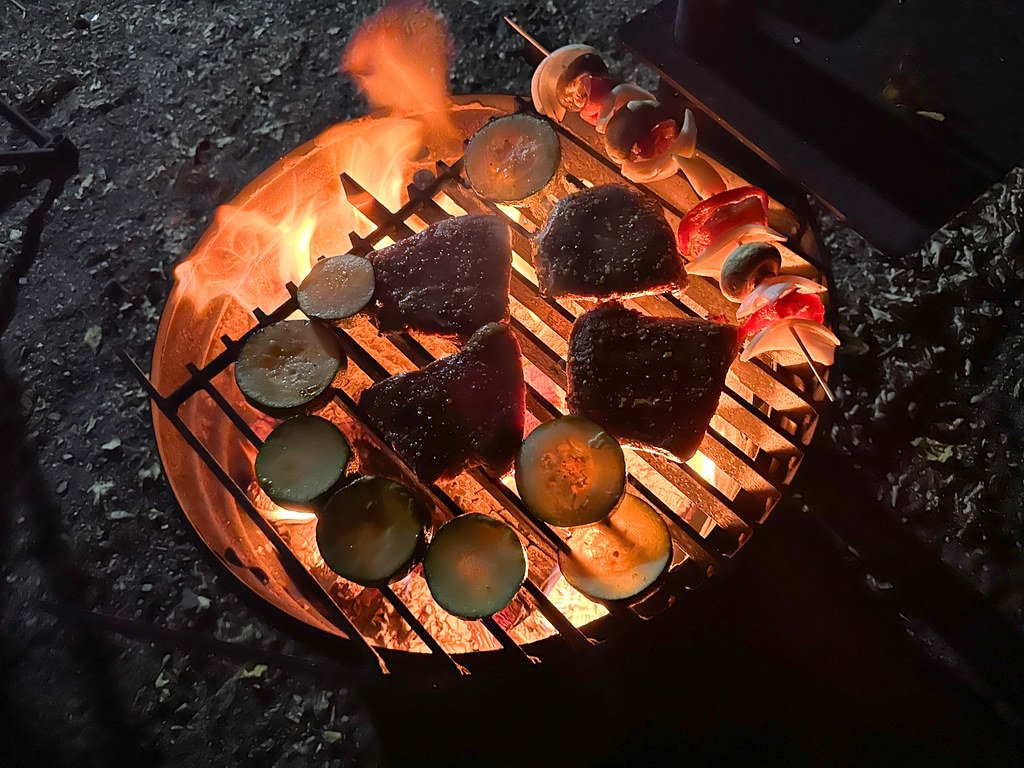
| Campfire with grate | Grilling, foil packets, kebabs | Flavor and atmosphere | Fire bans, uneven heat, takes time |
| Portable grill | Burgers, vegetables, sausages | Familiar cooking style | Bulky, needs fuel or charcoal |
| Dutch oven with coals | Stews, baking, one pot meals | Even heat, big batches | Heavy, takes practice |
| No cook meals | Lunches, hot days, quick stops | No fuel or cleanup | Limited variety |
Most beginner car campers do well with a stove for main meals and a campfire for an occasional treat. If you are shopping for one, our guide on how to choose a camping stove explains burner types, fuels and simmer control.
How do you set up a camp kitchen?
To set up a camp kitchen, choose a flat, stable surface such as a picnic table, place your stove on it away from tents and overhanging branches, keep the cooler in the shade, and set up a washing station nearby. Group cooking tools, spices and utensils in one bin so everything is easy to find.
A good layout keeps you safe and organized:
- Pick a level spot at least several steps away from your tent and any dry brush.
- Set the stove on a stable table or flat rock, never on soft ground.
- Shield the burner from wind with the stove’s windscreen or your vehicle.
- Place the cooler in shade and keep the lid closed as much as possible.
- Arrange a prep area with a cutting board, knife and bowls.
- Set up a washing station with two basins, biodegradable soap and a towel.
- Hang a light, such as a headlamp or lantern, for cooking after dark.
Our camping kitchen checklist lists every item worth packing, from pots and pans to trash bags and a lighter. Tent placement matters too, and our guide on how to choose a camping tent covers vestibules and space for storing cooking gear out of the rain.
Tip: Pack a dedicated kitchen bin with your stove, lighter, utensils, spices and dish kit. Keep it stocked between trips so you only need to add food before you leave.
How do you plan easy camping meals?
Plan easy camping meals by keeping menus short, choosing recipes with few ingredients and one pot or one pan, and prepping as much as possible at home. Write out each meal by day, list every ingredient, and match the menu to your cooking method so you are not stuck with food that needs an oven you do not have.
Simple planning steps:
- List how many breakfasts, lunches, dinners and snacks you need.
- Choose one pot or one pan meals for most dinners.
- Repeat ingredients across meals, such as tortillas for breakfast and lunch.
- Prep at home by chopping vegetables, measuring dry ingredients and marinating meat.
- Pack prepped food in labeled, sealed containers or bags.
- Plan the order of meals so perishable foods get eaten first.
For a deeper, beginner friendly menu framework, read our guide to easy camping meal planning for beginners.
Easy meal ideas for camp
- Breakfast: scrambled eggs with prechopped peppers, oatmeal with fruit, or breakfast burritos.
- Lunch: wraps, sandwiches, salads with sturdy greens, or cheese and crackers.
- Dinner: pasta with jarred sauce, chili, stir fry with precut vegetables, or foil packet meals.
- Snacks: trail mix, fruit, granola bars and crackers.
- Treats: toasted marshmallows or baked apples near the fire.
Warm meals do more than fill you up. A hot dinner and drink before bed help many people feel warmer at night, which is one reason our guide on how to stay warm while camping suggests eating well before you settle into your tent.
How do you keep food safe while camping?
Keep food safe while camping by storing perishable food at 40°F or below in a cooler with plenty of ice, separating raw meat from ready to eat food, washing hands before cooking, and cooking meat to safe internal temperatures checked with a food thermometer. Throw out perishable food that has sat warm for too long.
Food safety rules from home still apply outdoors, but heat and limited washing make them harder to follow. These habits help:
- Pre chill the cooler and food before packing.
- Use plenty of ice or ice packs, and refill as it melts.
- Pack raw meat in sealed containers at the bottom so juices cannot drip.
- Bring a separate cooler for drinks, which gets opened more often.
- Keep the cooler in the shade and off hot ground.
- Wash hands with soap and water, or use hand sanitizer when water is limited.
- Use a food thermometer, since color is not a reliable sign that meat is cooked.
The USDA and FoodSafety.gov publish safe minimum cooking temperatures and cooler guidance. Check them before your trip if you plan to cook meat, poultry or eggs. If someone becomes seriously ill after eating, with symptoms such as high fever, signs of dehydration or bloody diarrhea, seek medical care.
How do you cook over a campfire safely?
Cook over a campfire safely by using an existing fire ring, checking for fire restrictions first, keeping the fire small, and using a grill grate or cast iron to hold food steady. Cook over hot coals rather than tall flames, keep water and a shovel nearby, and put the fire out completely with water before leaving or going to bed.
Campfire cooking takes a little more patience than a stove. Follow these steps:
- Check current fire rules with the campground, park or land agency.
- Use an established fire ring where one exists.
- Build a small fire and let it burn down to glowing coals.
- Place a grill grate over the coals, or set a Dutch oven on them.
- Cook food over steady coals, moving it to cooler areas if it starts to burn.
- Keep a bucket of water and a shovel close by.
- Drown the fire with water, stir the ashes and drown again until everything is cool to the touch.
Foil packets are an easy campfire meal. Wrap sliced potatoes, vegetables and a protein in heavy foil with oil and seasoning, then cook them on the coals, turning them occasionally until everything is cooked through.
Tip: Bring heat resistant gloves or long tongs for campfire cooking. Grates and foil packets get very hot, and moving them by hand is a common way to get burned.
What safety rules should you follow when cooking outdoors?
The most important safety rules for cooking outdoors are never cooking inside a tent, using stoves on stable surfaces in open air, keeping children and pets away from flames, storing fuel safely, and following food storage rules for wildlife. These habits prevent burns, fires, carbon monoxide poisoning and unwanted visits from animals.
Follow these rules on every trip:
- Never cook inside a tent or run a stove, grill or heater in an enclosed space. The CDC warns that fuel burning devices can produce carbon monoxide, which can build up quickly in small spaces.
- Stay with your stove while it is lit.
- Let stoves cool before packing them away.
- Store fuel upright, away from heat, and outside the tent.
- Keep a clear zone around the cooking area, free of dry leaves and gear.
- Know the signs of carbon monoxide poisoning, such as headache, dizziness and nausea, and get to fresh air and call for emergency help if they appear.
Wildlife and food storage
Food smells attract animals, from raccoons to bears. In bear country, follow the park or campground rules, which may require bear lockers, bear resistant containers or storing food in a hard sided vehicle. Never keep food, trash or scented items such as toothpaste inside your tent. Clean up promptly after every meal.
How do you clean up after cooking at camp?
Clean up after cooking at camp by scraping food scraps into a trash bag, washing dishes in a basin with a small amount of biodegradable soap, rinsing in a second basin, and straining gray water before scattering it well away from lakes and streams. Pack out all food waste and trash, including small scraps.
A simple dishwashing routine:
- Scrape plates and pots into your trash bag.
- Heat water on the stove if you want hot washing water.
- Wash in the first basin with a small amount of soap.
- Rinse in the second basin.
- Dry dishes on a towel or rack.
- Strain the gray water to catch food bits, and pack them out with the trash.
- Scatter the water at least 200 feet from water sources, as Leave No Trace guidance recommends.
Use designated dishwashing stations if your campground provides them. Keep trash sealed and stored with your food at night.
What are common mistakes when cooking while camping?
Common camp cooking mistakes include planning complicated recipes, forgetting a lighter or fuel, not testing the stove before the trip, packing the cooler poorly, cooking in the tent during rain, and leaving food out overnight. A short menu, a tested stove and a stocked kitchen bin prevent most problems before they start.
Watch out for these:
- Too ambitious a menu. Choose simple recipes for your first trips.
- No backup ignition. Bring a lighter and waterproof matches.
- Untested stove. Light it at home before you leave.
- Running out of fuel. Pack spare fuel for longer trips or cold weather.
- Warm cooler. Opening it often or leaving it in the sun melts ice fast.
- Cooking in the tent. Use a tarp shelter or vestibule area in open air instead, with good airflow and distance from fabric.
- Late night snacks left out. Animals find food quickly after dark.
Good food and a calm camp kitchen also help you rest. A warm meal and a tidy site make it easier to settle down, and our guide on how to sleep better when camping covers the rest of a good night outdoors. For the bigger picture of your first trips, see our camping for beginners complete guide. Your next step: plan three simple meals, test your stove at home and pack a kitchen bin.
Frequently asked questions
What is the easiest way to cook while camping?
The easiest way for most beginners is a camp stove with one or two burners. It lights quickly, gives steady heat, and works when fire bans are in place. Pair it with one pot meals and food you prepped at home, such as chopped vegetables and premixed pancake batter, to keep cooking quick and simple.
Can you cook in a tent if it is raining?
No. Never cook or run a stove inside a tent, even in heavy rain. Fuel burning stoves can cause fires and produce carbon monoxide, which can build up quickly. Instead, cook under a well ventilated tarp in open air, keep the stove away from fabric, or choose meals that need no cooking.
How do you keep food cold while camping?
Pre chill your cooler and food, pack it with plenty of ice or ice packs, and keep it in the shade with the lid closed as much as possible. Use a separate cooler for drinks, which gets opened often. Keep perishable foods at 40°F or below, and add ice as it melts.
What food should you bring camping for beginners?
Bring simple, familiar foods that need little preparation: eggs, oatmeal, wraps, pasta with jarred sauce, prechopped vegetables, cheese, fruit and trail mix. Plan one pot dinners and easy lunches. Choose sturdy foods that survive a cooler well, and plan to eat the most perishable items first.
How do you wash dishes while camping?
Scrape food scraps into a trash bag, then wash dishes in a basin with a small amount of biodegradable soap and rinse them in a second basin. Strain the gray water, pack out food bits, and scatter the water at least 200 feet from lakes and streams. Use campground dish stations when available.
Sources and further reading
Featured photo: cogdogblog via Openverse (CC0).