On this page
A three-season tent is built for spring, summer and fall, with lots of mesh for airflow and a light frame that handles rain and moderate wind. A four-season tent is built for winter and exposed mountain conditions, with stronger poles, more solid fabric and a shape that sheds snow and stands up to strong wind. Most campers need a three-season tent.
The names cause confusion. A four-season tent is not simply a better tent for every season. It is a specialist shelter that trades ventilation and weight for strength. This guide compares the two types side by side, explains the design differences and helps you decide which one fits the trips you actually take.
Key takeaways
- Three-season tents suit most camping and backpacking from late spring to early fall in typical conditions.
- Four-season tents are designed for snow loads, strong wind and cold, often above tree line or in winter.
- Four-season tents are usually heavier, warmer and less ventilated, which can feel stuffy in summer.
- Extended season or “three plus” tents sit in between, adding strength and less mesh for shoulder seasons.
- A warmer tent does not replace a warm sleeping bag and pad. Insulation comes mostly from your sleep system.
What is the difference between a three-season and a four-season tent?
The difference between a three-season and a four-season tent is what each is built to withstand. A three-season tent prioritizes ventilation and low weight for rain, bugs and moderate wind. A four-season tent prioritizes strength, using more or thicker poles, more solid fabric and a low profile to handle heavy snow and strong wind.
What the labels usually mean:
- Three-season: designed for spring, summer and fall conditions. Mesh panels in the inner tent, a rainfly that may stop above the ground for airflow, and a frame that handles rain and moderate wind.
- Four-season: designed for winter camping and harsh mountain weather. Solid or mostly solid inner walls, a rainfly that reaches closer to the ground, stronger pole structures and steeper walls or domed shapes that shed snow.
- Extended season or three plus: a middle ground with less mesh, sturdier poles and more guy out points than a typical three-season tent, without the full weight of a winter tent.
These labels are not standardized ratings. Two tents with the same label can differ a lot, so read the specifications for each model you consider.
How do three-season and four-season tents compare side by side?
Three-season and four-season tents compare on strength, weight, ventilation, warmth, condensation, setup and versatility. Three-season tents win on airflow, weight and comfort in mild or warm weather. Four-season tents win on wind and snow resistance and on holding warmth. The right choice depends on the worst conditions you expect, not the average.
| Factor | Three-season tent | Four-season tent |
|---|---|---|
| Main purpose | Rain, bugs, moderate wind | Snow, strong wind, cold |
| Inner walls | Often lots of mesh | Mostly solid fabric |
| Rainfly | May stop above the ground | Usually closer to the ground |
| Poles | Fewer, lighter | More, stronger, more crossings |
| Weight | Lighter | Heavier |
| Ventilation | High | Lower, managed with vents |
| Warmth | Less heat retained | More heat retained |
| Snow load | Not designed for it | Designed for it |
| Summer comfort | Good | Often hot and stuffy |
| Best for | Most campers, most trips | Winter, alpine, exposed sites |
Use this table as a general guide, then compare specific tents on pole design, fabric and guy out points.
What are the strengths and limits of three-season tents?
Three-season tents are lighter, more ventilated and more comfortable in warm or mild weather, which makes them the right choice for most campers. Mesh keeps bugs out while letting air through, and the rainfly handles typical rain. Their limits show in heavy snow, very strong wind or deep cold, where mesh lets in drafts and poles may bend.
Strengths
- Lower weight and packed size for backpacking.
- Good airflow, which reduces condensation in mild conditions.
- Comfortable in summer heat.
- Mesh walls let you see out and stay cool on warm nights.
- A wide range of designs and sizes.
Limits
- Not designed to hold snow loads.
- Mesh lets in cold air and spindrift in winter conditions.
- Lighter pole structures may flex or fail in strong, sustained wind.
- A rainfly that stops high can let wind driven rain or snow underneath.
Our full guide on how to choose a camping tent covers materials, doors, vestibules and setup in more detail.
What are the strengths and limits of four-season tents?
Four-season tents are built to stay standing in strong wind and to shed or support snow, and they hold more warmth inside thanks to solid walls and a low fly. Their limits are higher weight, less airflow and more heat buildup in summer. Many are also more complex to pitch, and some need careful guying out to perform.
Strengths
- Stronger pole structures with more crossing points.
- Steep or domed shapes that shed snow.
- Solid inner walls that block wind and spindrift.
- More guy out points for anchoring in storms.
- Often designed to work with snow stakes or deadman anchors.
Limits
- Heavier and bulkier to carry.
- Can feel hot and stuffy in warm weather.
- Less mesh means condensation needs active management with vents.
- Usually cost more than comparable three-season tents.
What is the difference between mountaineering and base camp tents?
Within the four-season category, mountaineering tents are usually compact, low and as light as possible for carrying high, while base camp tents are roomier and heavier, meant to be pitched at a fixed camp for several days. Some single wall winter tents save weight but manage condensation less easily than double wall designs.
Can you use a three-season tent in winter?
You can use a three-season tent in some mild winter conditions, such as sheltered low elevation sites with light snow and little wind, if you have a warm sleeping system and experience. It is not designed for heavy snowfall or strong wind, so clear snow off regularly, choose a protected site and turn back if a storm is forecast.
If you try it:
- Check the forecast carefully and avoid storms, heavy snow and high winds.
- Pitch in a sheltered spot, such as among trees, away from dead branches.
- Use snow stakes or buried anchors if the ground is snow covered.
- Knock snow off the fly through the night so it does not build up.
- Bring a sleeping bag and pad rated for the temperatures you expect.
- Have a plan to retreat to your car or a shelter if conditions turn bad.
Cold weather camping carries real risk, including hypothermia. If you are new to it, start close to your car or a warm building and learn from experienced campers or a guided course first.
Tip: Your sleeping pad and bag do most of the work keeping you warm. A four-season tent with a summer sleeping bag will still be a cold night.
Can you use a four-season tent in summer?
You can use a four-season tent in summer, but it is often hotter, heavier and stuffier than you need. Solid walls and a low fly reduce airflow, so condensation and heat can build up on warm, still nights. It makes sense in summer only for high, exposed or stormy places, such as alpine camps or windy coasts.
Ways to make a four-season tent more comfortable in warm weather:
- Open every vent and door that is safe to open.
- Pitch in shade and position the door toward any breeze.
- Some models allow you to pitch only the fly or roll back panels.
For most summer camping, a three-season tent will be lighter and more pleasant.
How do tent design and pole structure differ?
Tent design and pole structure differ because four-season tents use more poles, more crossing points and often thicker or stronger poles to create a stiff frame that resists wind and snow. Three-season tents use fewer, lighter poles to save weight. Shape matters too: low domes shed wind and snow, while taller walls give more living space.
Design features to compare:
- Number of pole crossings. More crossings usually make a stiffer frame.
- Freestanding or not. Many four-season tents are freestanding, which helps on snow or rock. Our guide on freestanding vs non-freestanding tents explains the trade-offs.
- Guy out points. More points help you anchor the tent in wind.
- Vestibules. Larger vestibules help in winter for storing gear and boots.
- Single or double wall. Double wall tents manage condensation better, while single wall tents save weight.
For a structured way to evaluate these, see how to compare tent designs.
How does ventilation and condensation differ?
Ventilation and condensation differ because three-season tents use mesh and a high fly to move air freely, which reduces condensation in mild weather. Four-season tents trap more air to hold warmth, so moisture from breath and damp gear can build up on the walls. They rely on adjustable vents, which you need to use even when it is cold.
How to reduce condensation in either type:
- Open vents, even a little, especially overnight.
- Pitch away from water and low spots where cold, damp air collects.
- Keep wet gear in the vestibule, not inside the sleeping area.
- Avoid cooking inside the tent. It adds moisture and carries a serious risk of carbon monoxide poisoning and fire.
- Wipe walls in the morning with a small cloth.
Which tent type should you buy?
Most campers should buy a three-season tent, because it covers the vast majority of camping trips from late spring to early fall. Choose a four-season tent only if you plan winter camping with snow, alpine or high exposure trips, or camping in places known for violent wind. An extended season tent suits shoulder seasons and cooler, windy areas.
| If you mostly… | Choose |
|---|---|
| Car camp in summer | Three-season |
| Backpack from late spring to early fall | Three-season |
| Camp in shoulder seasons with cold nights | Extended season or sturdy three-season |
| Camp on windy coasts or open ridges | Extended season or four-season |
| Camp in winter with snow | Four-season |
| Climb or camp above tree line in storms | Four-season mountaineering tent |
Also think about size. Capacity labels describe how many sleeping pads fit, not how much room people need with gear. Read tent capacity ratings explained before you choose a size, especially for winter trips with bulky gear.
What mistakes do people make choosing between tent types?
The most common mistakes are buying a four-season tent for summer trips because it sounds tougher, using a three-season tent in heavy snow or storms, assuming a tent provides warmth and ignoring weight. Another mistake is not practicing the setup at home, which matters even more with complex four-season tents in cold or windy weather.
Mistakes to avoid:
- Overbuying. A winter tent for summer camping means extra weight and heat.
- Underbuying. A light, mesh heavy tent on an exposed winter ridge can fail.
- Relying on the tent for warmth. Your sleeping bag and pad matter more.
- Skipping guy lines. Many tents only reach their full wind resistance when properly guyed out.
- No practice pitch. Set it up at home or in a park first.
Your next step is to narrow down the features that matter for your trips. Start with our guide on how to choose a camping tent, or if you are new to camping, read camping for beginners: complete guide.
Frequently asked questions
Do I need a four-season tent for fall camping?
Usually not. A good three-season tent handles most fall camping, especially at lower elevations and in sheltered sites. Bring a warmer sleeping bag and pad for cold nights. Consider an extended season tent if you camp in exposed, windy places or where early snow is possible.
Are four-season tents warmer?
Four-season tents hold a little more warmth because solid walls and a low fly block wind and trap air. They are not heated, though, and the difference is modest. Your sleeping bag, sleeping pad and clothing provide most of your warmth, so choose those for the coldest temperatures you expect.
Is a three-season tent waterproof?
A three-season tent with a good rainfly and floor is designed to keep you dry in typical rain when pitched correctly. Waterproofing depends on fabric coatings, seam taping and a taut, well staked fly. Check seams before trips, and practice pitching the fly tightly so water runs off instead of pooling.
What is a three plus season tent?
A three plus or extended season tent sits between three-season and four-season designs. It usually has less mesh, sturdier poles and more guy points than a standard three-season tent, so it handles cooler temperatures and stronger wind. It is lighter than a full winter tent but not built for heavy snow.
Sources and further reading
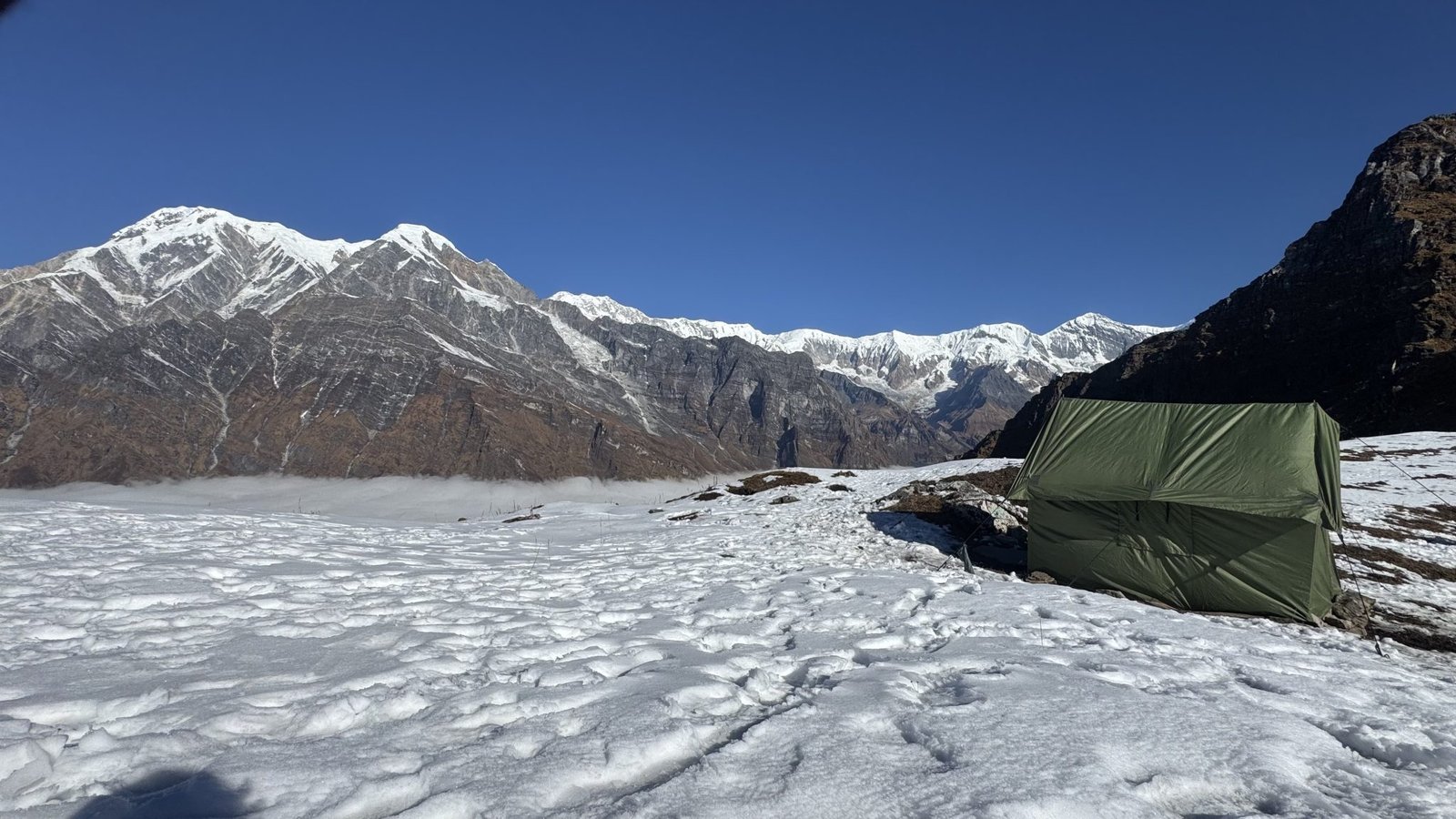
Featured photo: Tilak Bahadur Karki via Openverse (CC0).