On this page
A freestanding tent holds its shape with its own poles, so it stands up before you add a single stake. A non-freestanding tent relies on stakes and tension, often using trekking poles, to stay upright. Freestanding tents are easier to pitch almost anywhere, while non-freestanding tents are often lighter and pack smaller.
This comparison explains how each design works, where each one shines, the middle ground called semi-freestanding, and how to decide which suits your camping. It is a research-based guide focused on design trade-offs, so it does not recommend specific models.
Key takeaways
- Freestanding tents stand on their pole frame alone, though you should still stake them down.
- Non-freestanding tents need stakes or anchors to stand, and often use trekking poles instead of dedicated poles.
- Freestanding designs suit beginners, car campers and rocky or platform sites.
- Non-freestanding designs suit weight-conscious backpackers who are comfortable with careful pitching.
- Semi-freestanding tents mix both approaches, trading a little weight for some extra flexibility.
What is the difference between freestanding and non-freestanding tents?
The difference between freestanding and non-freestanding tents is how they hold their shape. Freestanding tents use a pole frame that creates structure on its own, so the tent stands without stakes. Non-freestanding tents need stakes, guylines and tension to stand. That single difference affects weight, setup, campsite choice and how the tent behaves in wind.
| Factor | Freestanding | Non-freestanding |
|---|---|---|
| Structure | Pole frame holds the shape | Stakes and tension hold the shape |
| Stakes needed to stand | No, but still recommended | Yes |
| Typical weight | Often heavier | Often lighter |
| Packed size | Poles add length and bulk | Often smaller, especially with trekking poles |
| Setup | Usually intuitive | Needs practice to pitch tautly |
| Rock, platforms, hard ground | Easier | Harder, needs creative anchoring |
| Moving after pitching | Easy to pick up and reposition | Must re-stake |
| Best fit | Beginners, car camping, varied terrain | Ultralight backpacking, experienced campers |
What is a freestanding tent?
A freestanding tent is a tent whose poles create a self-supporting frame, usually a dome or similar shape, so it stands without stakes. You can pitch it on rock, a wooden platform or hard ground, then lift and move it to a better spot. You still need stakes to secure it against wind and to pitch most vestibules.
Pros of freestanding tents
- Simple, intuitive setup, often with color-coded poles and clips.
- Works on sites where stakes will not go in easily.
- Easy to move after pitching, for example to avoid a root or puddle.
- Can be shaken out or dried by lifting it upside down.
- Steeper walls in many dome designs give good headroom.
Cons of freestanding tents
- Dedicated poles add weight and packed length.
- Often more expensive to make ultralight because of the pole frame.
- Unstaked tents can blow away, so they are not truly stake-free in practice.
- Vestibules usually still need stakes to be useful.
What is a non-freestanding tent?
A non-freestanding tent is a tent that needs stakes, guylines and tension to stand up. Many use one or two trekking poles as the main supports instead of dedicated tent poles, while tunnel tents use poles that only stand when staked out. Tarps and many single-wall ultralight shelters also fall into this category.
What types of non-freestanding shelters are there?
- Trekking pole tents: one or two trekking poles hold up the peak or ends, and stakes create the shape.
- Tunnel tents: hoops of poles run across the tent, but they only stand once both ends are staked out.
- Pyramid shelters: a single central pole and a ring of stakes form a tall, steep-walled shape.
- Tarps: a flat sheet pitched between poles, trees or guylines, often paired with a separate bug net and groundsheet.
- Bivy-style shelters: low, minimal shelters that may use a small pole or guyline to lift the fabric off your face.
Each of these relies on good anchoring, so the quality of your stakes and how well you pitch them matter as much as the shelter itself.
Pros of non-freestanding tents
- Often lighter, especially when trekking poles double as tent poles.
- Smaller packed size without long pole sections.
- A well-pitched shelter can be stable in wind because of its tension and guylines.
- Often large floor area or vestibule space for the weight.
Cons of non-freestanding tents
- Needs ground that holds stakes, or improvised anchors.
- Takes practice to pitch tautly and get the shape right.
- Larger footprint once guylines are staked out.
- Sloped walls in some designs reduce usable headroom.
- If you rely on trekking poles, you need to carry them.
Tip: Practice pitching a non-freestanding tent several times at home or in a park before a trip. A taut pitch is a learned skill, and a loose pitch sheds rain and wind poorly.
What is a semi-freestanding tent?
A semi-freestanding tent is a hybrid that uses a partial pole frame, often supporting the head end and center, with one or more corners that must be staked to stand fully. It saves weight compared with a fully freestanding design while still standing partly on its own. It is common in lightweight backpacking tents.
Semi-freestanding designs suit backpackers who want lower weight but still value easier setup than a fully staked shelter. The trade-off is that the foot end or vestibule may sag without stakes, so they still need decent ground. Our guide on how to compare tent designs covers dome, tunnel, semi-freestanding and trekking pole shapes in more detail.
Which is better on different terrain?
Freestanding tents are better on rock, wooden platforms, hard-packed ground and uneven sites because they do not depend on stakes to stand. Non-freestanding tents work best on soil that holds stakes well. In sand and snow, both designs need wider stakes or buried anchors, but non-freestanding tents rely on them more heavily.
| Terrain | Freestanding | Non-freestanding |
|---|---|---|
| Forest soil | Works well | Works well |
| Rock slabs | Stands, weight it with rocks or tie off | Needs rocks or other anchors |
| Wooden platforms | Stands, tie off to platform | Needs platform tie-off points |
| Sand | Stands, needs wide stakes or buried anchors | Needs wide stakes or buried anchors |
| Snow | Stands, needs snow stakes or deadman anchors | Needs snow stakes or deadman anchors |
| Hard-packed ground | Stands, stakes may be hard to drive | Can be difficult to pitch |
Improvised anchors for difficult ground
- Tie guylines around large rocks placed on the ground.
- Bury a stake or stuff sack horizontally in sand or snow, known as a deadman anchor.
- Loop guylines around trees or roots where allowed.
- Use cords to tie off to platform edges or built-in hooks.
- Carry a few wider stakes for soft ground if you expect it.
Follow Leave No Trace principles and avoid moving large rocks or damaging plants when you anchor a tent.
How do weight and packed size compare?
Non-freestanding tents are often lighter and pack smaller than freestanding tents of similar size, mainly because they use fewer or no dedicated poles. If you already hike with trekking poles, a trekking pole shelter can save noticeable weight. Freestanding tents carry extra weight in their poles but give you more setup flexibility in return.
For car campers, the difference rarely matters. For backpackers covering long distances, saving weight can make the trip more comfortable. Consider the whole system: if you do not normally carry trekking poles, you may need dedicated poles for a non-freestanding shelter anyway, which reduces the weight benefit.
How do they handle wind and rain?
Both freestanding and non-freestanding tents can handle wind and rain well when well designed and properly pitched. Freestanding tents gain strength from their pole frame, while non-freestanding tents rely on tension and guylines. In practice, site choice, guying out and a taut pitch matter more than the category. Read each tent’s weather rating carefully.
- Use all guylines in strong wind, whatever the design.
- Pitch the narrow end into the wind for many tunnel and trekking pole shelters.
- Choose sheltered sites behind trees, rocks or terrain where possible.
- Retension the fly as it stretches when wet or cold.
Season rating matters as much as structure. See three-season vs four-season tents for how designs differ in heavy weather and snow.
Which should you choose: freestanding or non-freestanding?
Choose a freestanding tent if you are new to camping, car camp often, pitch on rock or platforms, or want simple setup. Choose a non-freestanding tent if you backpack long distances, care about weight, already use trekking poles and are comfortable practicing a taut pitch. A semi-freestanding tent can balance both needs.
| You are | Consider |
|---|---|
| A beginner or family camper | Freestanding |
| A car camper | Freestanding |
| Often on platforms or rocky sites | Freestanding |
| A weight-conscious backpacker using trekking poles | Non-freestanding |
| A long-distance hiker | Non-freestanding or semi-freestanding |
| Looking for a lightweight middle ground | Semi-freestanding |
Also check capacity, since person ratings vary widely between designs. Our explainer on tent capacity ratings shows how to compare floor dimensions. For a complete buying process, read how to choose a camping tent.
How do you pitch a non-freestanding tent well?
To pitch a non-freestanding tent well, stake the corners squarely to form the floor shape first, then raise the poles to the stated height and tension the guylines evenly. Adjust each side until the fabric is smooth and taut. Practice at home makes this quick and reliable on the trail.
- Pick a flat site with soil that will hold stakes.
- Lay the tent out and orient it with the wind in mind.
- Stake the floor corners to create a square, wrinkle-free shape.
- Set your trekking poles or tent poles to the recommended length.
- Raise the poles and stake the main guylines.
- Tension each side evenly until the fabric is taut.
- Adjust pole height and stake positions to remove sags.
- Retension later in the evening, as fabric often loosens when it cools or gets damp.
What are common mistakes when choosing between them?
The most common mistakes are assuming freestanding means stake-free, buying a non-freestanding tent without practicing setup, ignoring the terrain you camp on and focusing only on weight. Many campers also forget that semi-freestanding designs exist. Matching the tent to your terrain and skill level avoids most problems.
- Skipping stakes on a freestanding tent. Wind can carry an unstaked tent away quickly.
- Choosing ultralight before you are ready. Non-freestanding tents reward experience.
- Forgetting trekking poles. A trekking pole shelter does not stand without them.
- Ignoring headroom. Sloped walls can make long rainy days inside less comfortable.
- Not checking campsites. Platform and rocky sites favor freestanding tents.
Next step: if you are new to camping, start with our camping for beginners guide to plan a first trip with whichever tent you choose.
Frequently asked questions
Do you need to stake a freestanding tent?
Yes, you should stake a freestanding tent even though it stands on its own. Wind can lift or roll an unstaked tent, especially when empty. Stakes also tension the rainfly and vestibules so they shed rain properly. On rock or platforms, tie guylines to rocks or tie-off points instead.
Are non-freestanding tents good for beginners?
Non-freestanding tents can work for beginners, but they take more practice to pitch well. Getting a taut pitch, choosing ground that holds stakes and improvising anchors are learned skills. Many beginners start with a freestanding tent for simplicity and consider a non-freestanding design later if they want to save weight.
Is a freestanding tent better in the wind?
Not necessarily. A freestanding tent gains strength from its poles, but a well-designed, properly pitched non-freestanding tent can also perform well in wind. Site choice, using every guyline and keeping the fabric taut matter more than the category. Check each tent’s design and season rating for your conditions.
What is a trekking pole tent?
A trekking pole tent is a non-freestanding shelter that uses one or two trekking poles as its main supports instead of dedicated tent poles. It saves weight for hikers who already carry poles. It needs stakes and guylines to stand and takes some practice to pitch tautly.
Sources and further reading
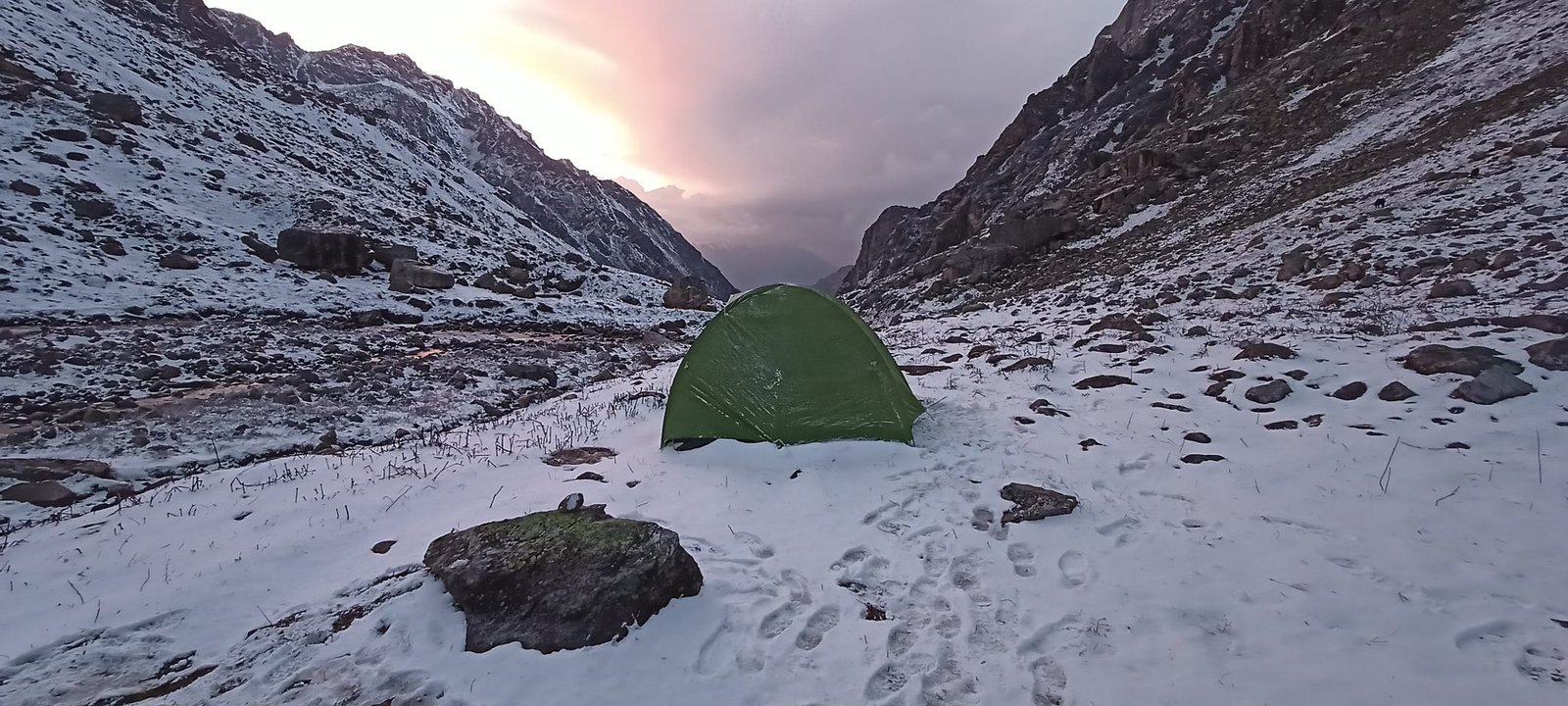
Featured photo: Subrata Sarkar via Openverse (CC0).