On this page
To camp in the rain, pick a campsite on slightly raised, well-drained ground, pitch a tent with a full-coverage rainfly, and rig a tarp over your cooking and sitting area. Keep a dry set of clothes and your sleeping bag sealed in waterproof bags, vent the tent to cut condensation, and watch the forecast for storms or flooding. Good preparation turns a wet weekend into a cozy one.
This guide covers planning, gear, campsite choice, pitching, cooking, staying dry inside the tent and packing up wet. It also explains the rain-related hazards that mean you should leave, such as thunderstorms and flash flooding.
Key takeaways
- Check the forecast for thunderstorms, high winds and flood warnings, not just rain.
- Choose a site on gently raised, firm ground. Never camp in a dry wash, gully or low spot.
- Use a tent with a full rainfly and seal seams if needed. Keep a footprint tucked inside the fly’s edge.
- Rig a tarp so you have a dry place to cook, eat and change.
- Pack your sleeping bag and spare clothes in waterproof bags, and keep wet gear out of the inner tent.
- Ventilate the tent to reduce condensation, even when it is raining.
Is it safe to camp in the rain?
Camping in the rain is generally safe when the forecast shows steady rain without thunderstorms, high winds or flood warnings, and when you camp away from low ground and waterways. Rain itself is mostly a comfort problem. The real dangers are lightning, flash floods, falling branches in wind and getting cold and wet.
Before you go, check the forecast from the National Weather Service or your local weather agency for the campsite location, including any watches or warnings. If thunderstorms or flood warnings are forecast, consider changing your dates or location.
During your trip, know when to leave:
- Thunderstorms: If you hear thunder, lightning is close enough to be a risk. Our guide to lightning safety for hikers and campers explains what to do. A tent offers no protection from lightning, so move to a hard-topped vehicle or enclosed building if you can.
- Flash flooding: Rising water, muddy fast-moving streams or a roaring sound upstream mean you should move to higher ground immediately. Never drive or walk through floodwater.
- High winds: Strong gusts can bring down branches and trees. Avoid pitching under dead limbs.
- Cold and wet: Wet clothing and wind can lead to hypothermia even in mild temperatures. Change into dry layers and warm up early.
How do you plan a camping trip when rain is forecast?
Plan a camping trip with rain in the forecast by checking for storm and flood warnings, choosing a campground with good drainage or covered facilities, and packing extra waterproof gear. Car camping is easier in rain than backpacking because you can bring a large tarp, spare clothes and a vehicle to retreat to if needed.
- Check the forecast regularly. Look at hourly rain, wind and thunderstorm chances for your campsite.
- Pick the right kind of trip. Car camping lets you bring extras and shelter in your vehicle. Our guide to car camping vs backpacking compares the two.
- Choose a campground with good drainage. Gravel or raised tent pads drain better than flat grass in a low area.
- Look for covered areas. Some campgrounds have picnic shelters you can use for cooking.
- Pack extra dry clothes and towels.
- Plan easy meals. Simple meals mean less time cooking in the wet.
- Have a backup plan. Know a nearby cabin, motel or covered area if conditions get worse.
If you are new to camping, our camping for beginners complete guide covers the basics you need before adding rain to the mix.
What gear do you need to camp in the rain?
To camp in the rain, you need a tent with a full-coverage rainfly, a tarp with guylines and stakes, waterproof stuff sacks or bags, a rain jacket and pants, waterproof or quick-drying footwear, extra dry clothes and towels. A good headlamp and a few trash bags for wet gear make life much easier.
| Gear | Why it helps in rain |
|---|---|
| Tent with full rainfly | Covers walls and doors to stop rain getting in |
| Footprint or ground sheet | Protects the floor, should not stick out past the fly |
| Tarp with guylines | Creates a dry area for cooking and sitting |
| Waterproof stuff sacks or dry bags | Keep sleeping bag and clothes dry |
| Rain jacket and pants | Keep you dry while moving around camp |
| Quick-drying or waterproof shoes | Mud and puddles are unavoidable |
| Extra socks and base layers | Dry clothes for evenings and sleeping |
| Camp towel | Wipes down gear and the tent floor |
| Trash bags | Store wet gear, line packs, sit on |
| Headlamp | Rainy days are darker |
Choosing a tent for rain
A tent for rainy weather should have a rainfly that reaches close to the ground, taped or sealed seams, a bathtub-style floor that rises up the sides, and vestibules for storing wet gear. Our guide on how to choose a camping tent explains waterproof features, materials and design.
Rain clothing
A waterproof breathable jacket keeps you dry while moving around camp. Our guide on how to choose a rain jacket covers membranes and fit.
Tip: Practice pitching your tent and tarp at home or in a park before your trip. In the rain, knowing exactly what to do saves you from getting soaked during setup.
How do you choose a campsite in the rain?
Choose a campsite in the rain on slightly raised, firm ground that drains well, away from streams, dry washes and low spots where water collects. Avoid pitching under dead branches or isolated tall trees. Look for natural shelter from wind, such as a line of healthy trees or a slope.
- Pick high, firm ground. A gentle rise drains better than a flat hollow.
- Look for drainage. Gravel, sandy soil or a raised tent pad works better than compacted dirt or clay.
- Stay away from water. Rivers and streams can rise quickly. Never camp in a dry wash or gully.
- Check above you. Avoid dead branches and leaning trees.
- Use natural wind shelter. Bushes or a hillside can block wind-driven rain.
- Face the door away from the wind. This keeps rain from blowing into the tent.
Our guide to how to choose a campsite explains site selection in more detail.
How do you set up a tent in the rain?
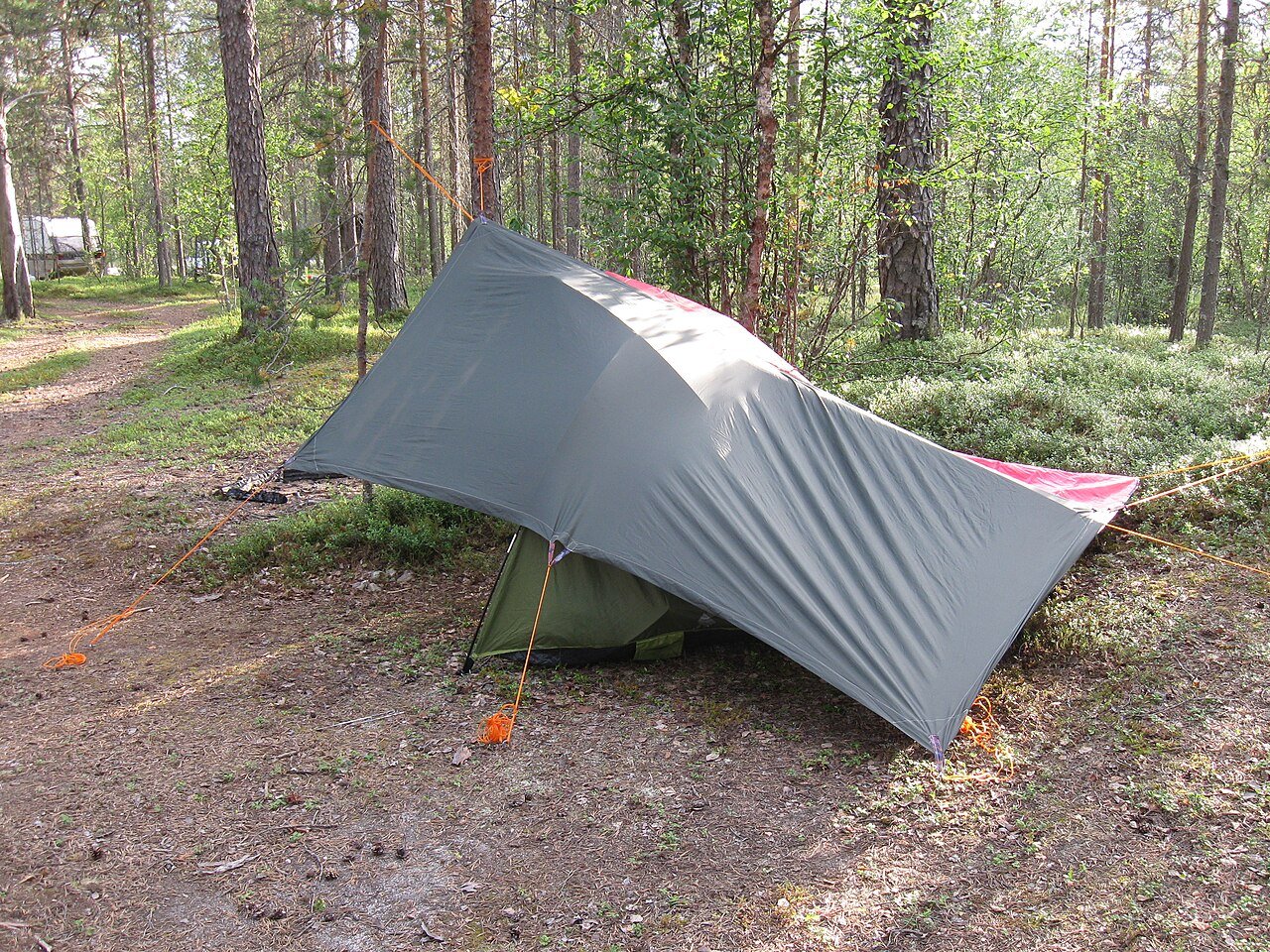
To set up a tent in the rain, pitch the tarp first if you have one, then set up the tent quickly with the rainfly on as early as possible. Some tents let you pitch the fly first, which keeps the inner tent dry. Tuck the footprint fully under the tent and stake out guylines firmly for a taut pitch.
- Pitch the tarp first. It gives you a dry space to unpack and set up beneath.
- Prepare everything before you unpack. Have poles, stakes and the fly ready.
- Pitch fly-first if your tent allows it. This keeps the inner tent dry from the start.
- Lay the footprint so it does not stick out. A footprint that extends past the fly collects rain and channels it under the tent.
- Set up the inner tent quickly and get the fly on as soon as possible.
- Stake out all guylines. A taut fly sheds water better and stops it touching the inner tent.
- Check that the fly does not touch the inner walls. Contact points can let water through.
- Open the vents. Ventilation reduces condensation.
For a full step-by-step guide in any weather, see how to set up a tent.
How to rig a tarp
Hang a tarp between trees or trekking poles, angled so water runs off one side rather than pooling in the middle. Pitch it slightly lower on the windward side. A tarp over the tent door creates a sheltered entry for taking off wet layers.
How do you cook while camping in the rain?
Cook while camping in the rain under a tarp or covered shelter, never inside your tent. Choose quick, simple meals that use one pot, and prep ingredients at home so you spend less time outside. Keep your stove stable, shielded from wind and well away from the tarp fabric to avoid melting or fire.
- Never cook inside a tent or closed vestibule. Stoves can cause fires and produce carbon monoxide, which can be deadly in an enclosed space.
- Cook under a well-ventilated tarp with plenty of space above the flame.
- Plan one-pot meals. Pasta, soups, chili and stews are easy and warming.
- Prep at home. Chop, measure and pack ingredients before you leave.
- Keep matches and lighters dry in a waterproof bag, and bring a backup.
- Bring hot drinks. A warm drink lifts spirits on a wet day.
Our guide on how to cook while camping covers stoves and methods, and our easy camping meal planning for beginners helps you plan simple menus.
How do you stay dry inside a tent in the rain?
Stay dry inside a tent in the rain by keeping wet gear in the vestibule, ventilating to reduce condensation, avoiding contact with tent walls and storing your sleeping bag and clothes in waterproof bags. Take off wet layers before getting inside, and wipe up any water quickly with a camp towel.
Manage condensation
Condensation forms when warm, moist air inside the tent hits the cooler tent walls. It can make the inside feel like it is leaking even when it is not.
- Open roof and door vents, even in rain.
- Keep wet gear outside the inner tent.
- Avoid cooking or drying clothes inside the tent.
- Wipe down walls with a towel in the morning.
Keep a dry zone
- Take off wet layers in the vestibule or under the tarp.
- Store wet gear in trash bags or the vestibule.
- Keep your sleeping bag sealed until bedtime.
- Change into dry sleep clothes.
- Avoid touching the tent walls, which can draw water through.
Tip: Keep one set of clothes that you only wear inside the tent. Having guaranteed dry clothes for sleeping is one of the biggest comfort boosts on a wet trip.
For more ways to stay comfortable on cool, damp nights, see our guide on how to stay warm while camping.
What can you do while camping in the rain?
While camping in the rain, you can enjoy card games, books and conversation under the tarp, take short walks in rain gear, explore nearby visitor centers or towns, and enjoy the sound of rain from your tent. Plan a few indoor or sheltered activities in advance so the day feels relaxed rather than stuck.
- Play card or board games under the tarp
- Bring a book or download podcasts and audiobooks
- Take a short walk in rain gear to see waterfalls and streams at their best
- Visit a nearby museum, cafe or visitor center
- Try photography of rain-soaked forests and mist
- Nap and rest, which is part of the fun of camping
How do you pack up a wet tent?
To pack up a wet tent, shake off as much water as possible, pack the rainfly separately from the inner tent, and put everything in a large bag so it does not soak your other gear. Once you get home, set the tent up or hang it to dry completely within a day or so to prevent mildew.
- Pack everything else first while the tent provides shelter.
- Shake off water from the fly and footprint.
- Wipe the inner tent with a towel if it is damp.
- Pack wet parts separately in a trash bag or stuff sack.
- Dry everything at home. Set the tent up or hang it in a garage or yard until fully dry.
Storing a damp tent can lead to mildew, odors and damage to coatings. Dry it completely before putting it away.
Common mistakes when camping in the rain
The most common mistakes when camping in the rain are pitching in a low spot, letting the footprint stick out past the rainfly, cooking inside the tent, storing wet gear in the inner tent and forgetting spare dry clothes. Others include ignoring thunderstorm warnings and packing a wet tent away for days.
- Camping in a hollow, wash or near a stream
- Leaving the footprint exposed so it channels water under the tent
- Cooking inside the tent or vestibule
- Bringing wet gear and clothing into the sleeping area
- Sealing the tent completely and creating heavy condensation
- Forgetting extra socks and dry sleep clothes
- Ignoring thunderstorm and flood warnings
- Storing a wet tent without drying it
Frequently asked questions
Can you camp in the rain without getting wet?
You can camp in the rain and stay mostly dry by using a tent with a full rainfly, rigging a tarp for cooking and sitting, keeping dry clothes and your sleeping bag in waterproof bags, and storing wet gear outside the inner tent. Ventilation reduces condensation. Expect some dampness, but you can stay comfortable.
Should you put a tarp under or over your tent in the rain?
You can use both, but placement matters. A tarp or footprint under the tent should be tucked fully inside the rainfly’s edge so it does not catch water. A tarp over the tent or cooking area adds a dry space and extra protection. Over the camp is usually the more useful position.
How do you keep a tent from leaking in the rain?
To keep a tent from leaking in the rain, pitch it taut so the fly does not touch the inner tent, seal seams if the manufacturer recommends it, and make sure the footprint does not stick out. Avoid touching the tent walls from inside, and open vents so condensation does not build up and drip.
Is it safe to camp in a thunderstorm?
Camping in a thunderstorm is not safe, because a tent offers no protection from lightning. If thunderstorms are forecast, consider changing your plans. If you hear thunder while camping, move to a hard-topped vehicle or enclosed building if you can, and wait until the storm has passed before returning to camp.
What should you do if your campsite starts to flood?
If your campsite starts to flood, move yourself and your group to higher ground right away. Leave gear behind if needed. Do not try to walk or drive through moving water, because even shallow fast water can sweep people and vehicles away. Follow any local warnings and contact emergency services if anyone is in danger.
Sources and further reading
Featured photo: SeppVei via Openverse (CC0).