On this page
To walk safely in winter, wear footwear with deep, flexible tread or add traction devices for ice, take short steps with your feet flat and your weight over them, and keep your hands free for balance. Dress in layers, cover your skin in the cold, stay visible in low light, and check the forecast and wind chill before you leave.
Winter walking is a great way to stay active through the darker months. The main risks are slips on ice, cold exposure and reduced visibility. This guide covers each one with clear habits you can use on daily walks, commutes and longer winter routes.
Key takeaways
- Short, flat footed steps with your center of gravity over your feet reduce the chance of slipping on ice.
- Footwear with a soft, deep tread helps on snow, and slip on traction devices help on packed snow and ice.
- Layer clothing so you can stay warm without overheating, and cover your head, hands and face in cold wind.
- Daylight is short in winter, so wear bright or reflective clothing and carry a light.
- Learn the warning signs of frostbite and hypothermia, and know when to get help.
- Watch for black ice on steps, ramps, parking lots and shaded spots.
Why is walking in winter riskier than other seasons?
Walking in winter is riskier because ice and packed snow make surfaces slippery, cold and wind can lead to frostbite or hypothermia, and shorter days mean more walking in the dark. Snowbanks and narrowed sidewalks can also push walkers closer to traffic. Planning for these hazards keeps winter walks safe and enjoyable.
The main hazards fall into four groups:
| Hazard | What it looks like | Main defense |
|---|---|---|
| Slips and falls | Ice, packed snow, wet leaves, black ice | Traction, short steps, slow pace |
| Cold exposure | Numb fingers, red or pale skin, shivering | Layers, covering skin, shorter routes |
| Low visibility | Dark mornings and early sunsets | Reflective gear, lights |
| Traffic | Narrow sidewalks, snowbanks, glare | Walking facing traffic where no sidewalk, eye contact with drivers |
None of these should stop you walking. They simply change how you plan your route, what you wear and how you move. If you are new to regular walking, start with our guide on how to start walking for exercise, then add the winter habits below.
How do you walk on ice without falling?
To walk on ice without falling, take short, shuffling steps with your feet flat, bend your knees slightly, keep your weight centered over your front foot, and walk slowly. Keep your arms free at your sides for balance, not in your pockets. Many people call this walking like a penguin, and it works well on slick surfaces.
Follow these steps when the ground looks icy:
- Slow down and give yourself extra time to reach your destination.
- Shorten your stride so each foot lands under your body.
- Point your feet slightly outward for a wider, more stable base.
- Bend your knees a little and keep your upper body over your feet.
- Keep your hands out of your pockets so you can catch your balance.
- Test questionable surfaces with one foot before trusting them.
- Use handrails on steps and ramps whenever they are available.
Where black ice hides
Black ice is a thin, clear layer that looks like wet pavement. It often forms:
- On steps, ramps and bridges.
- In shaded areas and under trees.
- In parking lots, especially near car doors.
- Where meltwater refreezes overnight.
Be extra careful getting in and out of cars. Hold the door frame and swing both feet out before standing.
Tip: If a surface looks wet on a freezing morning, assume it might be ice. Step onto the grass or snow beside it, which often gives better grip.
What shoes and traction devices are best for winter walking?
The best footwear for winter walking has a soft rubber sole with deep, widely spaced lugs, a waterproof upper, and enough room for warm socks. On packed snow or ice, slip on traction devices with metal studs or coils add much more grip. Remove them on bare pavement and indoors, where they can become slippery.
Compare common footwear and traction options:
| Option | Best for | Limits |
|---|---|---|
| Waterproof walking boots | Snow, slush, cold mornings | Can be heavy for long distances |
| Winter boots with insulation | Very cold days and deep snow | Bulky, can feel warm on brisk walks |
| Trail shoes with aggressive tread | Light snow, wet trails | Less warmth and waterproofing |
| Slip on studded traction devices | Packed snow and ice | Slippery on smooth indoor floors |
| Coil style traction devices | Light ice and packed snow in town | Less grip on steep icy slopes |
Fit matters as much as features. Leave room to wiggle your toes with thicker socks, because tight boots restrict blood flow and make feet colder. For more on fit and tread, read our guide on how to choose walking shoes, and see our comparison of hiking boots vs trail shoes if you walk on rougher paths in winter.
A walking pole or two can also help with balance on snowy paths. Some poles accept a small carbide tip that bites into ice.
How should you dress for a winter walk?
Dress for a winter walk in layers: a moisture wicking base layer, an insulating middle layer, and a wind and water resistant outer layer. Add a warm hat, gloves or mittens, and a scarf or neck gaiter to cover exposed skin. Start slightly cool, because you will warm up quickly once you begin walking.
Use this simple layering system:
- Base layer: a wicking top made from merino wool or synthetic fabric, not cotton.
- Middle layer: a fleece or light insulated jacket for warmth.
- Outer layer: a jacket that blocks wind and sheds snow or rain.
- Head and neck: a hat that covers your ears and a gaiter or scarf.
- Hands: gloves for mild days and mittens for very cold ones.
- Feet: wool or synthetic socks, plus waterproof footwear.
Cotton holds moisture, so once it is wet with sweat or snow it can make you cold. Our guide to outdoor clothing layering basics explains how to combine layers for different temperatures. For a full list of items to pack, use our walking gear checklist for beginners.
How do you stay visible when walking in winter darkness?
Stay visible when walking in winter darkness by wearing bright or reflective clothing, carrying a headlamp or small flashlight, and adding reflective strips or clip on lights to your jacket or bag. Walk on sidewalks where possible. Where there is no sidewalk, walk facing oncoming traffic, as far from the road as you safely can.
Daylight is short in winter, so many walks happen at dawn or after sunset. Make yourself easy to see:
- Wear light colors or high visibility gear, not dark clothing.
- Add reflective details at your ankles and wrists, which move and catch headlights.
- Carry a light, both to be seen and to spot ice on the path.
- Make eye contact with drivers before crossing.
- Avoid headphones at high volume so you can hear traffic and snowplows.
Snowbanks can hide walkers from drivers at corners and driveways. Pause and look carefully before stepping out.
How cold is too cold for walking outside?
How cold is too cold depends on temperature, wind, your clothing and your health. Wind chill matters most, because wind makes exposed skin lose heat faster. When the National Weather Service issues cold weather alerts, frostbite can happen quickly on exposed skin, so shorten your walk, cover up fully, or walk indoors instead.
Check the forecast and the wind chill before you head out. Then:
- Shorten your route on very cold or windy days.
- Plan loops near home, so you can cut the walk short if needed.
- Walk into the wind first, so the wind is at your back on the return when you may be damp with sweat.
- Cover all exposed skin, especially your face, ears and fingers.
- Choose indoor options such as malls, tracks or gyms on the coldest days.
People with heart or lung conditions, older adults and young children may be more sensitive to cold. If you have a health condition, ask your doctor about safe winter exercise.
What are the warning signs of frostbite and hypothermia?
Early frostbite signs include redness, pain or tingling followed by numbness and skin that looks white, grayish or waxy. Hypothermia signs include intense shivering, exhaustion, confusion, fumbling hands, slurred speech and drowsiness. Get indoors and warm up gradually if you notice them, and call emergency services for suspected hypothermia or serious frostbite.
The CDC lists these as key warning signs. Act early:
- Get out of the cold and into a warm place.
- Remove wet clothing and replace it with dry layers.
- Warm the body core first if hypothermia is suspected, using blankets and warm, nonalcoholic drinks if the person is alert.
- Avoid rubbing frostbitten skin or using direct high heat, which can cause more damage.
- Seek medical care for frostbite that does not improve, and call emergency services for signs of hypothermia.
Our guide on how to prevent hypothermia on the trail explains how cold, wet and wind combine, and how to stay ahead of them on longer outings.
How do you plan a safe winter walking route?
Plan a safe winter walking route by choosing well maintained paths, cleared sidewalks or busy trails, keeping distances shorter than in summer, and timing walks for daylight when possible. Tell someone your route for longer outings, carry a charged phone, and pick loops that let you turn back early if conditions are worse than expected.
Helpful planning habits:
- Choose routes that are plowed, salted or regularly used.
- Avoid steep hills and frozen lakes or ponds, unless officially marked as safe.
- Allow extra time, since winter walking is slower.
- Carry water, a snack, a phone and a light.
- Plan for shorter daylight on longer walks.
If you are preparing for a longer route or a multi day trip, our guide on how to plan a long distance walk covers pacing, rest days and resupply, which become even more important in winter. And if your walks are moving onto rougher terrain, our explainer on walking vs hiking helps you decide when you need more trail ready gear.
What are common winter walking mistakes?
Common winter walking mistakes include wearing shoes with worn or stiff soles, walking with hands in pockets, rushing on icy surfaces, wearing cotton layers, dressing too warmly at the start, ignoring the wind chill, and walking in dark clothing at night. Each one increases the risk of falls, cold exposure or not being seen.
Avoid these:
- Worn tread. Old soles lose grip fast on snow and ice.
- Hands in pockets. You cannot catch yourself if you slip.
- Rushing. Hurrying is when most slips happen.
- Cotton clothing. It stays wet and cold.
- Overdressing. Sweating leads to chills later.
- Skipping the forecast. Wind and freezing rain change everything.
- Dark clothing. Drivers may not see you.
- Wearing traction devices indoors. Studs can slide on smooth floors.
Winter rain and slush bring their own challenges, and our guide on how to walk comfortably in the rain covers waterproof layers and keeping feet dry. Your next step: check your footwear tread this week and add a reflective layer and a small light to your walking kit.
Frequently asked questions
Is it safe to walk outside in winter?
Yes, for most people winter walking is safe with the right precautions. Wear footwear with good tread or traction devices, dress in layers, stay visible in low light, and check the wind chill. Shorten or skip walks during severe cold alerts or ice storms, and talk to a doctor if you have heart or lung conditions.
What is the penguin walk?
The penguin walk is a way of moving on ice to reduce slips. Take short steps or shuffle, keep your feet flat and pointed slightly outward, bend your knees a little, and keep your weight over your front foot. Hold your arms out at your sides for balance rather than keeping hands in pockets.
Do you need ice cleats for winter walking?
You do not always need them, but slip on traction devices help a lot on packed snow and ice, such as icy sidewalks and trails. They are less useful on bare pavement and can be slippery indoors. Many walkers keep a pair in a bag and put them on only when surfaces become icy.
How should you dress for a walk in freezing weather?
Wear a wicking base layer, an insulating middle layer and a windproof outer jacket. Add a hat covering your ears, gloves or mittens, a neck gaiter, and warm wool or synthetic socks in waterproof footwear. Start slightly cool, because walking warms you, and avoid cotton, which stays wet and cold.
Should you walk facing traffic in winter?
Where there is no sidewalk, walk facing oncoming traffic so you can see vehicles and step aside if needed. In winter, snowbanks often narrow the road edge, so stay alert, wear reflective clothing and carry a light. Use cleared sidewalks or paths whenever they are available.
Sources and further reading
- Centers for Disease Control and Prevention: winter weather
- National Weather Service
- American Red Cross
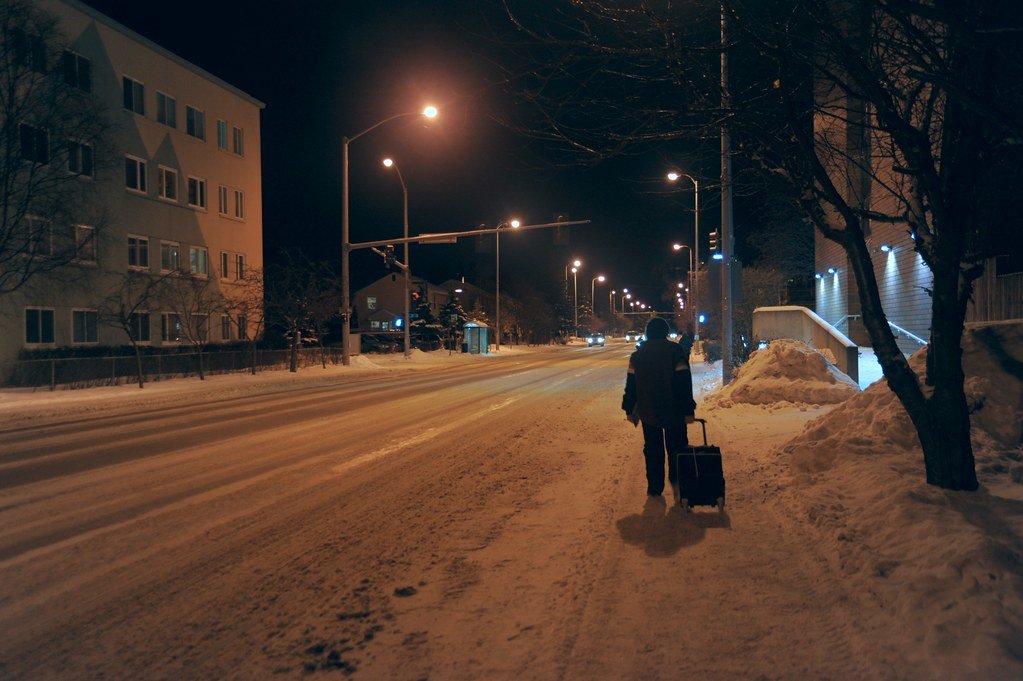
Featured photo: Wonderlane via Openverse (CC0).