On this page
Hiking alone can be safe and rewarding if you prepare more carefully than you would in a group. The essentials are simple: leave a detailed plan with someone you trust, pick a trail within your ability, check the forecast, carry the Ten Essentials and a way to call for help, and turn around early when something feels wrong.
When you hike solo, there is nobody to notice a wrong turn, share gear or go for help. That does not mean you should stay home. It means the margin for error is smaller, so the habits that keep you safe matter more. The tips below are grouped into what to do before you leave, what to do on the trail and how to handle problems, so you can build a routine you repeat every time.
Key takeaways
- Always leave a written hiking plan with a trusted person, including a time to call for help if you have not checked in.
- Choose a familiar or well-traveled trail at or below your current fitness and skill level.
- Carry the Ten Essentials plus a charged phone, and consider a satellite communicator where there is no cell signal.
- Set a turnaround time before you start and stick to it.
- Trust your instincts about people, weather and terrain, and leave early rather than late.
- If you get lost or hurt, stop, stay calm and make yourself easy to find.
Why do you need extra precautions when hiking alone?
Solo hikers need extra precautions because no one is there to help if they are injured, lost or caught by weather. A twisted ankle that is a nuisance in a group can become an emergency alone. Extra planning, communication and conservative choices replace the safety net a hiking partner usually provides.
The main risks for solo hikers are the same ones every hiker faces, just with less backup:
| Risk | Why it is harder alone | Main way to reduce it |
|---|---|---|
| Getting lost | No second opinion on route choices | Map, compass, offline map and frequent checks |
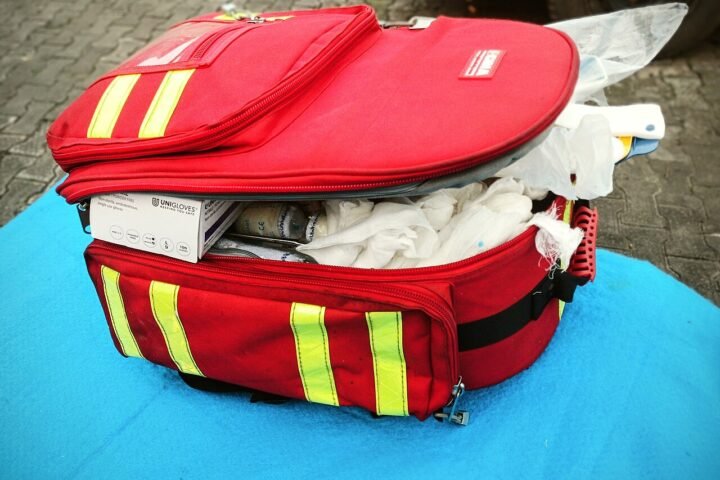
| Injury | Nobody to help or go for help | Careful footing, first aid kit, communication device |
| Weather changes | No one to share warmth or shelter | Forecast check, extra layers, early turnaround |
| Running out of daylight | Slower pace goes unnoticed | Turnaround time and a headlamp |
| Dehydration or heat illness | Early signs are easy to ignore | Enough water and regular breaks |
| Personal safety concerns | No companion to deter problems | Trust instincts, share plans, stay aware |
None of these is a reason to avoid hiking alone. Each one has a practical answer, and the tips below cover them.
What should you do before a solo hike?
Before a solo hike, choose a trail that fits your skill, research its conditions, check the weather forecast, pack the Ten Essentials and leave a detailed plan with someone reliable. Charge your phone and download offline maps. Most solo hiking problems are prevented by decisions made at home, not on the trail.
1. Leave a detailed hiking plan with someone you trust
This is the most important habit for solo hikers. Tell a reliable person where you are going, which trail and trailhead, your planned route, when you expect to finish and when they should call for help if they have not heard from you. Include your car description and license plate. Our guide on how to leave a hiking plan with someone walks through what to include and who to give it to.
2. Choose a trail within your ability
For your first solo hikes, choose trails you have done before or popular routes with clear signage. Save remote, technical or unmarked trails for when you have more experience. Our guide on how to choose a hiking trail for your level explains how to read distance, elevation gain and difficulty ratings.
3. Research current trail conditions
Check the land manager’s website, such as a national park, forest or state park page, for closures, washouts, wildlife warnings or seasonal hazards. Recent trip reports can help, but treat them as one source among several.
4. Check the weather forecast
Look at the forecast for the trail area, not just the nearest town, since mountains can be much colder, windier and stormier. In the US, the National Weather Service at weather.gov offers point forecasts for specific locations. If storms, extreme heat or extreme cold are likely, pick a different day or a shorter route.
5. Pack the Ten Essentials
The Ten Essentials are a widely used checklist covering navigation, light, sun protection, first aid, a knife or repair kit, fire, shelter, extra food, extra water and extra clothes. They matter even more when you are alone. See our full breakdown of the Ten Essentials for hiking explained.
6. Charge and prepare your devices
Fully charge your phone, download offline maps for the area and bring a small power bank. Turn on battery saver mode if you will be out of signal for long periods, since phones drain faster while searching for a network.
Tip: Put your hiking plan in a text message and send it before you leave the house, then send a quick “starting now” message from the trailhead if you have signal.
What should you carry when hiking alone?
When hiking alone, carry the Ten Essentials, a fully charged phone with offline maps, a power bank, a whistle and enough water and food for longer than you plan to be out. In areas without cell coverage, a satellite messenger or personal locator beacon gives you a way to call for help.
7. Bring a way to call for help
A phone works only where there is signal. For remote trails, consider a satellite communicator or a personal locator beacon (PLB). Satellite messengers usually allow two-way messages and need a subscription. PLBs send an emergency signal to search and rescue and generally do not need a subscription, but they do not send messages. Some newer phones can also send emergency texts by satellite in supported areas. Learn how your device works before you need it.
| Device | Works without cell signal | Two-way messages | Ongoing cost |
|---|---|---|---|
| Phone | No, unless it has satellite emergency features | Yes, with signal | Your phone plan |
| Satellite messenger | Yes | Usually yes | Usually a subscription |
| Personal locator beacon | Yes | No, SOS only | Usually none, registration required |
| Whistle | Not applicable | No | None |
8. Carry a whistle and a light
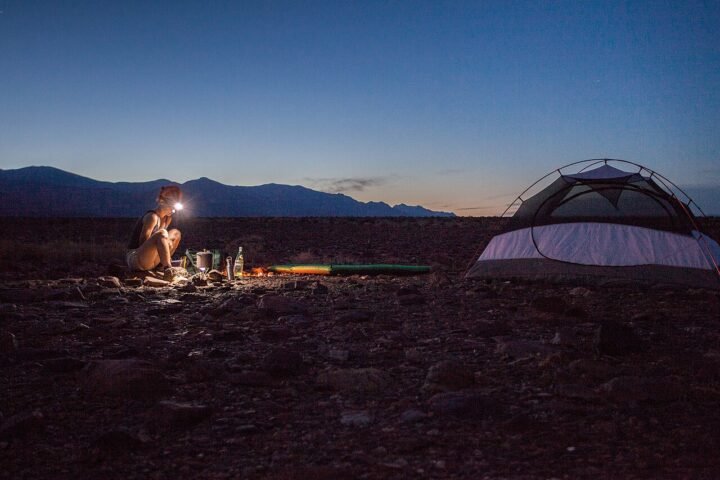
A whistle carries farther than your voice and takes less energy. Three short blasts is a widely recognized distress signal. A headlamp with fresh or charged batteries keeps you moving safely if your hike runs late.
9. Pack for the worst plausible weather
Bring an extra warm layer, a rain jacket and a hat even on fair days. Alone, you cannot borrow a jacket if conditions change. Our guide on how to hike in cold weather covers layering when temperatures drop, and our guide on how to hike in hot weather covers water, shade and timing in the heat.
10. Use a pack that fits and carries everything comfortably
A comfortable, well-fitting pack makes it easier to carry the extra gear solo hiking calls for. If you also use the same bag for travel, see our guide on how to choose a travel backpack for features that work on both trail and trip.
How do you stay safe on the trail when hiking alone?
Stay safe on the trail by starting early, checking your location often, setting a firm turnaround time, pacing yourself, drinking and eating regularly and staying alert to weather, terrain and people. Avoid risky shortcuts, keep your phone battery for emergencies and be willing to cut the hike short when something does not feel right.
11. Start early and set a turnaround time
Starting early gives you more daylight and often cooler temperatures. Before you begin, decide on a turnaround time based on sunset and your pace. When that time comes, head back even if you have not reached your goal. The destination will still be there next time.
12. Check your location often
Look at your map at every junction and every half hour or so, even on familiar routes. Most people who get lost miss a turn and keep going for a while before noticing. Our guide on how to navigate with a phone app on the trail explains offline maps and tracking features.
13. Take fewer risks than you would in a group
Skip the off-trail scramble, the slippery log crossing or the steep shortcut. Small injuries become big problems when you are alone. Step carefully on rocks, roots and wet surfaces, especially on descents when you are tired.
14. Watch the weather as you go
Check the sky regularly. Building clouds, rising wind or distant thunder are signs to turn back or get off exposed ridges. Our guide to lightning safety for hikers and campers explains what to do if a storm builds.
15. Trust your instincts about people
Most people on trails are friendly. Still, you do not have to share that you are alone or where you are parked. If someone makes you uncomfortable, it is fine to change plans, turn around or wait near other hikers. Being polite does not mean ignoring your instincts.
16. Be wildlife aware
Learn which animals live in the area and how to respond to encounters. Make noise in areas with limited visibility, store food properly and keep your distance. Our guide on wildlife safety on the trail covers the basics for common encounters.
What should you do if something goes wrong on a solo hike?
If something goes wrong on a solo hike, stop, stay calm and assess your situation before acting. If you are lost, stay put rather than wandering. If you are injured, protect yourself from the weather and call for help with your phone or satellite device. Make yourself visible and audible so searchers can find you.
A common memory aid for getting lost is STOP: Stop, Think, Observe, Plan.
- Stop: stay where you are. Moving without a plan often makes things worse.
- Think: retrace your steps in your mind. Where did you last know your location?
- Observe: check your map, compass, phone and surroundings for landmarks.
- Plan: decide on one clear action, such as backtracking to a known point or staying put.
If you cannot confidently find your way back, stay in one place. Searchers start from your last known location, which is why your hiking plan matters.
How do you call for help?
- With cell signal: call 911 in the US and Canada, 999 or 112 in the UK, or 000 in Australia. Give your location, the trail name and your injury or problem.
- Without signal: use a satellite messenger SOS, PLB or phone satellite emergency feature if you have one.
- No device: use three whistle blasts, bright clothing and a flashlight to signal.
- Conserve your phone: turn off apps you do not need and lower screen brightness.
Stay warm and dry while you wait. Put on extra layers, sit on your pack to insulate yourself from the ground and shelter from wind. If you are injured, keep pressure on any bleeding, avoid putting weight on a hurt ankle or knee and use your first aid kit for simple care while you wait for help.
Tip: Practice using the SOS feature on your device at home, following the manufacturer’s test instructions. You do not want to learn it for the first time when you are injured.
What are common solo hiking mistakes to avoid?
Common solo hiking mistakes include not telling anyone where you are going, choosing a trail beyond your experience, ignoring the forecast, relying only on a phone without a backup, skipping the turnaround time and pushing on when tired. Most serious solo hiking incidents start with a small decision that compounds over time.
Watch out for these too:
- Changing your route without telling anyone: your plan is only useful if it matches where you actually go.
- Starting too late: it leaves little buffer for slow sections or wrong turns.
- Carrying too little water: solo hikers cannot share supplies.
- Wearing headphones in both ears: it can block warning sounds such as wildlife, rockfall or other people.
- Forgetting to check in afterward: a missed check-in can start an unnecessary search.
How can you build confidence for hiking alone?
Build solo hiking confidence by starting with short, popular trails you already know, then gradually adding distance, elevation and remoteness as your skills grow. Practice navigation, first aid and gear use on easy hikes, and review each outing afterward. Confidence comes from repeated, well-planned trips rather than one big leap.
A simple progression:
| Stage | Trail type | Skills to practice |
|---|---|---|
| First solo hikes | Familiar, busy trails, short distance | Leaving a plan, packing the essentials, turnaround times |
| Building up | Longer popular trails with some elevation | Map checks at junctions, pacing, weather reading |
| Gaining independence | Less busy trails with clear navigation | Offline maps, compass basics, satellite device use |
| Experienced solo | Remote trails | Full self-sufficiency and emergency planning |
If you are newer to hiking in general, our beginner hiking guide covers the fundamentals before you head out on your own. Your next step: pick a familiar trail for your first solo hike this month and write your hiking plan today.
Frequently asked questions
Is it safe to hike alone?
Hiking alone can be reasonably safe with good preparation. Choose a trail you know or a popular route, leave a detailed plan with someone, check the weather, carry the Ten Essentials and a way to call for help, and set a turnaround time. Risk rises with remoteness, difficulty and poor planning.
What should I tell someone before hiking alone?
Share the trail name and trailhead, your planned route, your start time, when you expect to finish and the time they should call for help if you have not checked in. Add your car description, license plate, what you are wearing and the gear you carry, such as a satellite messenger.
Do I need a satellite messenger for solo hiking?
You do not always need one, but it is a strong safety tool on trails without reliable cell signal. Satellite messengers and personal locator beacons can send an emergency signal from remote areas. On busy trails with good coverage, a charged phone and a solid hiking plan may be enough.
What should I do if I get lost hiking alone?
Stop and stay calm. Use the STOP method: stop, think, observe and plan. Check your map and device, and try to identify your last known point. If you cannot confidently find your way, stay put, call or signal for help, keep warm and make yourself easy to see and hear.
Is hiking alone safe for women?
Many women hike alone regularly and safely. The same preparation applies to everyone: share your plan, choose well-used trails at first, stay aware and trust your instincts. You do not have to tell strangers you are alone. If anyone makes you uncomfortable, turning around or staying near other hikers is always fine.
Sources and further reading
Featured photo: nabinstha811 via Openverse (CC0).